From Ariete and Dardo to Panther and Lynx: Italy’s Armoured Renewal Begins
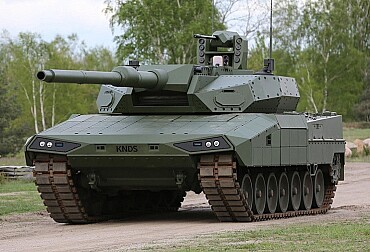
Italian media reported that the Ministry of Defence had awarded contracts worth approximately €3.7 billion to Leonardo Rheinmetall Military Vehicles (LRMV) for the first production tranche of next-generation armoured vehicles. According to Milano Finanza and subsequent reporting, the agreements cover an initial batch of roughly 30 main battle tanks based on Rheinmetall’s KF51 Panther under the New Main Battle Tank (NMBT or I-MBT) programme, together with additional Lynx KF41 infantry fighting vehicles under the Army Armoured Combat System (A2CS) programme. The figures have not been formally confirmed in joint statements by Leonardo, Rheinmetall or the Italian authorities, yet multiple specialised outlets describe the contracts as signed in late September, marking the operational launch of Italy’s long-planned heavy-force modernisation.
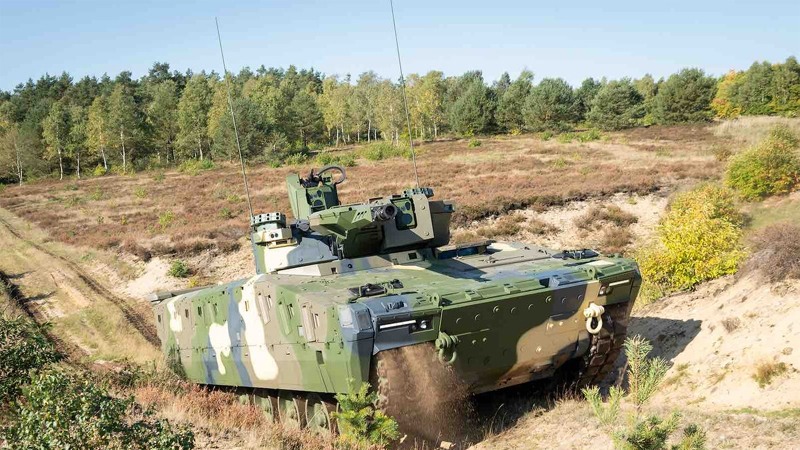
The tank element is significant because it constitutes the first production order for any version of the Panther platform. The vehicles will be configured to Italian requirements and are intended ultimately to replace the C1 Ariete fleet, which entered service in the mid-1990s. Earlier reporting indicated a long-term target of 132 combat tanks plus some 140 specialist vehicles (recovery, engineering and bridging variants) on a common chassis, with the overall tank programme running into the mid-2030s. The Lynx side builds on a first contract signed in November 2025 for 21 vehicles – five in an interim Hungarian Hiúz configuration with Rheinmetall’s Lance turret and 16 adapted with Leonardo’s two-man Hitfist turret mounting a 30 mm X-Gun.
The new order exercises options or adds further vehicles (reports cite 30 or 48 additional units), bringing the contracted total into the region of 50 vehicles. Italy’s broader A2CS requirement is for approximately 1,050 Lynx-derived platforms in more than a dozen variants, with deliveries planned through 2040. Together the two programmes have been costed at around €23 billion over their full life cycles. Defence Minister Guido Crosetto has spoken of efforts to reduce programme costs by roughly 18 per cent while maximising Italian industrial content; LRMV plans for approximately 60 per cent of development, assembly, integration and support work to take place in Italy, primarily at facilities including the former Oto Melara site in La Spezia.
The first four Lynx vehicles from the initial order were formally handed over to the Italian Army at the Montelibretti test centre on 27 January 2026. These early deliveries allow the service to begin concept development, training and tactical experimentation well before the main production wave arrives. Italian Lynx variants are expected to incorporate Leonardo’s Hitfist turret and, potentially, powerpacks developed with Italian industry participation, while the NMBT will integrate Italian electronics, sensors and protection systems onto a chassis derived from Panther technology.
Publicly displayed NMBT demonstrators have shown a modern turret architecture with provisions for advanced fire-control, active protection and remote weapon stations; some descriptions reference a 120 mm L55A1 smoothbore as the initial main armament, with growth potential toward larger calibres. Both platforms are designed with lessons from Ukraine in mind: modular armour, active protection against anti-tank missiles and top-attack drones, digital architecture for networked operations, and high mobility.
A direct comparison with the systems they are meant to replace underlines the scale of the change. The Ariete, Italy’s indigenous main battle tank developed in the 1980s, has suffered chronically low readiness – Army leadership has cited figures around 30 per cent operational availability, with some assessments suggesting fewer than fifty vehicles fully usable at any time. It lacks active protection, has dated optics and command systems, and offers limited growth potential against contemporary top-attack and drone threats.
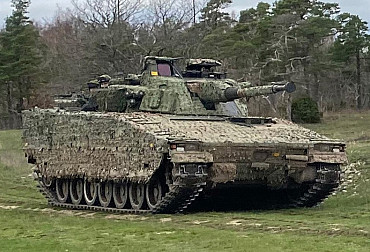
The VCC-80 Dardo infantry fighting vehicle, also from the 1990s, is similarly constrained in protection, sensors and modularity; large numbers of even older M113 variants remain in support roles. In contrast, the Panther-derived NMBT and Lynx-based A2CS are intended to provide a coherent, digitally integrated heavy force with active protection, programmable ammunition options, and a common logistical base across combat and specialist variants. The Lynx’s modular design allows rapid reconfiguration across infantry, command, reconnaissance, engineering, mortar and medical roles, something the Dardo family never offered at scale.
Within the wider European context the Italian choice stands out for its combination of industrial partnership and platform selection. After earlier discussions on an Italian Leopard 2A8 variant did not proceed, Rome opted for the Rheinmetall-Leonardo joint venture and the KF51/KF41 pair. This gives Italy a stake in a next-generation tank design rather than a pure off-the-shelf purchase, while the Lynx is already entering service with Hungary and has been selected or evaluated by other users. Compared with programmes such as the Czech CV90 MkIV or ongoing German and Nordic tracked modernisations, the Italian effort is larger in absolute numbers of IFVs and uniquely pairs a new main battle tank with a full family of supporting vehicles under a single industrial structure. The 60 per cent national-content target is intended to rebuild Italian capacity in heavy tracked systems after years of limited production.

Operationally, the initial contracts allow the Italian Army to begin regenerating heavy mechanised formations that have been constrained by low availability and ageing equipment. The early Lynx deliveries support experimentation in combined-arms tactics under conditions shaped by drones and precision fires, while the first NMBT prototypes and production vehicles will establish the technical and industrial baseline for the larger fleet.
For NATO’s southern flank the implications are straightforward. An Italian heavy force built around modern, protected, networked tanks and infantry fighting vehicles, backed by a domestic industrial base and interoperable with other European KF41 and future Panther users, strengthens conventional deterrence and expeditionary capacity. As LRMV moves from the first contracted vehicles toward the full programmes of more than a thousand Lynx and several hundred tank-family platforms, Italy’s armoured renewal will provide a practical test of how effectively a major European joint venture can convert political and industrial intent into sustained high-intensity combat power over the next decade and a half.