
From Professional Army to Citizen Reserves: Croatia’s Conscription Comeback Amid Europe’s Security Reassessment
Croatia’s reinstatement of conscription marks a significant shift in its defense policy, nearly two decades after abolishing mandatory military service in 2008 to adopt a professional army. On March 9, 2026, the first cohort of around 800 recruits – primarily young men – reported to barracks in Knin, Slunj, and Požega for two months of basic training. This program, now active, includes fundamentals like weapon handling, first aid, survival skills, self-defense, and modern elements such as drone operation. The Croatian Ministry of Defense emphasizes that the goal is to instill basic military proficiency for crisis response, not to create a standing army of conscripts but to build a robust national reserve.
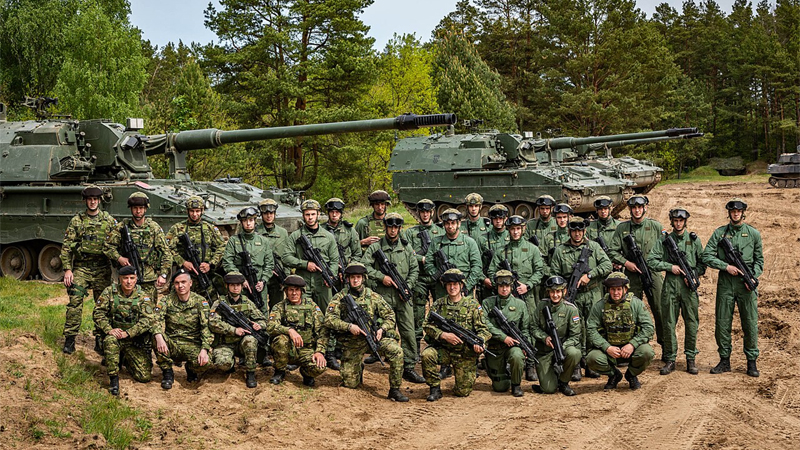
The decision stems from a perceived deterioration in Europe’s security environment, particularly amid the ongoing war in Ukraine and instability in the Balkans. Croatian authorities note that since 2008, roughly 300,000 citizens have received no military training, leaving gaps in readiness. Defense Minister Ivan Anušić praised the strong participation, with over half of the initial group volunteering and only about 1% claiming conscientious objection. The plan targets training approximately 4,000 conscripts annually, expanding the reserve force for potential mobilization.
This move aligns with a broader European trend among NATO members, where Russia’s aggression since 2014 – and especially the full-scale invasion of Ukraine in 2022 – has prompted reevaluation of defense postures. Many countries that phased out conscription post-Cold War are now reviving or expanding mandatory or selective service to address recruitment shortfalls, bolster reserves, and meet NATO commitments amid uncertainties over long-term U.S. support.

Mandatory military service across Europe
Currently, around 10 NATO countries maintain some form of mandatory military service: Denmark (extended to women in 2025, now up to 11 months), Estonia, Finland, Greece, Latvia, Lithuania, Norway (gender-neutral), Sweden, Turkey, and now Croatia (two-month basic training for men aged 18–30). These systems vary – Nordic and Baltic states often use selective drafts or lotteries, focusing on building trained reserves rather than mass armies.
Debates rage in other major NATO allies. Germany, which suspended conscription in 2011, passed a 2025 law requiring all 18-year-old men (born 2008 onward) to complete questionnaires and medical screenings starting January 2026, with full mandatory exams from 2027. The system prioritizes voluntary service to reach targets like 20,000 annual recruits, but leaves the door open for compulsory drafts if shortfalls persist or threats escalate – sparking protests from youth groups fearing a full return to the draft.
France announced a new 10-month voluntary national service program launching in summer 2026, initially for men, as President Macron cited accelerating global threats. This hybrid approach aims to expand reserves without immediate compulsion.
Other nations show mixed signals. Poland has explored models for broader training, while the UK has discussed preparatory measures but maintains a professional force. Resistance exists – protests in Germany highlight concerns over militarization, social cohesion, and youth rights – yet governments frame these steps as necessary deterrence against Russian aggression.

In the Czech Republic
The debate on reinstating conscription remains cautious and largely focused on alternatives to full mandatory service in the Czech Republic. The country abolished compulsory military service in 2005, transitioning to a fully professional army. However, heightened security concerns – driven by Russia’s war in Ukraine and broader European instability – have revived discussions among military leaders, politicians, and the public.
Chief of the General Staff Karel Řehka has repeatedly emphasized the need for some form of enhanced preparedness, warning that voluntary reserves alone may prove insufficient in a crisis. In late 2025 and early 2026, he advocated for “administrative conscription”, which would involve updating records, sending questionnaires to citizens (especially young adults), and creating a clearer database of potential specialists – such as medics, IT experts, engineers, drone operators, and others with valuable skills – without immediate mandatory training or service in peacetime. This approach aims to modernize the existing framework of defense obligation, which legally persists for citizens aged 18–60 but lacks active enforcement or data collection since the old draft system ended.
President Petr Pavel, a former military chief, has supported such administrative measures as a low-burden way to fulfill legal obligations and improve readiness, stressing it would not impose new duties on citizens but simply enable better planning. Defense ex-Minister Jana Černochová and her successor Jaromír Zůna consistently reject a return to universal compulsory service, citing practical barriers: insufficient barracks, instructors, and infrastructure, high costs. They prioritize expanding voluntary active reserves and professional recruitment.
Proposals for selective or targeted mechanisms, inspired by Nordic and Baltic models, occasionally surface in expert circles and political statements, but they face resistance. Overall, the Czech approach leans toward incremental, non-mandatory steps – digital registries, pre-assignment for specialists, and boosted voluntary programs – rather than Croatia’s structured short-term training or Germany’s questionnaire-based system with potential escalation.
A need for societal involvement
Croatia’s short, focused program (two months) contrasts with longer services elsewhere, positioning it as a pragmatic “catch-up” effort. It reflects a continent-wide awakening: after years of professionalization and peace dividends, Europe confronts the need for societal involvement in defense. Whether this trend leads to wider mandatory systems or stabilizes at selective/voluntary models depends on evolving threats and public acceptance.
As Defense Minister Anušić noted, high participation signals societal buy-in in Croatia. Across NATO Europe, the debate continues: Is conscription a relic of the past, or an essential tool for future readiness in an unstable world?