
From Quantico to Xi’an: How Far Military Humanoids Remain from Star Wars
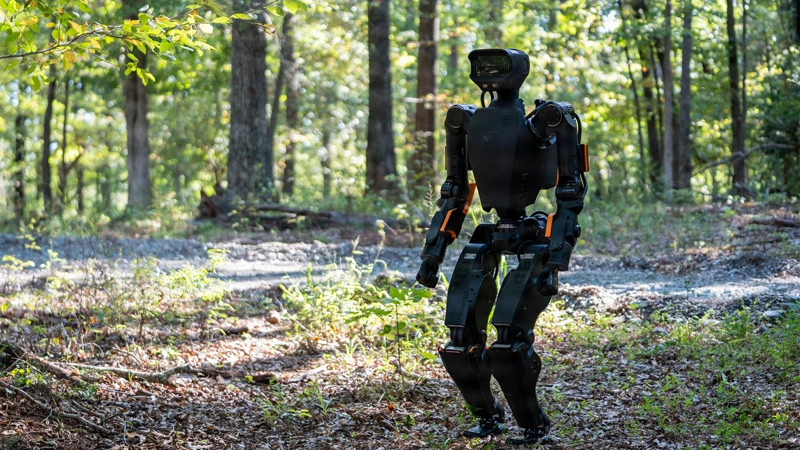
The United States Army’s selection of the Alex humanoid, developed by the Florida Institute for Human and Machine Cognition, marks a deliberate step rather than a sudden leap. After reviewing 103 proposals and watching nine finalists demonstrate at Marine Corps Base Quantico in September 2026, the service chose one complete robot plus four enabling technologies: scalable power systems, compact field generators, fingertip tactile sensors, and software that turns commander intent into discrete robotic actions. Alex features impact-resilient actuators, some ballistic protection, and hybrid autonomy that mixes onboard artificial intelligence with human supervision. It is intended first for high-risk tasks in environments built for people – stairs, doorways, damaged interiors – where sending a soldier would expose them to fragments, toxins, or fire. Officials have not released exact protection ratings, endurance figures, or payload data, underscoring that this remains an experimental pathway, not a procurement decision. Follow-on funding of up to $1.25 million may keep the work alive, but the Army is still mapping the ecosystem around the machine: energy, sensing, and control.
That same logic is visible elsewhere, most prominently in China. Chinese manufacturers already account for the large majority of global humanoid shipments, giving the People’s Liberation Army an industrial base that Western programs cannot match in volume. After the 2026 World Humanoid Robot Games, the PLA Daily urged researchers to move laboratory machines onto military training grounds and treat them as potential “combatants.” Procurement notices and academic papers from 2025–2026 show tenders for complete humanoids, perception-and-manipulation systems, and data-collection kits that label camera, radar, and motion information for varied terrain.
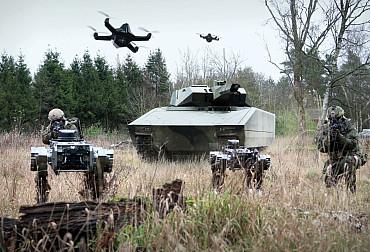
Researchers at the National University of Defense Technology have modeled mixed teams of humanoids, quadrupeds, and unmanned vehicles clearing buildings floor by floor alongside troops. State-linked firms have displayed platforms such as Norinco’s Fuxi for sentry, reconnaissance, and hazardous-duty roles under remote control. Yet no evidence exists that an armed humanoid has been assigned to an operational PLA unit. Independent assessments commonly place useful battlefield integration five to ten years away, limited by power, reliability, and the difficulty of operating outside controlled demonstrations.
Other nations are following narrower or more urgent paths. South Korea has already tested a humanoid as a naval helmsman and earlier deployed quadrupeds for counter-terrorism work. Ukraine, fighting a live war of attrition, launched a defense-exclusive humanoid grant program while simultaneously fielding thousands of unmanned ground vehicles for logistics, casualty evacuation, and limited armed missions; one remotely operated gun-armed platform reportedly held a position for weeks. The claim comes from reporting on a Ukrainian remotely operated ground vehicle, the DevDroid Droid TW 12.7, a tracked platform armed with an M2 Browning .50-caliber machine gun. A unit commander described a December 2025 mission in which that single robot held a position and engaged Russian forces for 45 consecutive days. The account was given to Business Insider and subsequently covered by other outlets.
Russia continues work on platforms descended from earlier Fedor concepts and has roadmaps for military robotics through 2030. European programs remain more fragmented, and Japan’s long humanoid tradition has so far stayed closer to industrial and disaster-response use. Across these efforts the pattern is consistent: humanoids are attractive because they can use existing human-scale infrastructure, but they remain expensive, energy-hungry, and fragile compared with cheaper wheeled or tracked unmanned systems already proving themselves in Ukraine.
The question of “Star Wars droid battles” therefore sits at a distance that is both technical and conceptual. Battle droids in fiction are cheap, numerous, reasonably autonomous, and willing to absorb losses that would be politically and morally unacceptable with human troops. Current humanoids last a few hours on battery, struggle with mud, rubble, and electronic warfare, and still require a human in or on the loop for anything resembling judgment. Mass production at the scale of tens of thousands of units per year is being discussed by startups, yet the cost, logistics, and software robustness needed for independent swarm combat remain unsolved.
Experts note that even six hours of reliable outdoor operation would be a notable achievement today. Ethical and legal constraints further slow any move toward machines that independently decide to fire. What is arriving first is a supporting role: robots that enter the dangerous room so a soldier does not have to, that carry ammunition under fire, or that map a building before an assault. Those incremental uses will accumulate over the next decade. Fully autonomous droid-versus-droid engagements on open terrain, with machines making tactical decisions at scale, belong to a later generation – plausibly the 2030s at the earliest for limited trials, and later still for anything resembling cinematic armies of disposable infantry. The real race is less about building a single impressive prototype than about solving power, perception, and trust so that a machine can be sent forward and still be useful when the first shot is fired.