Germany Activates Israeli Arrow 3 Battery: A €4 Billion Message of Deterrence to Moscow
For the first time outside Israel, a long-range Arrow missile defense system has just been put into service, in Germany. Germany has officially activated its Arrow 3 long-range missile defense system as a key measure to protect itself against potential Russian aggression.
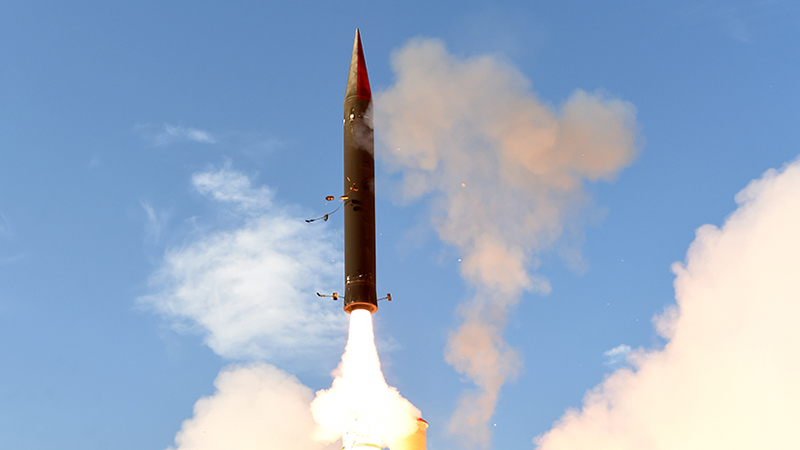
Under leaden winter skies at the Holzdorf air base in Saxony-Anhalt, Germany officially commissioned the Arrow 3 exo-atmospheric missile defense system on Tuesday, marking a historic turning point in European strategic defense. For the first time ever, the advanced Israeli-designed interceptor – considered one of the most sophisticated weapons of its kind in the world – is operational outside the State of Israel.
Developed jointly by Israel Aerospace Industries (IAI) and Boeing, with significant U.S. financial and technological backing, Arrow 3 is specifically engineered to destroy incoming ballistic missiles while they are still in space, at altitudes of over 100 kilometers and at ranges reaching up to 2,400 kilometers. Unlike ground-based systems that engage threats inside the atmosphere, Arrow 3 strikes warheads during the mid-course phase, before they can release decoys or multiple re-entry vehicles. This “hit-to-kill” technology essentially turns the interceptor into a high-speed projectile that obliterates its target through sheer kinetic force.

The deployment in Germany sends a clear strategic message, especially toward Moscow. Since Russia’s full-scale invasion of Ukraine in February 2022, European nations have fundamentally reassessed their air and missile defense posture. Germany, long criticized for under-investing in defense, responded with the landmark €100 billion Zeitenwende (“turning point”) special fund announced by Chancellor Olaf Scholz. Part of that money – exactly €3.99 billion – was allocated in November 2023 to purchase three Arrow 3 batteries from Israel in what remains the largest single defense export deal in Israeli history.
The choice of the Holzdorf air base was deliberate. Located roughly 100 kilometers south of Berlin, the site offers optimal radar coverage over central and eastern Germany while remaining far enough from the Polish border to avoid unnecessary provocation. Construction began in summer 2024; German and Israeli engineers worked side-by-side to erect the distinctive green launchers, command centers, and the powerful EL/M-2080 “Great Pine” radar system. By late 2025, the first battery achieved initial operational capability, with two additional batteries scheduled for delivery by 2027.
Arrow 3 does not stand alone. It forms the uppermost tier of the German-led European Sky Shield Initiative (ESSI), launched in 2022 and now counting 21 participating nations, including neutrals such as Austria and Switzerland. Lower tiers are filled by Patriot PAC-3, IRIS-T SLM, and in the future possibly the American SM-3 or the Franco-Italian SAMP/T NG. The goal is a seamless, NATO-compatible dome stretching from Norway to Romania, capable of defeating everything from short-range rockets to hypersonic glide vehicles.
For Israel, the German deal carries both symbolic and practical weight. It represents the deepest integration yet of Israeli defense technology into a major European military, decades after the shadows of the Holocaust made such cooperation politically unthinkable. Prime Minister Benjamin Netanyahu called the activation “a bridge of iron between Jerusalem and Berlin, built on shared values and shared threats.” Israeli officials also quietly emphasize the financial aspect: the €4 billion contract helps fund further development of Arrow 4, the next-generation system already in advanced planning.
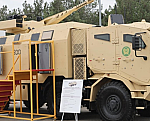
On the ground in Holzdorf, German Defense Minister Boris Pistorius struck a cautiously triumphant note. “Today we are stronger than yesterday,” he declared during the ceremony attended by his Israeli counterpart Yoav Gallant and U.S. Ambassador Amy Gutmann. Without mentioning Russia by name, Pistorius spoke of “actors who believe they can redraw borders by force” and stressed that Arrow 3 “makes any calculation of aggression infinitely more complicated.” Bundeswehr generals are even more explicit in private: the system can theoretically cover the entire European part of Russia west of the Urals from launch sites in Poland or the Baltics – a capability that fundamentally alters deterrence dynamics.
Training has been intensive. Hundreds of German soldiers have spent months in Israel’s Nevatim and Palmachim air bases, learning Hebrew terminology and the unique procedures required to operate a system originally designed for a country under constant missile threat.
Looking ahead, pressure is mounting to expand coverage eastward. Poland has already expressed interest in co-financing a second site near its border, while Finland and the Baltic states push for integration into the ESSI architecture before the end of the decade. Washington, which must approve any export of technology containing American components, has signaled strong support, seeing the European shield as a way to free up U.S. systems currently deployed in Europe for possible use in the Indo-Pacific.
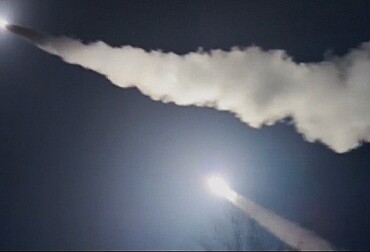
The Holzdorf ceremony ended with a single, almost symbolic interceptor launch – a training round fired into the Baltic Sea under tight safety protocols. As the missile disappeared into the clouds, officers from three continents watched in silence. What began as a desperate Israeli quest for survival against Arab missile arsenals in the 1990s has evolved, thirty-five years later, into a cornerstone of European deterrence against a revanchist nuclear power.