
Germany Embraces American Technology for Future Frigates as Navy Modernization Accelerates
Germany has taken a significant step in modernizing its navy by securing approval to equip its future F127-class air defense frigates with advanced American combat systems, marking a major procurement valued at around €10 billion (approximately $11.9 billion). This decision, notified through the U.S. Foreign Military Sales process, underscores Berlin’s push to rapidly enhance its maritime capabilities amid evolving security threats in the Baltic and beyond, while highlighting ongoing debates about European defense autonomy.
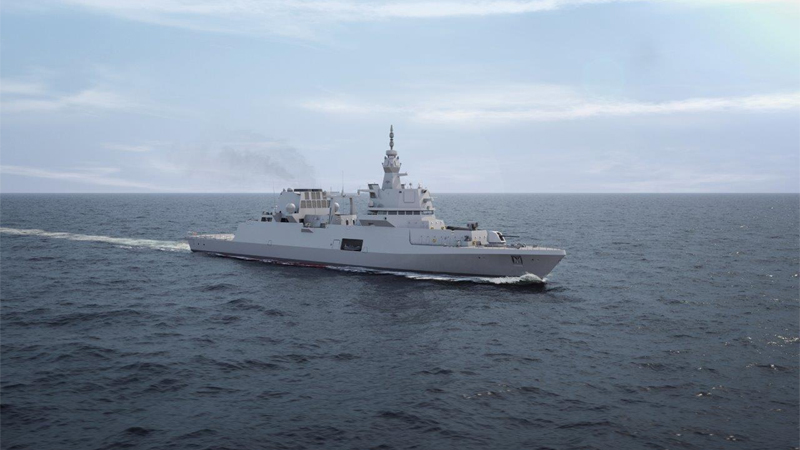
The F127 program, formally known as NGFrig-AD or Next Generation Frigate – Air Defence, envisions up to eight vessels with a displacement of about 10,000 tons each. These will replace the aging F124 Sachsen-class frigates and provide the German Navy with robust ballistic missile defense capabilities for the first time. The hulls and platform integration will be German-led by a consortium involving ThyssenKrupp Marine Systems (TKMS) and Naval Vessels Lürssen, but the heart of the ships – the combat system – will be American. Lockheed Martin’s AEGIS Baseline system, integrated with Raytheon’s AN/SPY-6(V)1 active electronically scanned array radar, forms the core. The frigates will feature 96 Mk 41 vertical launch system cells capable of firing SM-6 Block I and SM-2 Block IIIC missiles, alongside additional sensors like the AN/SPQ-9B radar, electronic warfare suites, and Mk 45 gun mounts.
U.S. officials justified the sale by emphasizing its contribution to NATO interoperability and Germany’s role as a stabilizing force in Europe. The €10 billion package represents roughly 40 percent of the overall F127 program cost, estimated at €26 billion for development and construction. This choice of proven U.S. technology over European alternatives prioritizes performance, rapid integration, and compatibility with allied forces over purely continental industrial preferences.
This move fits into a broader, ambitious modernization drive for the Deutsche Marine. Germany’s navy has long suffered from readiness issues and an aging fleet, but recent Zeitenwende policies and substantial budget increases have accelerated renewal. Key projects include the troubled F126 (Niedersachsen-class) multi-mission frigates – six vessels originally contracted to Dutch firm Damen Naval but now facing delays of up to four years, with Rheinmetall potentially stepping in as prime contractor and interim MEKO A-200 frigates from TKMS under consideration for delivery starting in 2029 to bridge gaps in anti-submarine warfare. The F127 air defense frigates will complement these, creating a more balanced surface fleet. Additional efforts encompass modernization of Type 212A submarines, procurement of new corvettes, and investments in unmanned systems and maritime domain awareness. Long-term goals outlined in the Navy 2035+ vision aim for a more capable force with enhanced high-intensity warfare readiness, including potential expansion to 16–18 major surface combatants supported by robotic missile vessels.
Germany’s naval revival occurs against a backdrop of surging defense spending. The country’s overall defense budget has climbed dramatically, projected near €83 billion for 2026 with plans for further growth, part of a multi-year push that could see allocations approach or exceed NATO’s evolving targets. Naval-specific investments, including the €36.6 billion earmarked in longer-term plans for vessels and related systems, signal a shift from post-Cold War restraint toward greater responsibility for European maritime security.
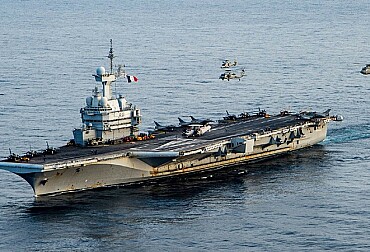
In comparison, the naval capabilities and budgets of Germany’s key European peers reveal diverse strengths and pressures. France maintains one of Europe’s most balanced and expeditionary navies, centered on its nuclear-powered aircraft carrier Charles de Gaulle, a fleet of nuclear attack submarines, and around 15 first-rate frigates and destroyers, bolstered by amphibious ships and a growing emphasis on drones and deep-strike munitions. French defense spending stands at roughly €55–60 billion annually in recent years, with plans for significant uplifts – including an additional €36 billion through 2030 – driving procurement of new frigates (FDI class), Rafale upgrades, and submarines. Paris prioritizes sovereign technologies and power projection, often leading in European operations from the Indo-Pacific to the Mediterranean.
The United Kingdom’s Royal Navy, historically a global force, operates two Queen Elizabeth-class aircraft carriers, a strong submarine flotilla including nuclear deterrent vessels, and a shrinking escort fleet of six Type 45 destroyers and around seven Type 23 frigates, with many units facing maintenance challenges and reduced availability. Defense spending hovers near £60 billion (approximately $75–80 billion), with ambitions to reach 2.5 percent of GDP by 2027 and higher targets later, though funding gaps of £16 billion or more in equipment plans have led to delays in programs like Type 83 destroyers and Type 26/31 frigates. The RN excels in carrier strike and high-end warfare but grapples with fleet size constraints and readiness issues that limit sustained deployments.
Italy’s Marina Militare fields a modern fleet highlighted by the STOVL carrier Cavour, the amphibious ship Trieste, ten FREMM frigates (with more evolutions planned), and diesel-electric submarines. Budgets run around €31 billion annually, qualifying for NATO’s 2 percent target when including certain expenditures, with investments in F-35B jets for naval aviation, new maritime patrol aircraft, and frigate sustainment. Italy emphasizes multi-role platforms and Mediterranean security, often achieving high operational availability relative to budget size, though it lacks the nuclear or carrier-centric projection of France or the UK.
Spain’s Armada operates a more modest but capable force, including the Juan Carlos I amphibious assault ship (with potential future carrier ambitions), five Álvaro de Bazán-class (F-100) air defense frigates undergoing mid-life upgrades with AEGIS enhancements, and emerging F-110 frigates. Defense spending has risen sharply in real terms – up over 117 percent in the past decade – to around €33-35 billion, meeting 2 percent GDP goals with a high proportion allocated to equipment. Spain focuses on interoperability with NATO partners and regional projection but faces constraints in overall fleet numbers and munitions stocks compared to larger peers.
Across these nations, budgets and capacities reflect strategic priorities and economic realities. Germany’s surge in spending and focus on high-end air defense and anti-submarine assets positions it to close longstanding gaps, potentially rivaling or exceeding others in surface combatant numbers over the coming decade if programs stay on track. France leads in integrated power projection with nuclear elements, while the UK retains qualitative edges in carrier operations despite quantitative pressures. Italy and Spain offer efficient, modern fleets tailored to their geographies, with strong frigate and amphibious capabilities but less global reach. Collectively, these European navies represent a patchwork of strengths – interoperability via NATO remains key, yet choices like Germany’s adoption of U.S. systems for the F127 highlight persistent tensions between transatlantic cooperation and calls for greater European industrial sovereignty. As threats from state actors intensify, sustained investment and closer collaboration will determine whether these fleets can collectively deter and defend effectively in contested waters.