
Japan Breaks Decades-Old Taboo: Lethal Arms Exports Signal New Era in Pacific Security and Industry Growth
Japan has taken a landmark step in its postwar defense policy by scrapping long-standing restrictions on the export of lethal weapons, opening the door for its advanced military technology to reach allied and partner nations under strict conditions. Announced on April 21, 2026, by the government of Prime Minister Sanae Takaichi, the reform eliminates previous limits that confined exports largely to five non-lethal categories such as rescue, transport, surveillance, warning, and minesweeping equipment. Now, Japanese authorities will evaluate transfers of all defense equipment—including finished lethal systems like fighter jets, missiles, and destroyers—on a rigorous case-by-case basis. Sales remain prohibited to countries engaged in active conflicts, and exports to third parties face tight controls, with recipients required to pledge adherence to the United Nations Charter. This change builds on incremental liberalizations since 2014 but represents the most significant break yet from the near-total ban imposed in 1976, rooted in Japan’s pacifist constitution and desire to distance itself from its imperial past.
Prime Minister Takaichi’s decision stems from a candid assessment of the deteriorating security landscape in the Indo-Pacific and beyond. In her public statements, she emphasized that “no country can preserve its peace and security by its own forces alone” in an era marked by China’s rapid military modernization, North Korea’s persistent missile tests and provocations, and Russia’s assertive actions globally. The policy also responds to uncertainties surrounding long-term U.S. commitment under shifting American priorities, prompting Tokyo to deepen reciprocal defense ties with like-minded partners. Economically, the move aims to invigorate Japan’s defense industry, which has long suffered from a small domestic market limited to the Self-Defense Forces. By boosting production volumes, the government hopes to reduce unit costs for its own procurement, enhance industrial capacity for potential crises, and position armaments manufacturing as a driver of broader economic growth. Japan’s defense budget, now approaching 2 percent of GDP, provides the fiscal backing for this strategic pivot, while the strain on U.S. production lines from conflicts in Ukraine and the Middle East creates an opening for diversified suppliers.
The regional implications of this policy shift are profound and multifaceted. In the Indo-Pacific, it strengthens deterrence against Chinese assertiveness in the East and South China Seas by enabling closer interoperability and capability-sharing among U.S. allies and partners. Countries like the Philippines, facing maritime disputes, stand to gain advanced Japanese technology that could bolster their coastal defense and naval presence, potentially raising the threshold for aggression in contested waters. Australia, already deepening naval ties, benefits from enhanced joint production capabilities, contributing to a more resilient “security belt” across the region. However, the change has drawn sharp criticism from Beijing, which expressed "deep concern" and vowed vigilance against any perceived militarization. Domestically in Japan, public opinion shows reticence, with critics accusing the government of eroding the pacifist principles enshrined in Article 9 of the constitution, though Takaichi has reassured citizens that the nation’s fundamental commitment to peace remains intact. Globally, the reform could encourage a reconfiguration of supply chains in the defense sector, reducing over-reliance on American systems and fostering trilateral or multilateral collaborations, such as the ongoing next-generation fighter program with Britain and Italy slated for the mid-2030s. While it promotes stability among democratic partners, it risks heightening tensions if perceived as escalatory by adversaries.
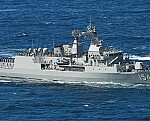
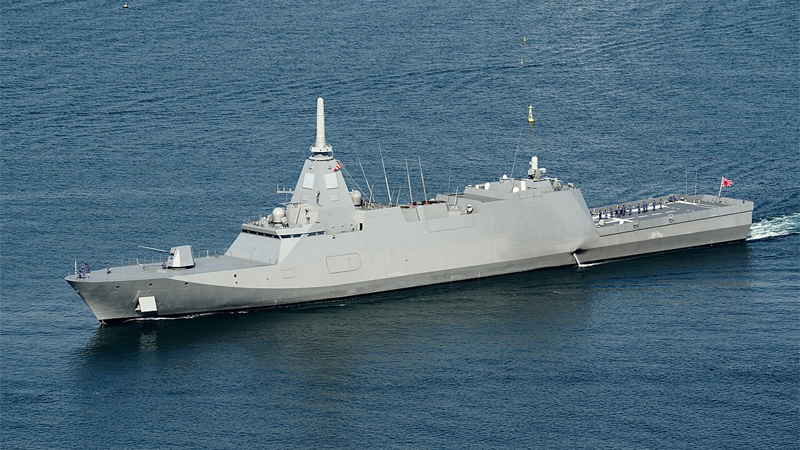
This opening presents substantial opportunities for Japan’s defense sector, long constrained by export limitations. Major conglomerates with proven expertise in high-technology systems are poised to lead the charge. Mitsubishi Heavy Industries (MHI), a leader in shipbuilding, aerospace, and missile production, emerges as a prime beneficiary; it has already secured a significant deal to deliver upgraded Mogami-class frigates to Australia, with potential for more joint construction. Kawasaki Heavy Industries, known for its maritime patrol aircraft like the P-1 and advanced submarines, could find markets for anti-submarine warfare platforms. Mitsubishi Electric and NEC bring strengths in electronics, radar, and command systems, while Fujitsu offers computing and sensor technologies. Potential arms for export include long-range missiles (such as those MHI is ramping up production for), Patriot PAC-3 interceptors to replenish global air defense stocks depleted by ongoing conflicts, electronic warfare aircraft like the Kawasaki EC-2, and even second-hand or new destroyers and frigates. The next-generation Global Combat Air Programme (GCAP) fighter jet, developed collaboratively, represents a flagship opportunity for technology transfer and co-production deals.
Target markets extend beyond immediate regional partners. The Philippines appears likely to be among the first recipients, with interest in used warships, drones, and electronic warfare systems to enhance its resilience in the South China Sea; Defense Secretary Gilberto Teodoro has warmly welcomed the policy as providing access to top-tier technology. Australia has already moved forward with frigate acquisitions and may expand into missiles or aircraft components. Other Indo-Pacific nations such as Indonesia and New Zealand have signaled interest in naval and maritime patrol assets. Further afield, countries like Poland are exploring procurement to modernize their forces amid European security concerns, while India could pursue collaborative opportunities in missiles or electronics to complement its own defense indigenization efforts. The United States and United Kingdom, as treaty allies with existing agreements, may integrate Japanese components into joint programs, helping offset production backlogs. Overall, these exports could generate new revenue streams, sustain skilled jobs, and accelerate innovation, though success will depend on government support for marketing, financing, and overcoming capacity constraints compared to established exporters like the United States or South Korea. Analysts note that without sustained investment, the industry may struggle to scale rapidly, but the policy lays a foundation for Japan to evolve from a primarily defensive actor into a more proactive contributor to collective security.
In summary, Japan’s relaxation of lethal arms export rules under Prime Minister Takaichi reflects a pragmatic response to geopolitical realities while promising economic revitalization for its defense base. The move carries risks of regional friction but holds the potential to forge stronger alliances and introduce high-quality, reliable Japanese systems into the global market, reshaping dynamics in the Indo-Pacific and beyond.