
Iran Fortifies Tehran Skies: S-300, Bavar-373, and Cobra-V8 Form New Anti-Access Shield Amid U.S. Buildup
Iran’s air defense capabilities have undergone significant scrutiny and reinforcement in early 2026, amid escalating tensions with the United States. Satellite imagery from mid-February 2026 reveals visible redeployments of key systems around Tehran and strategic sites like Isfahan, signaling Tehran’s efforts to anticipate potential U.S. air or missile strikes. These moves coincide with increased U.S. naval presence, including carrier strike groups in the eastern Mediterranean and Persian Gulf, heightening fears of preemptive action over Iran’s nuclear program.
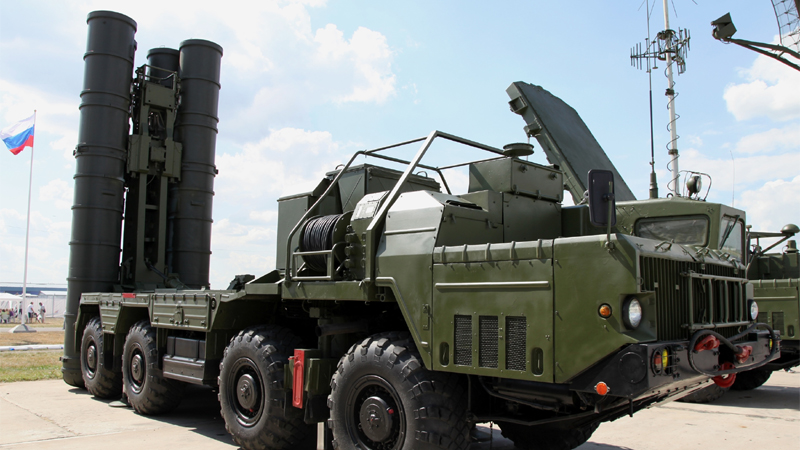
Central to this buildup is the repositioning of Russian-supplied S-300 surface-to-air missile systems. Iran operates the S-300PMU-2 variant, featuring mobile 5P85 launchers approximately 15-16 meters long. These systems provide long-range engagement against fighter jets, cruise missiles, and other aerial threats, with capabilities for multi-target tracking and interception at extended distances. Recent imagery shows S-300 launchers near Kharizak south of Tehran, often paired with other assets. Additional batteries have appeared around Isfahan, a key industrial and nuclear-related hub. This dispersion strategy reduces vulnerability to concentrated strikes, allowing coverage of multiple approach vectors.
Complementing the S-300 is Iran’s indigenous Bavar-373 system, often touted as comparable or superior to the S-300 in some aspects. The Bavar-373 uses Sayyad-4 missiles (with upgrades like Sayyad-4B extending range to 200-300+ km and altitudes up to 32 km). Recent variants, including the Bavar-373-II introduced around 2025, feature autonomous transporter-erector-launcher-radars (TELARs) for decentralized operation, enabling independent target engagement even if central command links are disrupted. This resilience proved valuable post-2025 conflicts, where Iran appears to have integrated S-300 components with Bavar-373 for redundancy.
A standout addition is the Cobra-V8 electronic warfare system, unveiled in 2023 and now prominently deployed. This mobile, truck-based platform – analogous to Russia’s Krasukha – jams radar emissions, intercepts signals, and disrupts intelligence, surveillance, and reconnaissance (ISR) platforms within a reported radius of up to 250 km. Co-located with S-300 launchers near Tehran (and reportedly near Bandar Abbas), Cobra-V8 shifts defense from purely kinetic interception to proactive electromagnetic denial. Iranian officials, including Admiral Amir Rastegari of Iran Electronic Industries, claim it has disrupted foreign reconnaissance aircraft and built databases of enemy radar signatures, including those from stealth platforms like the F-35. By targeting upstream ISR – such as U.S. P-8 Poseidon patrols or AWACS – Cobra-V8 aims to degrade strike coordination before threats enter missile range.
Iran’s layered approach integrates these systems: long-range SAMs (S-300/Bavar-373) for high-altitude threats, shorter-range options like Khordad-15 or Arman for ballistic defense, and electronic warfare for spectrum control. Mobile launchers and decentralized radars enhance survivability against initial suppression efforts. Additional short-range enhancements include reported acquisitions of Russian 9K333 Verba MANPADS (shoulder-fired systems) to counter low-altitude threats like drones or helicopters.
Iran’s air force, however, remains a weaker link in overall aerial defense. The Islamic Republic of Iran Air Force (IRIAF) operates an aging fleet, primarily pre-1979 U.S.-origin aircraft (F-4 Phantom, F-5 Tiger, F-14 Tomcat) alongside some MiG-29s and limited modern additions. Maintenance challenges due to sanctions have grounded much of the fleet in past conflicts, earning descriptions as a “flying museum.” No fifth-generation fighters are in service, though reports suggest potential future deliveries of Russian Su-35s (Generation 4++), which could bolster interception starting in 2026. The air force contributes minimally to integrated air defense, relying instead on ground-based systems. Drone swarms and asymmetric tactics supplement conventional airpower.
Overall, Iran’s strategy emphasizes graduated deterrence through resilience and cost imposition. Densified networks, EW integration, and dispersion make any air campaign uncertain and expensive for adversaries. While vulnerabilities persist – particularly against advanced U.S. electronic attack (e.g., EA-18G Growler) and stealth platforms – the current posture deters limited strikes by raising risks to ISR, aircraft, and munitions.