
Israel’s Record Defense Budget Signals Unprecedented Investment in Technological Superiority Amid Multi-Front Threats
In a move that underscores the escalating security challenges facing the Middle East, Israel’s parliament, the Knesset, has approved a historic defense budget for 2026 totaling approximately 143 billion Israeli shekels, equivalent to around 39 billion euros or roughly 45.8 billion US dollars. This figure represents a dramatic surge from pre-2023 levels, when the annual defense allocation hovered closer to 17 billion euros, effectively more than doubling in just three years. The increase comes as Israel navigates ongoing operations across multiple fronts, including sustained efforts in Gaza, engagements in southern Lebanon, and direct confrontations involving Iranian threats since early 2025. Policymakers describe this as a necessary response to hybrid warfare, where state and non-state actors deploy swarms of drones, rockets, and advanced ballistic missiles in coordinated attacks.
The broader national budget for 2026 stands at about 850 billion shekels, or 235–271 billion euros depending on exchange rates, with defense emerging as the undisputed priority. An additional injection of over 30 billion shekels was fast-tracked through legislative processes, reflecting the daily operational costs of conflict, estimated in some reports at around one billion shekels per day. Finance Minister Bezalel Smotrich hailed the package as a “historic turning point” that not only bolsters immediate security but also positions Israel to reshape regional dynamics. In contrast, opposition figures like Yair Lapid criticized the allocation as a misdirection of funds, arguing it diverts resources from civilian needs while benefiting coalition priorities. Despite such debates, the consensus in security circles is clear: sustained high spending is essential for maintaining qualitative military edges in an era of proliferating threats from Iran-backed proxies and long-range strike capabilities.
At the heart of this massive investment lies Israel’s commitment to its multi-layered air and missile defense architecture, widely regarded as the most sophisticated in the world. This system has repeatedly proven its value in real-world scenarios, intercepting thousands of incoming projectiles while minimizing civilian casualties and infrastructure damage. The budget will accelerate procurement, upgrades, and research into next-generation technologies, ensuring that Israel remains ahead of adversaries who continue to innovate in asymmetric warfare. From short-range rocket barrages to exo-atmospheric ballistic threats, the integrated network combines kinetic interceptors with emerging directed-energy solutions, creating a comprehensive shield that adapts dynamically to evolving battlefields.
One of the most battle-tested components is the Iron Dome system, developed by Rafael Advanced Defense Systems in collaboration with Israel Aerospace Industries. Operational since 2011, Iron Dome excels at neutralizing short-range rockets, artillery shells, and unmanned aerial vehicles at ranges of 4 to 70 kilometers. Its radar and command system rapidly assesses trajectories, engaging only those threats projected to hit populated or strategic areas, achieving interception rates often exceeding 90 percent in intense salvos. Each Tamir interceptor missile costs tens of thousands of dollars, prompting ongoing efforts to complement rather than replace it with more economical alternatives. The system’s mobility and rapid deployment have made it indispensable during prolonged conflicts, protecting cities and military installations alike from indiscriminate fire.
Building on this foundation is David’s Sling, a medium- to long-range air and missile defense system jointly developed with the United States’ Raytheon. Entering service in 2017, David’s Sling targets threats at distances from 40 to 300 kilometers, including tactical ballistic missiles, cruise missiles, aircraft, and advanced drones. Its Stunner interceptor employs hit-to-kill technology with advanced seekers and multi-pulse propulsion for superior maneuverability. Recent upgrades, including successful tests in early 2026 that even explored naval vessel integration, have enhanced its ability to handle sophisticated saturation attacks. By filling the gap between short-range and exo-atmospheric layers, David’s Sling reduces pressure on higher-tier systems and provides flexible coverage across land and potentially maritime domains. Its cost per interception, while higher than Iron Dome, offers significant value against more expensive enemy assets.
For the most demanding threats – long-range ballistic missiles capable of traveling hundreds or thousands of kilometers – Israel relies on the Arrow family of systems from Israel Aerospace Industries. Arrow 2, operational since the early 2000s, intercepts incoming missiles in the upper atmosphere using explosive warheads for destruction. Its successor, Arrow 3, represents a leap forward with exo-atmospheric “hit-to-kill” capabilities, engaging targets in space at altitudes exceeding 100 kilometers and ranges up to 2,400 kilometers or more. Arrow 3’s ability to neutralize threats outside Earth’s atmosphere, including hypersonic or maneuvering re-entry vehicles, makes it a cornerstone of strategic deterrence against nations like Iran. The system has undergone rigorous testing and co-production agreements with the US, with production rates reportedly tripled in response to current conflicts. Plans for an even more advanced Arrow 4 are underway, promising greater precision and capacity against future peer-level adversaries.
Complementing these kinetic systems is the groundbreaking Iron Beam, a high-energy laser-based directed-energy weapon developed by Rafael that has transitioned from development to operational status in late 2025. As the innermost layer of Israel’s defense umbrella, Iron Beam uses powerful solid-state lasers – reportedly in the 100-kilowatt class or higher – to burn through or disable short-range rockets, mortars, drones, and UAVs at distances of up to 10 kilometers or more, depending on atmospheric conditions. Unlike traditional missiles, each “shot” from Iron Beam costs only a few dollars in electricity, offering virtually unlimited magazine depth during sustained barrages. Extensive trials demonstrated successful interceptions against diverse targets in realistic scenarios, and the system is now being integrated into the Israeli Air Force’s multi-layered array alongside Iron Dome. Planners envision phased deployment, including mobile and potentially airborne variants mounted on fighter jets or helicopters, to counter swarming tactics where cost becomes a decisive factor. Iron Beam’s arrival marks a paradigm shift in air defense economics, allowing forces to engage low-value threats without depleting expensive interceptor stockpiles.

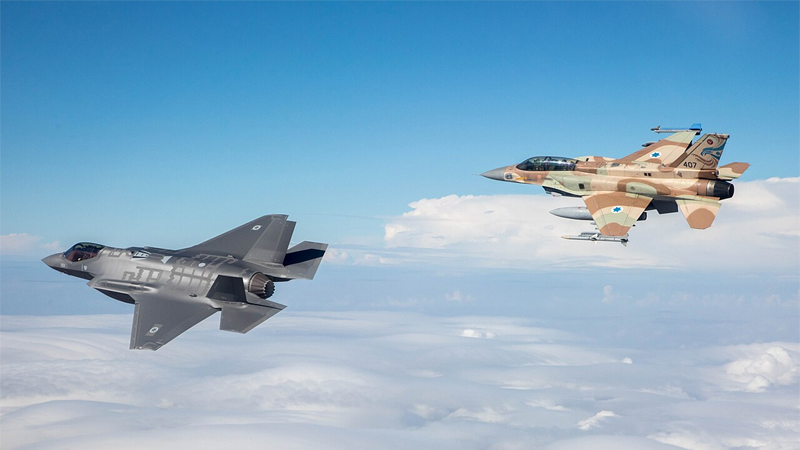
Beyond static defense, Israel’s offensive and precision-strike capabilities receive substantial funding under the new budget. Systems like the Spice family of guided bomb kits transform unguided munitions into autonomous, jam-resistant “smart” weapons with ranges exceeding 100 kilometers and pinpoint accuracy. The Rampage supersonic air-to-surface missile provides standoff attack options against hardened targets, while naval defenses incorporate the Barak MX and C-Dome variants for ship protection against aerial and missile threats. The Trophy active protection system, mounted on main battle tanks like the Merkava, uses radar-guided explosively formed penetrators to defeat incoming anti-tank rockets and missiles in close proximity, dramatically increasing armored vehicle survivability in urban or contested environments. These technologies, many battle-hardened through recent operations, underscore Israel’s emphasis on network-centric warfare where sensors, AI-driven decision-making, and rapid response converge.
The 2026 budget also prioritizes broader modernization, including enhanced intelligence, surveillance, and reconnaissance assets, cyber defense capabilities, and unmanned systems. Investments will support the expansion of drone fleets for both reconnaissance and strike missions, as well as AI algorithms that improve threat discrimination and reduce operator workload. Collaboration with the United States remains pivotal, with joint programs accelerating production of Iron Dome, David’s Sling, and Iron Beam components to replenish stocks depleted by high-tempo operations. Long-term commitments exceeding 80 billion shekels ensure sustained research into hypersonic countermeasures, quantum technologies, and space-based assets that could further extend defensive reach.
Critics within Israel point to the economic trade-offs, noting that other ministries face cuts while funds flow toward security and coalition-linked projects, including support for certain communities and settlement initiatives. Yet proponents argue that in a region where existential threats persist, underinvestment could prove far costlier. The budget’s passage amid ongoing alerts and operations highlights the normalization of wartime footing, with defense spending now consuming a significant portion of GDP – around 8–9 percent in recent years.
Looking ahead, this record allocation is expected to yield not only stronger immediate defenses but also export opportunities, as nations worldwide seek proven systems to counter similar threats from drones and missiles. Israel’s defense industry, already a global leader, stands to benefit from increased innovation driven by real-world lessons. Rafael and Israel Aerospace Industries report robust growth, fueled by demand for layered protection that combines affordability, reliability, and adaptability.
In essence, Israel’s 2026 defense budget reflects a strategic calculus: technological superiority remains the ultimate guarantor of security in an unpredictable landscape. By doubling down on systems like Iron Dome for everyday threats, David’s Sling for medium-range challenges, Arrow 3 for strategic ballistic dangers, and the revolutionary Iron Beam for cost-effective volume engagements, the country is forging a resilient shield capable of withstanding multi-domain assaults. As conflicts evolve, this investment signals Israel’s determination to maintain deterrence and operational freedom, ensuring that qualitative edges translate into enduring strategic advantages. The coming years will test whether this ambitious financial commitment can deliver the decisive edge needed to navigate an increasingly volatile Middle East.