
North Korea Just Built Its Own Version of HIMARS
North Korea appears to be moving a new generation of tactical strike weapons closer to frontline deployment — and one of them looks strikingly similar to one of America’s most battle-proven systems.
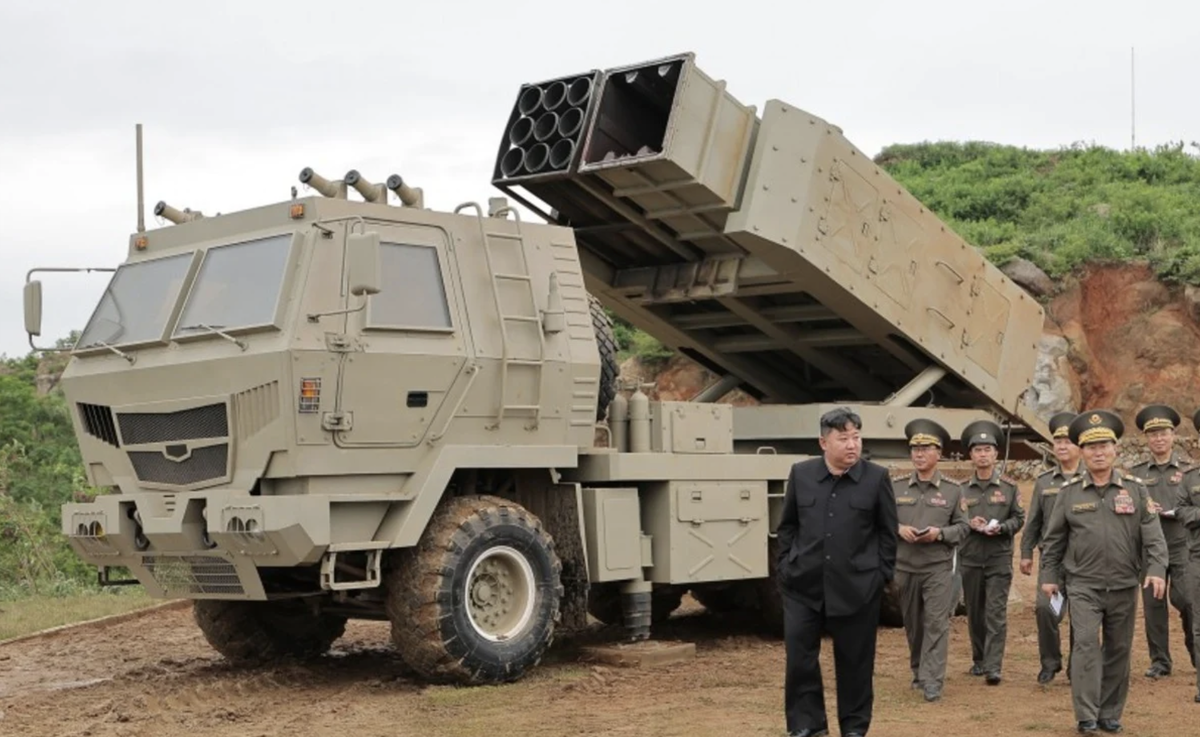
On May 26, under the personal supervision of Kim Jong Un, North Korea tested three different weapons systems: a newly developed lightweight multipurpose missile launcher, an upgraded 240mm guided rocket with extended range, and a tactical cruise missile that Pyongyang claims can hit any target within 100 kilometers using artificial intelligence-based guidance. Kim described the test results as “a clear signal” of military progress and ordered faster deployment to frontline units facing South Korea.

The most attention is likely to fall on the new launcher system, which analysts have compared to the American M142 HIMARS. Photographs released by North Korean state media show a highly mobile wheeled launcher carrying a limited number of launch tubes, a layout that closely resembles the U.S. High Mobility Artillery Rocket System. That resemblance matters. HIMARS has become one of the most recognized precision-strike weapons in modern warfare, valued for its mobility, speed, and ability to deliver accurate fire from a truck-mounted platform.
North Korea first showed a HIMARS-like launcher at a military parade in 2023, but the May 26 test suggests the system has now advanced beyond display status and into operational evaluation. If Pyongyang succeeds in fielding a credible local equivalent, it would mark a meaningful shift in the Korean People’s Army’s capabilities by giving it a faster, more flexible precision fires option than it has traditionally possessed.
North Korea’s state media outlet, KCNA, said the tests were conducted by the Missile Administration and the Academy of Defense Sciences as part of the country’s five-year national defense development plan. The report was published on May 27, a day after South Korea’s military had already detected the launches. Seoul observed multiple projectiles, including close-range ballistic missiles, flying about 80 kilometers toward the Yellow Sea from the Jongju area in North Pyongan Province. South Korean officials did not immediately confirm North Korea’s description of the systems involved.
The second system tested — the 240mm guided rocket — may be less flashy than the HIMARS-style launcher, but it could be just as important. North Korea has long fielded large numbers of 240mm multiple rocket launchers, weapons designed to saturate targets across the Seoul metropolitan region. In their older form, these rockets were unguided, meaning they were dangerous in volume but limited in precision. The new version appears to change that equation.
According to KCNA, the upgraded 240mm rocket now uses an ultra-precision autonomous navigation system and has an expanded firing range. That transforms the weapon from a broad area-suppression tool into something more capable of striking specific targets. In practical terms, this means North Korea may be trying to make one of its most numerous artillery systems smarter, more accurate, and more militarily useful in the opening stages of a conflict.
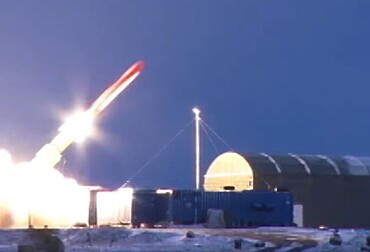
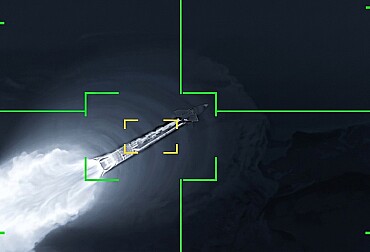
The tactical cruise missile tested the same day drew particularly strong praise from Kim. North Korea says the missile combines terrain-contour matching navigation with AI-driven terminal guidance, allowing it to adjust its final approach for better accuracy. KCNA also said the missile uses a combined glide-and-propulsion flight profile, which could make interception more difficult by varying how it moves through the air.
Pyongyang claims the missile can strike any target within 100 kilometers with high precision. From positions near the border, that range would put a wide swath of South Korean military facilities, command nodes, airfields, and populated areas at risk. Kim reportedly ordered the missile’s deployment with long-range artillery brigades stationed near the southern frontier, underlining how central conventional strike power remains to North Korea’s military planning.
Taken together, the three systems point to a broader pattern. North Korea is not just building more missiles — it is trying to build a layered tactical strike architecture. The HIMARS-like launcher offers mobility and responsiveness. The upgraded 240mm guided rockets improve the lethality of existing artillery forces. The tactical cruise missile adds another precision option for lower-altitude, harder-to-intercept strikes at shorter operational ranges. Each system addresses a different part of the same battlefield problem: how to rapidly and accurately hit South Korean targets from mobile platforms under wartime conditions.
The pace of this development is notable. North Korea’s weapons testing in 2026 has been intense. In January, Kim oversaw a test of an upgraded 600mm multiple rocket launcher that analysts said appeared designed to show resistance to electronic warfare and jamming. In March, he supervised a live-fire drill involving 12 of those 600mm launchers. The May 26 event, which combined three separate systems in one test, suggests that Pyongyang is pushing several weapons programs through final evaluation at the same time.
KCNA also said that all of the launch vehicles involved in the latest test had been upgraded with automated fire control systems tailored for “modern warfare.” That detail may be especially important. It suggests North Korea is focusing not only on the missiles and rockets themselves, but also on the command, targeting, and launch processes needed to use them more effectively in real combat.
The bigger picture is clear: North Korea is accelerating the modernization of its conventional strike forces while much of the outside world remains focused primarily on its nuclear arsenal. If even part of these systems perform as advertised, Pyongyang could soon field a more mobile, more precise, and more responsive battlefield strike capability aimed directly at South Korea.
And if the HIMARS-style launcher truly enters service, it would symbolize more than imitation. It would show that North Korea is studying the most effective weapons of modern war — and trying to build its own version for the next crisis on the peninsula.