Poland Rises to No. 2 Globally with $4.7B Acquisition of 96 AH-64E Apache Helicopters
On November 26, 2025, Poland signed a $4.7 billion (€4.34 billion) contract with Boeing for 96 AH-64E Apache Guardian attack helicopters — the largest single export order ever placed for the iconic American rotorcraft and the biggest Apache deal outside the United States.
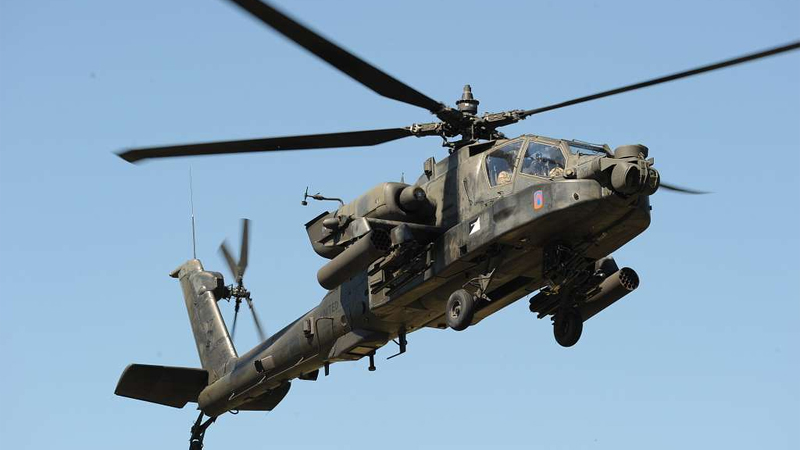
Executed through the U.S. Foreign Military Sales (FMS) program, the agreement instantly catapults Poland into second place globally (behind only the U.S. Army) in terms of Apache fleet size. The package is far more than just airframes: it includes a full logistics tail, weapons (Hellfire and Stinger missiles, 70 mm APKWS and Hydra rockets), spare engines, simulators, eight years of contractor support, and — crucially for Warsaw — the creation of a sovereign maintenance, repair, overhaul, and upgrade (MRO&U) center as well as a composite rotor-blade production and repair workshop on Polish soil.
First deliveries are scheduled to begin in 2028, with the entire fleet expected to reach full operational capability by the early 2030s. The tight timeline has already forced Boeing to expand production capacity at its Mesa, Arizona, facility, which is simultaneously fulfilling large remanufacturing orders for the U.S. Army and new-build aircraft for Saudi Arabia, Australia, and now Poland.
The AH-64E Version 6.5 (Guardian) that Poland will receive is the most advanced Apache ever built. Key upgrades over earlier models include:
- Improved GE T701D engines with 13 % more power
- Upgraded transmission capable of carrying heavier payloads in hot-and-high conditions
- Open-architecture Mission System Computer enabling rapid software upgrades
- Manned-Unmanned Teaming (MUM-T2) capability to control accompanying UAVs (Poland is separately negotiating for MQ-1C Gray Eagle or future Loyal Wingman-type drones)
- Maritime mode for the Longbow radar, giving the helicopter a limited anti-ship capability
- Enhanced Link-16 and SATCOM integration for joint all-domain operations
This acquisition forms the centerpiece of Poland’s “Heavy Attack Helicopter Brigade” concept and directly replaces the ageing fleet of 28 Soviet-era Mi-24 Hinds, which are reaching the end of their structural life. Once the Apaches are fully fielded, Poland will possess the most powerful attack-helicopter force in Europe — surpassing even the combined fleets of the UK (50 Apache AH1), Netherlands (28 AH-64D/E), and Greece (20+12 AH-64A/D).
The strategic context is unmistakable. Poland has set itself the goal of spending at least 4 % of GDP on defense from 2025 onward (double NATO’s 2 % guideline) and has already signed massive contracts in 2022–2025 for 1,000 K2 Black Panther tanks and 672 K9 Thunder howitzers from South Korea, 366 M1A2 SEPv3 Abrams tanks from the U.S., 48 FA-50 light fighters, and 218 Chunmoo multiple rocket launchers. The Apache purchase completes the transformation of Poland’s land forces into what analysts now describe as “the most modern and heaviest-armed army on NATO’s eastern flank.”
Geopolitically, the timing matters. The contract was signed exactly one week after the largest-ever Russian-Belarusian Zapad-series exercise near the Suwałki Gap and amid continuing hybrid pressure on Poland’s border with Belarus. Senior Polish officials, including Defense Minister Władysław Kosiniak-Kamysz, have repeatedly stated that the country must be ready for high-intensity conventional war by 2030. The Apaches will be forward-deployed primarily in the 18th Mechanized Division (eastern Poland) and the newly reactivated 1st Warsaw Armored Brigade, giving Warsaw the ability to deliver rapid, precise deep strikes against armored formations up to 150–200 km inside hostile territory.
For Boeing, the Polish deal is a lifeline for the Apache production line, which was facing a potential slowdown after U.S. Army orders began shifting toward the Future Attack Reconnaissance Aircraft (FARA) program. The Polish and ongoing Australian orders now guarantee production through at least 2033.
Finally, the contract contains significant offset and industrial-return clauses valued at more than 100 % of the purchase price. Polish industry — led by the state-owned PGZ group and private company WB Group — will produce cabling harnesses, composite components, and selected avionics sub-assemblies, while the Military Aviation Works No. 1 in Łódź will become the certified European MRO hub for Central and Eastern European Apache operators.
When the last of the 96 Apaches touches down in Poland, Warsaw will not only possess overwhelming conventional overmatch against any regional adversary; it will also have cemented its position as the indispensable heavyweight of NATO’s eastern flank and a pivotal player in European deterrence for decades to come.