
Poland’s Rearmament Is Reshaping the Map of Europe’s Defense Industry
When Poland’s rearmament is discussed today, attention naturally focuses on record purchases of tanks, howitzers, rocket launchers and other weapons systems. But behind these headline acquisitions, an arguably even more important transformation is taking place. Poland does not simply want to modernise its armed forces quickly. It is systematically building its own industrial capabilities and seeking to ensure that an increasing share of the value is created domestically.
This year, Poland will spend approximately 4.8% of GDP on defence, the highest share of any NATO country. In addition to its own budget, it has gained access to up to EUR 43.7 billion under the EU’s SAFE programme to finance defence projects.
The sheer amount of money involved, however, is not the most important factor. Poland today combines several advantages that are far from commonplace in Europe: the political will to invest in defence, a large domestic market, growing manufacturing capacity and, above all, long-term demand that allows industry to plan investments years ahead.

The war in Ukraine has also reminded us of something Europe had partly forgotten after decades of peace. In a prolonged conflict, it is not only the technological sophistication of individual weapons systems that matters. Equally important is the ability to manufacture ammunition at scale, repair equipment, replenish stocks and rapidly expand production capacity. And this is precisely where Poland’s transformation becomes important not only for Poland itself.
A new industrial ecosystem is emerging in Central Europe. Czech companies provide technologies and platforms for military vehicles. Slovak companies contribute expertise in artillery ammunition production. Polish companies, meanwhile, are building manufacturing capacities that are among the fastest-growing in Europe.
This is no longer simply about traditional exports, where one country manufactures and another buys. Increasingly, it is about joint production, technology transfer, collaborative development and long-term industrial partnerships.
In my view, Europe has for too long confused the protection of national industries with strategic autonomy. Genuine European self-sufficiency will not be achieved by every country trying to manufacture everything on its own. It will emerge when individual countries combine the areas in which they are genuinely strong and create shared manufacturing and supply chains capable of functioning even in times of crisis.

CSG’s strategy in Poland
This idea has been at the heart of CSG’s strategy in Poland from the outset. Our goal has never been simply to supply finished products to the Polish market. We want to be part of the local industrial base – transferring technology, involving Polish companies in joint projects and creating capabilities that will remain viable over the long term.
An important step in this direction this year was the acquisition of DOMAR MS, a manufacturer of military cable harnesses and electrical connectors. These are not components that typically make newspaper headlines. Yet virtually no modern land system can be built without them. DOMAR supplies cable harnesses for platforms including Krab self-propelled howitzers and other key armoured and artillery systems manufactured in Poland.
By bringing DOMAR into CSG, we have taken another step forward: from being a supplier and partner to Polish companies, we are gradually becoming a direct part of Poland’s defence industry.
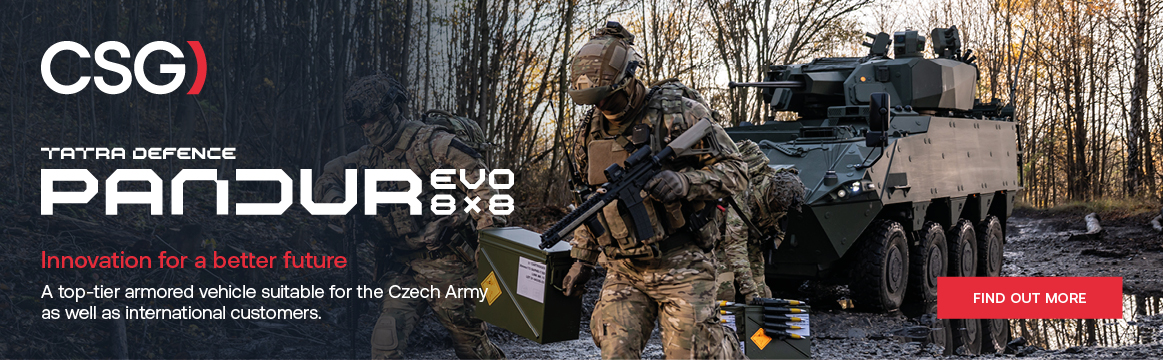
The regional dimension of this cooperation is equally important. Thanks to the expertise of MSM Group companies, technologies for the production of 155 mm artillery ammunition have been transferred to Poland. CSG companies in the Czech Republic, meanwhile, provide chassis platforms and technologies for a new generation of tactical vehicles.

Each country contributes areas in which it has a strong industrial tradition, technological expertise and manufacturing capabilities. By connecting these strengths, Central Europe can build a defence industry that is not only larger, but above all more resilient, faster and more competitive.
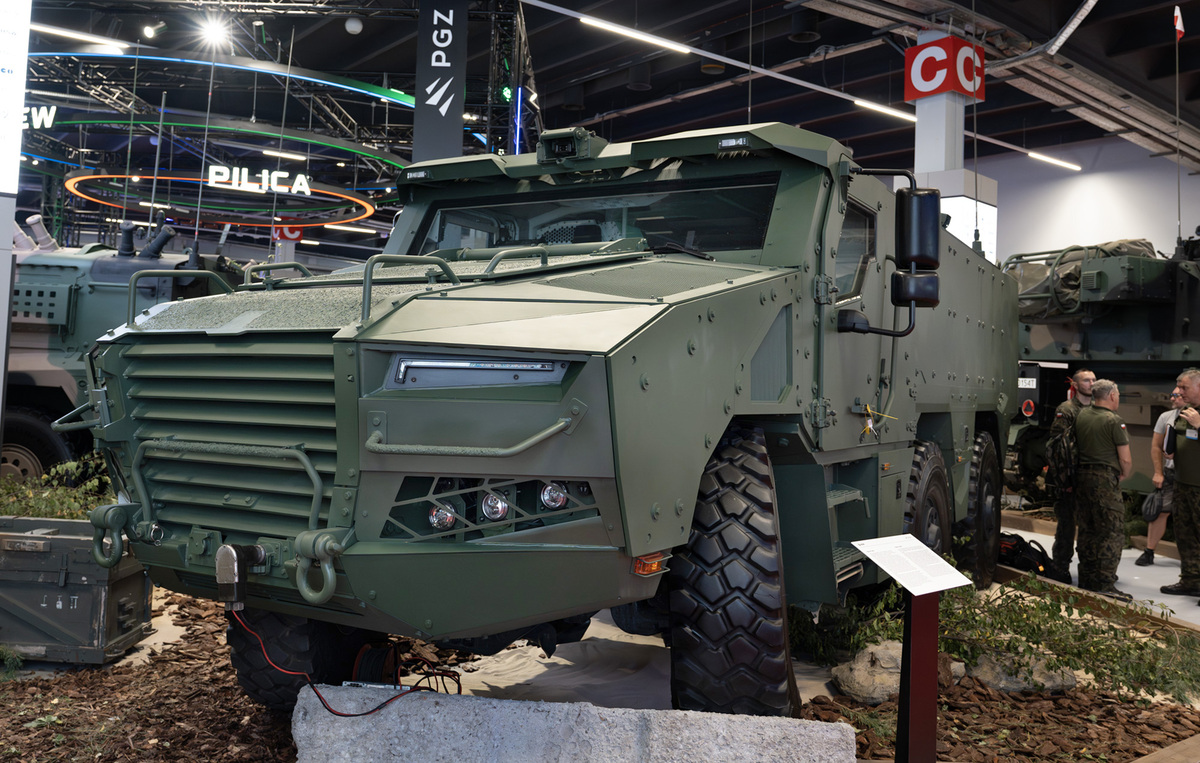
The results of this long-term approach are already tangible. We have signed a contract worth more than EUR 100 million with Zakłady Metalowe Dezamet for the supply of components used in the production of 155 mm ammunition. With Huta Stalowa Wola, we have signed contracts worth more than EUR 150 million for the delivery of several hundred chassis manufactured by CSG Group companies for Waran 4x4 and Heron 6x6 vehicles, including assembly kits.
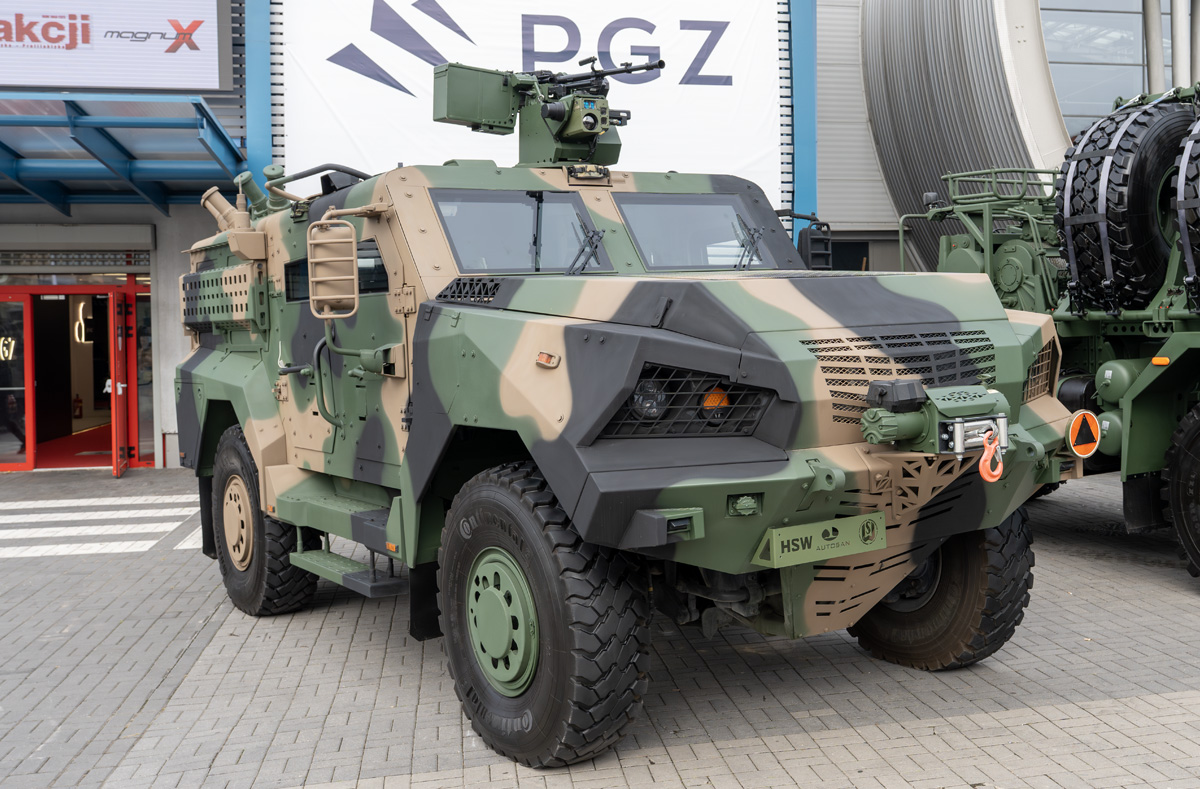
I consider these contracts to be among the most significant successes of the Czech defence industry in the Polish market in recent years – but not primarily because of their financial value.
Their real significance lies elsewhere. They demonstrate that Czech, Slovak and Polish companies are no longer connected merely by supplier-customer relationships. Together, they are creating manufacturing capabilities, sharing technologies and building supply chains that strengthen the defence capabilities of the entire region.
European programmes such as SAFE can significantly accelerate this trend. Their true contribution should not be measured solely by the number of new systems purchased. Far more important will be whether they help create manufacturing capacity, technological know-how and cross-border industrial links that will remain in Europe even after the current investment cycle has ended.
For the Czech and Slovak defence industries, Poland is therefore not merely a large export market. It can become a gateway to much deeper integration of Europe’s defence industry.
Success should therefore not be measured only by the value of contracts or the number of vehicles and rounds of ammunition delivered. We should also measure it by how much joint manufacturing capacity we can build, how many technologies we can develop together and how resilient the supply chains we create in Europe will be.
Poland has an opportunity to become one of the principal industrial centres of European defence. For Czech and Slovak companies, this is an opportunity that should not be viewed simply in terms of exports, but as a chance to become part of an emerging European defence ecosystem.
The European defence industry of the next decade will therefore, in my view, not become less national. But it will become far more interconnected.
The future of Europe’s defence industry will not be built within national borders, but across them.