Behind KNDS’s IPO Delay: The Warning Signs Investors Couldn’t Ignore
KNDS, the Franco-German defense manufacturer behind the Leopard 2 main battle tank, has postponed its planned initial public offering, pulling back from what had been expected to be one of Europe’s most closely watched defense listings this year. The company cited concern over market volatility, signaling that even in a period of heightened security spending, investor confidence in the sector is far from guaranteed.

In a statement released Wednesday, KNDS said its shareholders had decided to delay the stock market debut until conditions improve. The company added that it had already completed nearly all of the necessary preparation for the listing, which was expected to take place in Frankfurt and Paris.
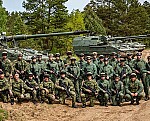
The message from the company was clear: the IPO is not abandoned, but paused. KNDS said it and its shareholders would continue watching capital market conditions closely and would be ready to restart the process once the environment becomes more favorable.
The postponement is significant because KNDS had been widely seen as a strong candidate for a major multibillion-euro market debut. Earlier expectations pointed to a possible June launch. The listing was also backed by a broader political effort from France and Germany, which recently finalized an agreement positioning both countries as equal shareholders in the company. At the time, Berlin and Paris described the move as an important step toward strengthening shared sovereignty in land defense.
That political symbolism made the IPO about more than fundraising. A successful listing would have reinforced KNDS’s status as a flagship European defense group at a time when governments across the continent are rethinking military readiness, industrial capacity, and strategic autonomy. The delay, therefore, sends a different message: even defense has not escaped the turbulence shaking European markets.
KNDS did not spell out exactly what triggered shareholder concern, but the wider backdrop offers several clues. European defense stocks have faced a choppier stretch in recent weeks, despite the sector’s strong long-term narrative. A series of major procurement decisions and fresh questions around future spending have unsettled investors.
One example came in June, when Germany decided to cancel the F126 frigate program. The impact on sentiment was immediate. Shares in Rheinmetall fell sharply, at one point dropping as much as 20 percent to a 15-month low and wiping €11 billion from the company’s market value. That kind of move does not just hit one company — it sends a warning signal across the sector.
Investor unease has not been limited to Germany. Capital Alpha Partners described the previous week as a rough one for European defense stocks overall. Among the pressures cited was a decision in the United States, where lawmakers cut the Army’s XM-30 armored vehicle program in draft defense budget plans. That mattered for Rheinmetall because its U.S. division is pursuing the program, showing how transatlantic policy shifts can quickly feed back into European valuations.
There are also signs that some governments may be putting limits on defense spending growth. Italy, for example, has been linked to tighter spending plans, which may help explain weakness in domestic defense names such as Leonardo and Fincantieri. For investors, these developments complicate what had previously looked like a straightforward growth story for the European defense industry.
Against that backdrop, KNDS’s decision to wait looks less like caution and more like timing discipline. Launching an IPO into an unstable market can depress valuation, weaken demand, and create an avoidable stumble in a company’s public-market debut. By delaying, KNDS preserves the option to return when sentiment is stronger and pricing conditions are more supportive.
The contrast with Czechoslovak Group is notable. Its listing on Euronext Amsterdam helped the arms and ammunition producer achieve a market value of more than €33 billion. That success showed investor appetite for defense assets can be strong when the market environment aligns. KNDS had been aiming to ride similar momentum, but current conditions appear too uncertain to justify moving ahead.
For now, the delay underlines a simple reality: defense may be politically strategic, but it is still financially cyclical. Governments may be talking more about rearmament and industrial sovereignty, yet stock market investors remain highly sensitive to procurement shocks, spending doubts, and sudden changes in sentiment.
KNDS still appears well positioned to go public when the window reopens. The groundwork is largely complete, the political backing is in place, and the company remains one of Europe’s most important land systems manufacturers. But until market confidence steadies, even a company with KNDS’s profile is choosing patience over momentum.