Rheinmetall’s Humanoid Combat Robots: Ambitious Vision or Battlefield Reality
German defense giant Rheinmetall is moving into one of the most futuristic areas of military technology: humanoid combat robots. According to recent reports, the company plans to present its first prototypes within roughly 15 to 18 months, placing a likely unveiling around 2028. The idea is bold, but the bigger question is whether humanoid robots can realistically become useful military assets anytime soon.
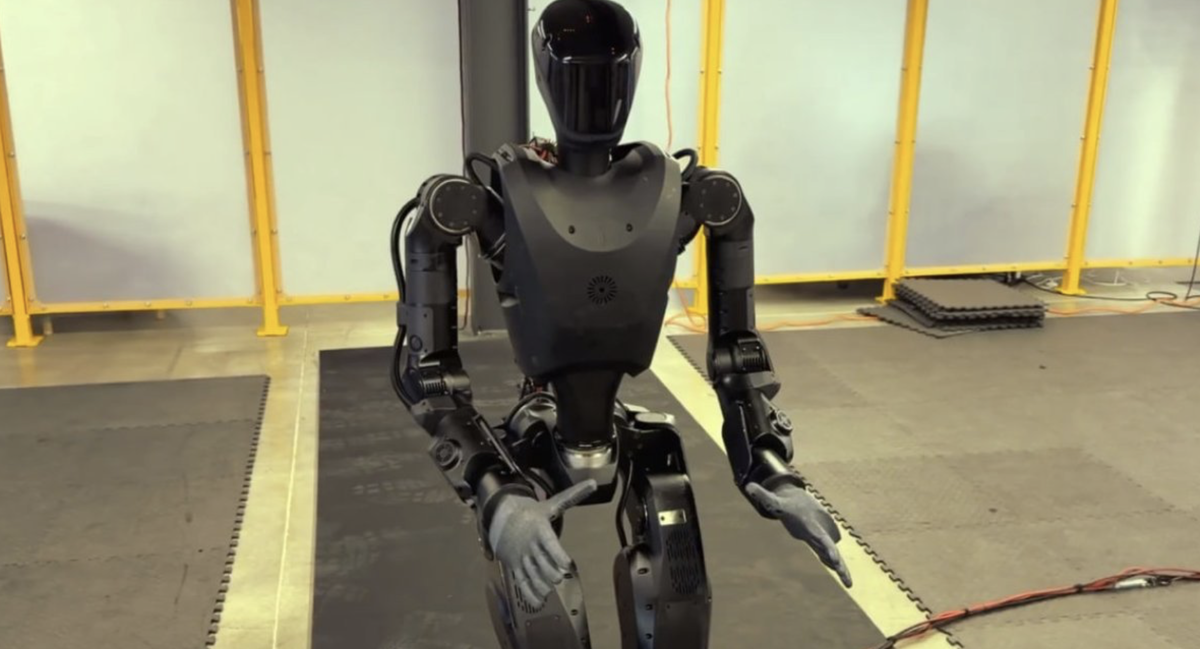
For now, the answer is cautious: the technology is advancing quickly, but true battlefield deployment is likely still years away.

Rheinmetall’s interest in humanoid robots reflects a broader shift in defense technology. Modern armies are already relying heavily on unmanned systems, from aerial drones to ground-based robotic vehicles. The next step, at least in theory, is to develop machines that can operate in environments designed for humans: buildings, trenches, vehicles, warehouses, roads, factories, and urban combat zones. A humanoid robot, unlike a wheeled or tracked platform, could potentially climb stairs, open doors, carry equipment, move through narrow passages, and use tools originally made for human soldiers.
That is the appeal. But turning that concept into a reliable military system is far more difficult than building a civilian robot for controlled environments.
Rheinmetall CEO Armin Papperger has reportedly noted that many companies are already capable of producing humanoid robots for civilian roles, including support work in nursing homes. A battlefield, however, is not a nursing home. Combat zones are chaotic, damaged, dirty, noisy, and unpredictable. A robot operating there would need to deal with rubble, mud, smoke, electronic interference, explosions, extreme temperatures, and rapidly changing tactical situations.
This is where artificial intelligence becomes central. A military humanoid robot would not only need to walk and carry objects. It would need to understand commands, coordinate with human units, identify obstacles, react to threats, and possibly make decisions under pressure. Even if humans remain in control of lethal actions, the robot would still require a high level of autonomy to function usefully in real time.

That is one reason why Rheinmetall’s prototypes, even if shown around 2028, are unlikely to enter operational military service immediately. German defense observers suggest that real deployment may not happen before the 2030s. This timeline sounds realistic. Military systems usually require years of testing, redesign, certification, integration, and field trials before they become dependable enough for combat use.
The global race in humanoid robotics is already underway. China is one of the strongest players in the sector. UBTECH Robotics, for example, has launched mass production of humanoid robots and reportedly has the capacity to manufacture more than 10,000 units per year. Its Walker S2 robot has already been purchased for border-related duties along the Chinese-Vietnamese border, including patrol and cargo inspection tasks.
South Korea is also investing heavily in the field. The country has opened a specialized data collection center where humanoid robots are trained for everyday and industrial tasks. The aim is to improve the AI models that allow robots to perform useful actions in real-world environments. South Korean officials have also made clear that humanoid robotics is not only about domestic or commercial uses. The same technology can support industry, defense, military applications, and even space programs.
This points to the most likely path for humanoid combat robots: dual-use development. Instead of building a robot purely for war from the beginning, companies may first improve humanoid systems for civilian and industrial tasks. These machines can then be adapted for military roles once their mobility, reliability, AI, and power systems become mature enough.
In practical terms, the first military humanoid robots probably will not look like science-fiction soldiers charging across open battlefields. Their early roles are more likely to be support-oriented. They could carry ammunition, transport supplies, inspect dangerous areas, assist with mine clearance, help evacuate casualties, or perform reconnaissance in places too risky for humans.
Such missions make more sense than direct combat. They reduce risk for soldiers while avoiding some of the most complex legal, ethical, and technical issues associated with autonomous armed robots. A humanoid robot carrying supplies through a ruined building is far easier to justify and control than one making independent combat decisions.
Still, combat applications cannot be ruled out. In close-quarters environments, humanoid robots could have unique advantages. A machine able to enter a building, move through rooms, climb stairs, and transmit live data could be valuable for assault units. In extreme cases, such robots could even be used as expendable platforms, including for self-destructive missions against fortified enemy positions. That possibility raises serious ethical and operational questions, but it also shows why militaries are watching the technology closely.
The development path may resemble the evolution of unmanned ground vehicles. Early UGVs were often experimental, limited, and unreliable. Over time, they gained better sensors, communications, autonomy, and payload options. Combat modules were added gradually, usually after years of testing and field experience. Humanoid robots will likely follow a similar pattern, but with even greater complexity because bipedal movement and human-like manipulation are difficult to master in harsh conditions.
Ukraine is already becoming an important testing ground for robotic military systems. The Phantom Mk1 humanoid robot developed by Foundation is reportedly undergoing testing in Ukraine, showing that this technology is no longer limited to laboratory demonstrations or promotional videos. War accelerates innovation because it exposes machines to real operational demands. Systems that fail are quickly discarded; systems that prove useful are rapidly improved.
For Rheinmetall, the move into humanoid combat robots is therefore both strategic and experimental. The company is not simply chasing a futuristic trend. It is positioning itself for a possible new category of military systems that may become important in the next decade. If humanoid robots become practical, defense companies that enter the field early will have a major advantage.
But expectations should remain realistic. The biggest challenges are not just mechanical. Power supply, battlefield communications, AI reliability, resistance to electronic warfare, maintenance, cost, and command-and-control integration may all determine whether humanoid robots become useful weapons or expensive prototypes.
The most credible near-term future is not an army of robotic infantry. It is a gradual introduction of humanoid machines into dangerous support roles, followed by limited tactical applications once the technology proves itself. Rheinmetall’s first prototypes may mark an important step, but the real test will come later: whether these robots can survive, adapt, and deliver value in the brutal conditions of modern war.
Humanoid combat robots are coming closer, but they are not yet ready to replace soldiers. For now, their most realistic role is to reduce human exposure to danger, not to transform warfare overnight.