
Russia Declared Them Unfit. Then It Sent Them Back to the Front Anyway
Russia’s war effort is increasingly exposing a brutal reality behind the front lines: wounded soldiers are being pushed back into combat before they have healed, even after serious surgeries, disability diagnoses, or formal medical rulings declaring them temporarily unfit for service.
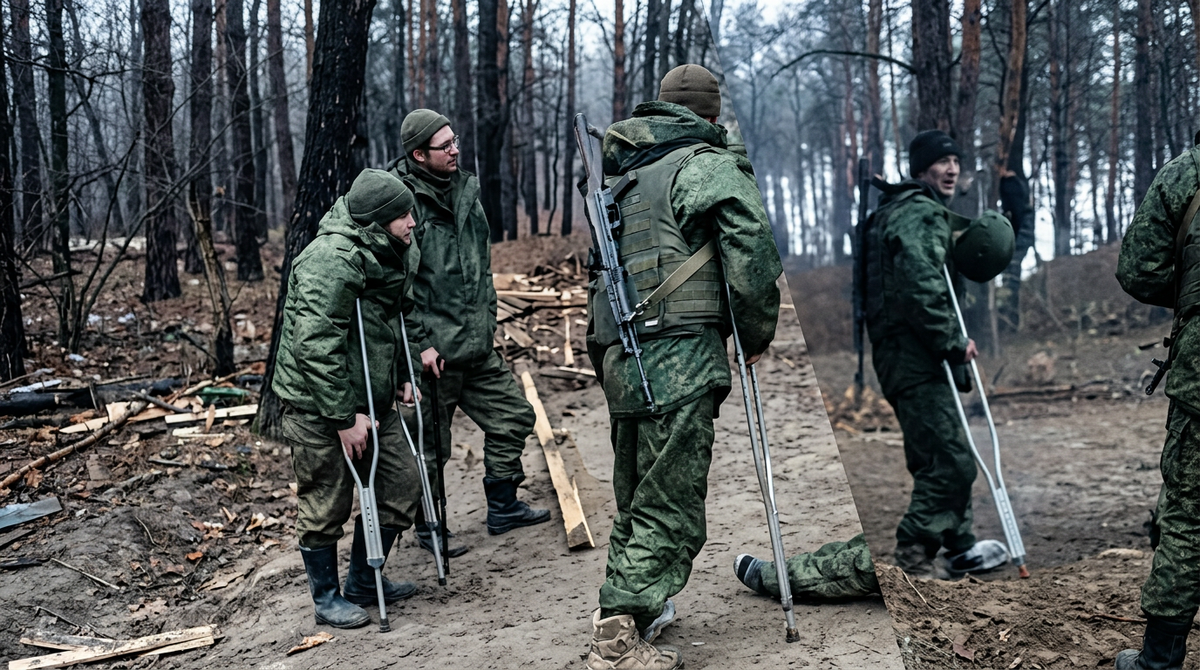
A new investigation has documented at least 319 cases in which Russian troops with significant injuries were returned to the battlefield before completing treatment. The cases, tracked since 2022 by researchers from the Veter project, point to a pattern that appears far broader than the publicly known record. In most of the documented incidents, the return was not a personal decision but a forced one. More than 80 percent of the cases involved soldiers being pressured, ordered, or directly transferred back to combat zones despite ongoing medical needs.

The numbers alone are grim, but the individual stories make the pattern impossible to dismiss as bureaucratic dysfunction. They suggest a military system so strained by manpower demands that it is willing to recycle damaged soldiers back into war rather than allow them to recover or leave service.
One of the clearest examples is Ivan D. from Yekaterinburg. He signed a contract with the Russian Ministry of Defense in 2023. A year later, he suffered a severe shrapnel wound to the leg. After surgery, he could move only with crutches. Instead of continuing treatment, however, he was sent back to his unit. In March 2025, he was wounded again — this time far more seriously. Shrapnel damaged his kidney and intestines, forcing doctors to remove part of his bowel. A military medical commission subsequently declared him temporarily unfit for service.
That ruling did not protect him. Ivan was later labeled a deserter, and criminal proceedings were opened against him. By December 2025, he had been transferred to a reserve battalion in Yenakiieve. Even though he had been referred once more to a military medical commission, he was sent back into combat in the Pokrovsk area. Soon afterward, all contact stopped. He has been listed as missing in action since December 2025.
Another case followed a nearly identical pattern. Danil K., 32, was seriously wounded near Pokrovsk and diagnosed with fractures as well as injuries to his spine and pelvis. Doctors judged him temporarily unfit for service. Yet in December 2025, while he was waiting at a temporary deployment site for a medical examination, the military removed him from the location. Days later, his family was told he was “back in the ranks.” On January 7, he was added to the missing in action list.
Taken together, such cases reveal more than isolated abuse. They suggest a system in which medical conclusions can be ignored, administrative coercion overrides physical condition, and wounded men remain part of the military manpower pool regardless of whether they are medically capable of fighting.
Some of the soldiers in the documented cases reportedly agreed to return voluntarily. But even that detail does not soften the broader picture. In a military environment shaped by pressure, fear of punishment, loyalty to comrades, financial dependence, and the stigma of refusing orders, “voluntary” decisions can exist in a gray zone. The larger pattern remains unmistakable: badly wounded soldiers are repeatedly finding themselves pushed back toward the front before recovery, not protected from it.
The report also warns that the known cases likely represent only a fraction of the true scale. Many such stories never become public, especially in a tightly controlled wartime environment where families may fear retaliation, soldiers may lose communication, and local commanders may face strong incentives to conceal manpower shortages or medical neglect.
Evidence from the battlefield has reinforced those concerns. Last year, Ukrainian drone footage captured Russian troops with visible mobility impairments, including soldiers moving on crutches, being sent into combat near the village of Novotroitske in Donetsk Oblast. Similar incidents were also observed near Pokrovsk. Those images gave visual form to what investigators and relatives had already been describing: not just a wounded army, but an army reusing the wounded as if recovery were a luxury it could no longer afford.
The implications are severe. Militarily, sending injured troops back to the line weakens effectiveness, damages morale, and increases the likelihood of further casualties, desertions, and disappearances. Politically, it undercuts official narratives of military professionalism and state support for servicemen. Morally, it reflects a system in which injured bodies are treated less as patients than as expendable resources to be cycled back into the war machine.
As casualties mount and manpower pressures persist, these stories may offer a stark window into how Russia is managing the human cost of its war: not by reducing the burden on wounded soldiers, but by folding them back into it.