
Russian Commander Killed by His Own Officer — Then the Suspect Turned Up Dead
The killing of a Russian battalion commander by one of his own senior officers has exposed another grim layer of violence inside Moscow’s invading forces — a system where corruption, brutality, and internal score-settling appear to be as lethal as the battlefield itself.
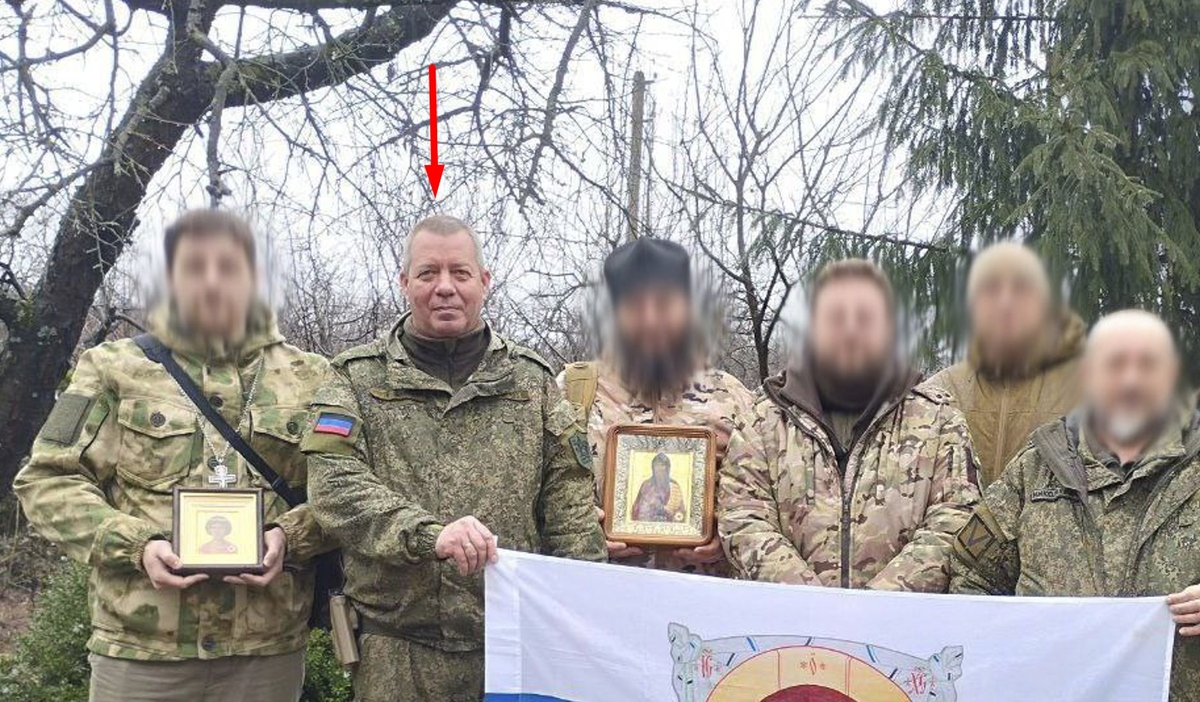
Yuriy Burakov, commander of the 2nd Battalion of the 95th Regiment of the Russian Federation’s 5th Brigade, was shot and killed in July 2025. Burakov, known by the call sign “Gray,” is set to be buried in occupied Volnovakha in the Donetsk region. His death was publicly addressed by Pyotr Lundstrem, a member of the Russian Federation’s Public Chamber, who described the killing as a betrayal carried out by Burakov’s “own people.”
The man accused of murdering Burakov is Dmitry Ivankevich, commander of the 95th Regiment, known by the call sign “Old.” The case quickly drew attention because it did not resemble a battlefield death or a random act of indiscipline. Instead, it pointed to something more dangerous inside the Russian military structure: internal elimination tied to what Burakov allegedly knew.
According to Lundstrem, Burakov had uncovered embezzlement and attempts to conceal heavy losses. If true, that would suggest his killing was not only personal, but tied to a broader effort to suppress damaging information from within the ranks. Lundstrem said the dead officer was a career serviceman, a former intelligence officer, and a volunteer for frontline service — a profile intended to underscore both his loyalty and the shock surrounding his death.
Ivankevich later confessed. But the story did not end there.
In December, Ivankevich himself was found dead with four gunshot wounds. Who killed him, and under what circumstances, remains unknown. That second killing deepened the sense that what happened was not an isolated dispute, but part of a murky cycle of internal violence, revenge, or silencing within the command structure.
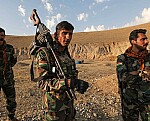
The case has gained even greater weight because it touches a unit already associated with severe abuse. ASTRA has published an investigation into the torture of Russian soldiers by commanders of the 5th and 110th Brigades. According to sources cited in the investigation, commanders created what was described as a “concentration camp” on the grounds of the abandoned Petrovska Mine in Donetsk. The site allegedly served as a place of torture and abuse against Russian servicemen by their own side.
The same location has also been linked to the death of American Russell Bentley, a long-time pro-Russian propagandist. Before his death, soldiers from the 5th Brigade reportedly tortured him there — a detail that further highlights the lawlessness and internal savagery associated with the unit.
The 5th Separate Guards Motorized Rifle Brigade has a long and controversial history. It began operating in 2014 as an illegal armed formation in occupied Ukrainian territory under the cover of the Oplot battalion. In 2022, it was formally integrated into the Russian Armed Forces as part of the 51st Guards Combined Arms Army. That transformation from proxy force to official military structure was supposed to signal institutional control. Instead, these accounts suggest that methods rooted in warlordism and impunity may have survived the rebranding.
What makes this story especially striking is not only the killing itself, but what it reveals about the environment inside parts of the Russian military machine. When commanders are accused of torture, officers are allegedly murdered for discovering corruption, and the suspected killer later turns up dead as well, the image is not one of a disciplined army — but of a force consumed by fear, brutality, and internal collapse.
Far from the Kremlin’s public image of order and strength, this case paints a different picture: one in which frontline units are shaped as much by intimidation and criminality as by command and strategy. Burakov’s death, and Ivankevich’s after it, may be remembered less as isolated murders than as signs of a military culture devouring itself from within.