
Russia’s Second Largest Oil Refinery Suddenly Goes Dark After Devastating Drone Strike
Russia’s second-largest oil refinery has suspended operations after a series of drone strikes caused major damage to critical processing infrastructure, dealing another blow to the country’s energy sector.
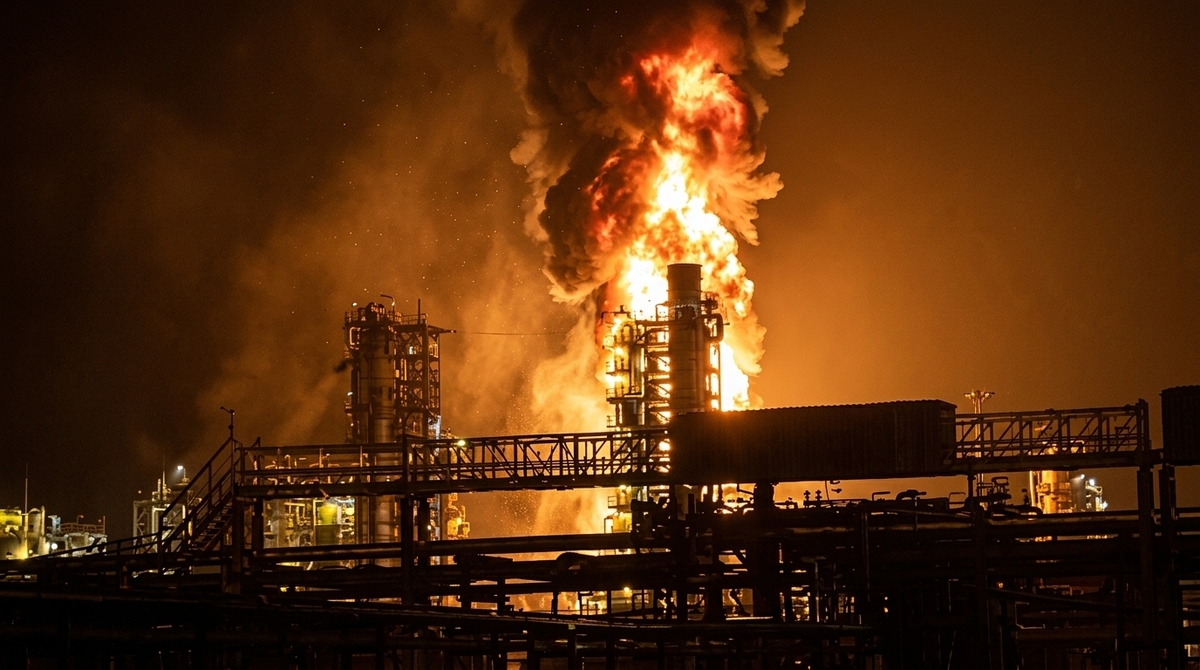
The refinery, located in Kirishi in Russia’s Leningrad region, plays a central role in the nation’s fuel production network. With an annual processing capacity of about 20.1 million tonnes of oil, the facility is one of the most important assets in Russia’s refining industry and a major component of Surgutneftegaz’s operations.

The shutdown follows repeated attacks that severely affected the plant’s ability to function. Three of its four main crude distillation units were reportedly put out of action. These units are essential to the refinery’s operations, and losing most of them effectively prevents the facility from running at normal capacity. Several supporting systems were also damaged, further complicating any effort to resume production quickly.
Positioned roughly 790–800 kilometers from the Ukrainian border, the Kirishi refinery has become a recurring target despite its distance from the front line. The site was previously hit in October 2025, when Special Operations Forces reportedly disabled key equipment. Additional strikes were later recorded on March 26 and May 5, 2026, marking at least the fifth known attack on the facility.
The full extent of the disruption remains difficult to measure, and the timeline for repairs is still unclear. Restoring a large refinery after damage to primary distillation units and auxiliary systems is typically a complex and time-consuming process, especially when multiple core components have been affected at once.
The Kirishi refinery produces a broad range of petroleum products, including gasoline, diesel fuel, fuel oil, aviation fuel, and other refined components. Its temporary halt is significant not only because of the scale of the plant, but also because of the strategic role it plays in supplying domestic and industrial fuel demand.
The repeated targeting of major refining infrastructure suggests a sustained effort to pressure Russia’s energy system beyond frontline military operations. If the outage continues for an extended period, it could create additional strain on fuel production and logistics, particularly given the refinery’s size and importance.
For Russia’s energy sector, the halt at Kirishi is more than an isolated industrial setback. It highlights the growing vulnerability of key economic infrastructure to long-range attacks and raises fresh questions about how quickly damaged refining capacity can be restored under continuing pressure.