The Baltics Exit the Ottawa Treaty – and Their Neighbors Follow
The coordinated withdrawal of Estonia, Latvia, and Lithuania from the Ottawa Convention banning anti-personnel mines and the announced intention of Finland and Poland to follow suit in 2026 represent a fundamental shift in Europe's approach to humanitarian disarmament. Russia's closest allies within NATO are thus responding to a changed security environment in which high-intensity warfare has once again become a realistic scenario. This development raises the broader question of whether existing security norms are adequate for a conflict in which one of the key players systematically violates the rules.
The Ottawa Convention, officially known as the Convention on the Prohibition of Anti-Personnel Mines, was adopted in 1997 and entered into force two years later. It was created at a time when Europe believed that large-scale ground conflicts were a thing of the past and that international law could gradually limit the most destructive forms of warfare. The ban on the production, use, stockpiling, and transfer of anti-personnel mines became one of the most visible achievements of humanitarian disarmament. By 2024, 166 states had acceded to the convention, and anti-personnel mines were seen as a weapon of the past in the European context.
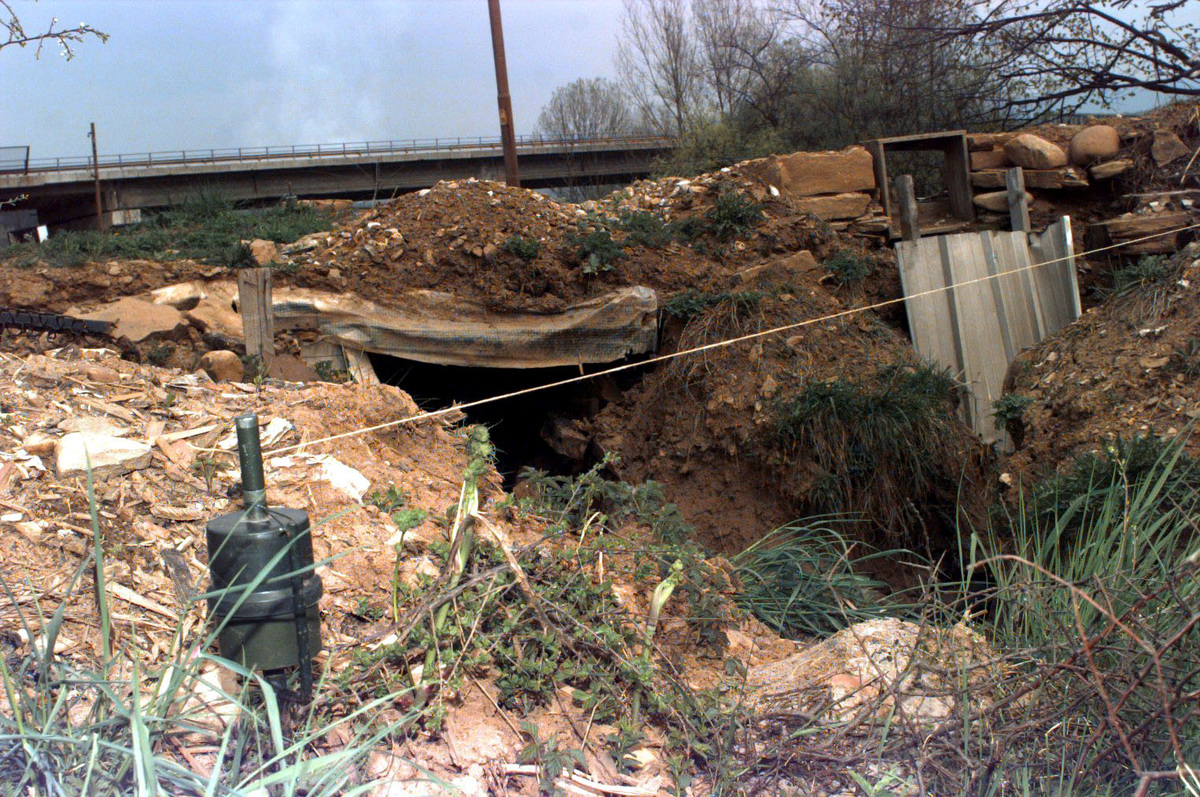
However, this consensus was disrupted by the return of high-intensity warfare to the European continent. Russia's full-scale invasion of Ukraine in February 2022 fundamentally changed the security reality. Independent organizations, including Human Rights Watch, have repeatedly documented the use of anti-personnel mines by Russian forces in the occupied territories of Ukraine. These facts have shown that a key player in the conflict is not only not a party to the Ottawa Convention, but also does not adhere to basic humanitarian principles. For the states on NATO's eastern flank, this has fundamentally changed the assessment of the risks associated with unilateral disarmament.

In December 2025, Estonia, Latvia, and Lithuania completed the formal process of withdrawing from the Ottawa Convention after depositing the relevant instruments with the UN depositary in the summer of that year. This step was the result of a coordinated political decision announced by the Baltic states in the spring of 2025. Finland and Poland subsequently declared that they would complete the same process in 2026. Overall, this is the largest simultaneous withdrawal of states from a humanitarian disarmament treaty in modern history.
The common denominator in the decisions of all five countries is the assertion that their security environment has fundamentally changed. In a situation where a potential adversary has numerical and material superiority and is not bound by the same restrictions, maintaining a unilateral ban on certain defensive weapons is perceived as a strategic disadvantage. These states emphasize that withdrawal from the convention should not lead to the unrestricted use of anti-personnel mines, but to the restoration of the possibility of their limited, exclusively defensive deployment.
Time plays a key role in their strategic thinking. For states with relatively small territories, limited human resources, and long land borders with Russia or Belarus, the ability to slow down the enemy's advance is a crucial element of defense. In this context, anti-personnel mines are seen as a tool that can increase the costs of potential aggression and create space for the rapid activation of NATO's collective defense. Experience from Ukraine shows that minefields and other defensive obstacles can significantly affect the pace and course of ground operations.
From a legal point of view, the states concerned acted in accordance with Article 20 of the Ottawa Convention, which allows for withdrawal after a six-month period following notification to the depositary. In their official statements, they point to a fundamental change in the security environment and the fact that the main source of the threat is not a party to the convention. At the same time, they declare their intention to minimize the risks to the civilian population and to subject any new production or use of mines to strict national control.
The mass withdrawal of five European states from the Ottawa Convention calls into question the idea that humanitarian disarmament is a one-way and irreversible process. It shows that the effectiveness of international norms is conditional on a stable security environment and at least a basic degree of reciprocity. If one of the actors in a conflict systematically violates the rules, the willingness of others to bear the costs of compliance gradually weakens.
At the same time, this confirms that security policy is not a static set of moral principles, but a dynamic process responding to changing threats. The debate on anti-personnel mines thus goes beyond the specific issue of a particular weapon and becomes a symbol of the broader dilemma facing Europe today: how to preserve humanitarian values in a situation where they are confronted by an actor who openly rejects them.
The withdrawal of Estonia, Latvia, and Lithuania, and the planned steps by Finland and Poland, signal that Europe has entered a new phase of security realism. This is not a rejection of humanitarian principles, but rather their confrontation with the reality of war taking place in the immediate vicinity of the European Union. It will be crucial for both NATO and the EU that this shift does not lead to a fragmentation of security policy, but rather to an open and coordinated debate on how to ensure collective defense in an environment where rules are no longer universally respected.