
The Caspian Sea Incident: An Iranian Ship Sinks on a Route Under Scrutiny. What Was It Really Carrying
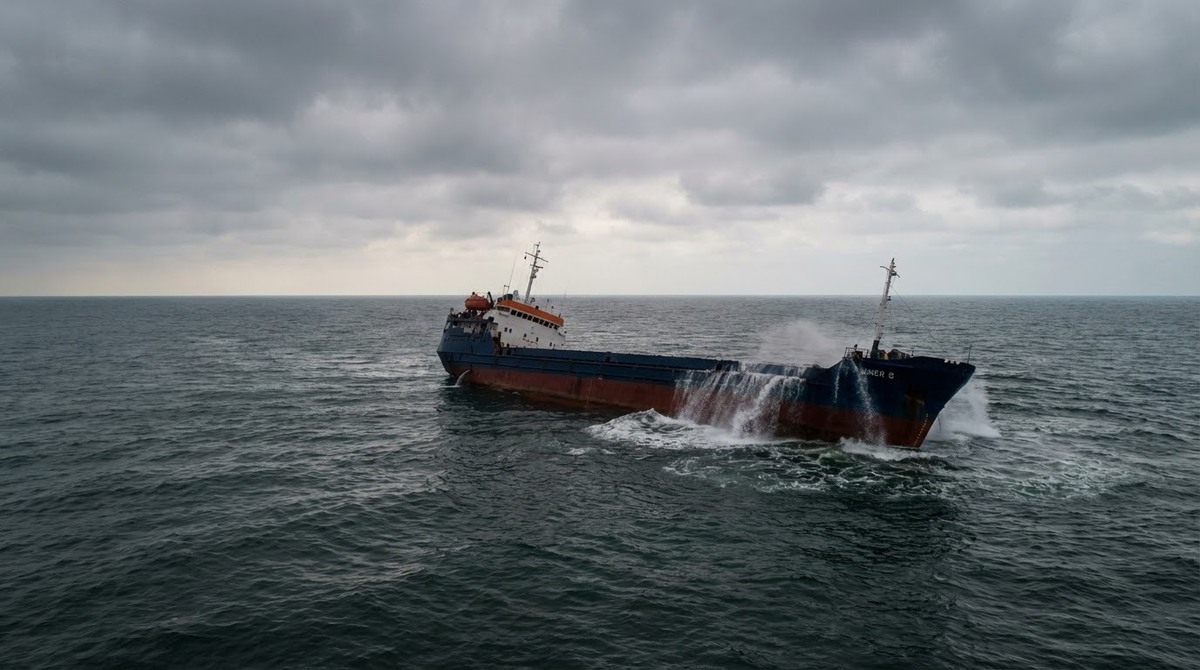
An Iranian-flagged bulk carrier, RONA, has sunk in the Caspian Sea, an incident that drew swift rescue action from Turkmenistan and renewed attention on a maritime corridor long associated in reporting with Iran-to-Russia cargo flows, including alleged military shipments.
SOS Received, All Crew Rescued
The sinking was reported by Turkmenistan’s Ministry of Foreign Affairs, which said Turkmen rescue units responded after receiving an SOS signal from the vessel. A rescue operation was launched promptly, and all 14 people on board were saved.
It was previously established that those rescued were citizens of Iran and India.
Vessel Details:
RONA is an older bulk carrier, built in 1983, with a displacement of 2,453 tons. The ship measures 114 meters in length and 13 meters in width.
Reported Route Overlaps With a Widely Scrutinized Corridor
According to ASTRA, RONA regularly sailed between Iranian ports and several Russian destinations, including Astrakhan, Makhachkala, and Azov. That route aligns with what has been described in multiple investigations as a primary Caspian Sea corridor used to move cargo between Iran and Russia.
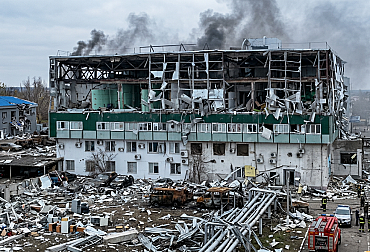
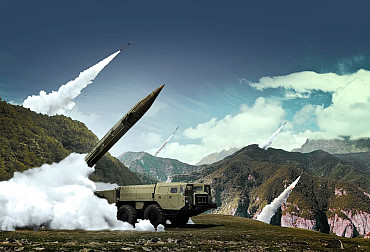
In earlier investigative reporting, CNN and The Wall Street Journal documented claims that the Caspian Sea has been used as a channel for transporting ammunition and other military cargo from Iran to the Russian Federation. While the available facts do not establish what RONA was carrying at the time it sank—or whether the sinking is directly connected to any such shipments—the ship’s reported pattern of travel has fueled speculation because it matches a route already under international scrutiny.
What’s Known—and What Isn’t
At this stage, the confirmed elements are straightforward: an Iranian-flagged bulk carrier sank, an SOS was received, and all crew members survived due to a successful rescue.
What remains unclear based on the provided information is the cause of the sinking, the cargo on board, and whether the incident has any direct relationship to the broader allegations about arms transfers via the Caspian Sea. Any definitive link would require official findings or verifiable documentation about the ship’s manifest and the circumstances leading to the loss of the vessel.