Turkey Joins the Eurofighter Club: £8 Billion Deal Modernizes Air Force and Bolsters NATO’s Eastern Flank
In October 2025, Turkey finalized an agreement with the United Kingdom for the purchase of 20 new Eurofighter Typhoon aircraft, valued at approximately £8 billion ($10.7 billion), including a comprehensive weapons package featuring advanced munitions like MBDA Meteor beyond-visual-range air-to-air missiles and Brimstone ground-attack missiles. On March 25, 2026, Turkish Defense Minister Yaşar Güler and UK Defense Secretary John Healey signed a follow-on training and logistical support contract in London. This agreement covers UK-based training for 10 Turkish pilots and nearly 100 ground technicians, high-fidelity simulators, spare parts, electronic warfare capabilities, and technical support for an initial three-year period once the jets enter service.
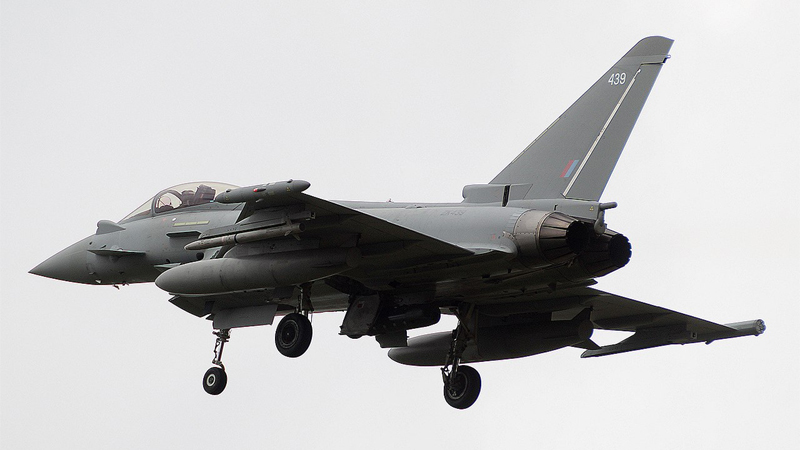
The deal, described by UK Prime Minister Keir Starmer as a major boost for British industry (securing around 20,000 jobs at facilities like BAE Systems’ Warton plant), represents Turkey’s first combat aircraft purchase from a non-US source in decades. It also includes options for additional aircraft and potential acquisition of second-hand Typhoons from Qatar and Oman, potentially bringing Turkey’s total Typhoon fleet toward 40+ jets.
Recent History of the Turkish Air Force
Since the 1990s, the Turkish Air Force (TuAF) has relied heavily on US-origin platforms while pursuing gradual modernization and indigenous capabilities. In the 1970s–1980s, Turkey operated a large fleet of McDonnell Douglas F-4E Phantom II fighters (over 230 acquired in total). Many underwent a major upgrade in the late 1990s to early 2000s under the “Terminator 2020” program with Israeli assistance, adding modern avionics, radars, and compatibility with indigenous Turkish weapons like the SOM cruise missile. These upgraded Phantoms remain in limited service but are aging and scheduled for eventual retirement.
The backbone of the fleet became the Lockheed Martin F-16 Fighting Falcon. Deliveries began in 1987 under the Peace Onyx program, with local assembly by Turkish Aerospace Industries (TAI). Turkey operates around 240 F-16s (mostly older Block 30/40/50 variants), making it one of the largest operators worldwide. Ongoing efforts include upgrades to Block 70/V configurations and potential acquisition of additional new-build F-16s, though these have faced political hurdles.
Turkey’s exclusion from the F-35 Lightning II program (due to its purchase of Russian S-400 air defense systems) created an urgent need for modern multirole fighters. The Eurofighter deal addresses this gap, providing a high-performance Western platform while Turkey continues development of its indigenous fifth-generation fighter, the KAAN (formerly TF-X), in partnership with TAI.
Capabilities of the Eurofighter Typhoon
The Eurofighter Typhoon is a twin-engine, delta-wing, multirole “swing-role” fighter developed by a consortium of the UK, Germany, Italy, and Spain. Designed initially for air superiority, it has evolved into one of the most capable 4.5-generation combat aircraft. Its key strengths include:
- exceptional speed (Mach 2+), agility, and climb rate, powered by two Eurojet EJ200 turbofans,
- advanced sensors, including the Captor-E (or upcoming ECRS Mk2) active electronically scanned array (AESA) radar,
- supercruise capability (sustained supersonic flight without afterburners),
- a wide weapons envelope: Meteor air-to-air missiles for long-range engagements, short-range IRIS-T or ASRAAM, precision ground-attack munitions, and electronic warfare suites,
- high payload capacity and excellent performance at altitude,
Typhoon excels in beyond-visual-range air combat, air-to-ground strikes, reconnaissance, and suppression of enemy air defenses (SEAD). Ongoing upgrades focus on enhanced mission computing, electronic attack, crewed-uncrewed teaming (with loyal wingman drones), and better network-centric warfare integration.
Operators and Future Perspective
Current primary operators include the air forces of the UK (Royal Air Force), Germany (Luftwaffe), Italy (Aeronautica Militare), Spain (Ejército del Aire), and Austria. Export customers in the Gulf include Saudi Arabia, Oman, Kuwait, and Qatar. Turkey will become the tenth operator once deliveries begin around 2030.
The global Typhoon fleet recently surpassed one million flight hours, underscoring its maturity and reliability. In the future air combat environment – characterized by networked operations, advanced threats, and integration with fifth- and sixth-generation systems – the Typhoon is positioned as a critical “bridge” platform.
Upgrades will allow it to serve as a “missile truck,” sensor node, or electronic warfare platform alongside stealthy fighters like the F-35 or future European projects (e.g., UK’s GCAP/Tempest or Franco-German-Spanish FCAS). Its modular design supports longevity into the 2060s, emphasizing interoperability within NATO while offering European strategic autonomy.
For Turkey, the Typhoon acquisition strengthens NATO’s eastern flank, enhances interoperability with allies like the UK, and provides a potent capability boost amid regional security challenges. It also signals a diversification of defense suppliers as Ankara balances relations with the US, Europe, and its own industrial ambitions. This development highlights ongoing evolution in European defense cooperation and the enduring relevance of advanced 4.5-generation fighters in a rapidly changing aerial battlefield.