
Ukraine Exchanges Data for British Missiles and Technology: A New Model of Defense Cooperation Takes Shape
The United Kingdom is gaining access to data collected over more than four years of war in Ukraine. An agreement signed in Kyiv between British Prime Minister Andy Burnham and Ukrainian President Volodymyr Zelenskyy grants British universities, research teams, and technology companies access to the Avengers Labs platform. Its databases contain millions of observations gathered via thousands of cameras, drones, and sensors deployed along the front lines. The Ukrainian platform represents the most valuable source of experience from the modern battlefield, where there is a constant clash of unmanned aerial vehicles, artillery, missiles, and electronic warfare.
According to the Ukrainian Ministry of Defense, the Avengers Labs system stores more than 100,000 drone video recordings per month and achieves approximately a 70% success rate in detecting enemy targets. The previous generation of the system identified about 12,000 pieces of equipment per week. Behind these results is the Universal Military Dataset, an extensive collection of real combat footage from drones and acoustic sensors, systematically sorted and categorized for machine learning purposes. Kyiv has thus leveraged the war with Russia to create one of the world’s largest sources of training data for military artificial intelligence.
“The lack of high-quality, categorized battlefield data is one of the biggest constraints in developing reliable artificial intelligence for autonomous systems,” said Miša Nestor of the U.S.-Ukrainian company Swarmer. “Ukraine has amassed an asset that is unparalleled anywhere in the world: a massive amount of data collected directly in the conditions of modern combat.” From the perspective of AI developers, real combat data is significantly more valuable than the synthetic simulations on which many companies rely. In exchange for sharing data, Ukraine gains access to British research, computing capacity, talent, and technological capital.

British interest is also focused on acoustic sensors deployed throughout Ukraine. These systems detect the acoustic signatures of approaching drones and, after being trained on a sufficiently large dataset, provide highly accurate threat identification. In certain scenarios, they offer an interesting alternative to radar, particularly in protecting military facilities, energy infrastructure, and logistics hubs.
“This agreement will combine Ukraine’s unrivaled operational experience with the UK’s cutting-edge artificial intelligence ecosystem,” said Andy Burnham, describing the UK-Ukraine agreement. He thus summarized an increasingly common model of industrial cooperation, in which one party contributes combat experience and real-world data, while the other provides funding, research infrastructure, and industrial capacity. The result is faster development cycles, more accurate algorithms, and a shorter path from experimentation to deployment.
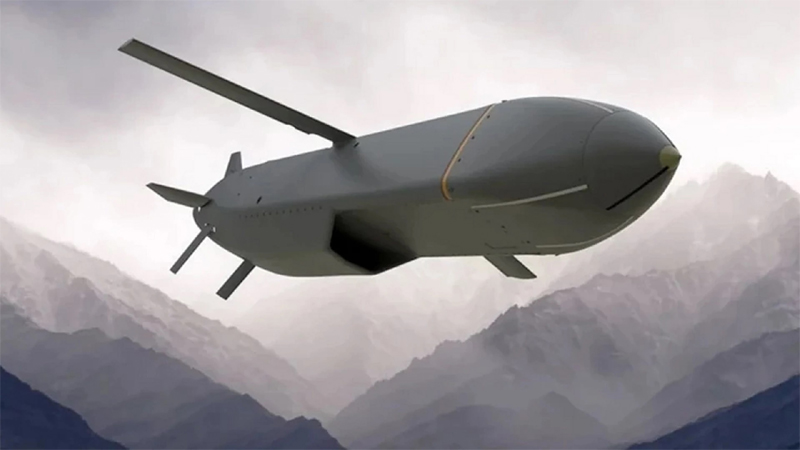
At the same time, cooperation is underway on a much more sensitive technology transfer. The British government has authorized MBDA to share controlled technical information regarding British components used in the SCALP missile, known in the United Kingdom as Storm Shadow. This step paves the way for the establishment of assembly lines on Ukrainian territory in cooperation with France. MBDA is thus gradually shifting part of its know-how closer to the front lines, while Ukraine gains access to the manufacturing processes associated with one of Europe’s most advanced cruise missiles.
SCALP and Storm Shadow are part of a joint Franco-British program. According to the British Ministry of Defense, the Storm Shadow’s range exceeds 300 nautical miles, or approximately 550 kilometers. The missile is used to strike command posts, fortified positions, logistics centers, and infrastructure deep behind enemy lines.
During the war in Ukraine, it has become one of the most important Western tools for precision strikes over long distances. Each missile delivered strengthened Ukraine’s capabilities. However, each missile fired depleted European stockpiles. It is precisely this dynamic that is driving the effort to move part of the production closer to where the missiles are used.
Meanwhile, Kyiv has established extensive industrial production of domestically manufactured long-range weapons. The fastest-growing sector is that of attack drones capable of striking targets hundreds of kilometers from the border and, in some cases, more than a thousand kilometers deep into Russian territory. Cheaper unmanned aerial vehicles allow for mass deployment, while cruise missiles offer a larger warhead, more precise guidance, and greater ability to penetrate air defenses. Ukraine is thus combining two distinct approaches: quantity on the one hand and technological sophistication on the other.
However, the technology transfer for the production of the Storm Shadow missile entails more than just a manufacturing license. It involves the design of stealth missiles, the integration of guidance systems, quality control, component manufacturing, and supply chain management. Ukraine is gaining experience in the production of one specific weapon while simultaneously laying the groundwork for future generations of domestic missiles. Furthermore, local assembly provides greater control over the pace of production, maintenance, and restocking. This creates a model in which foreign technology accelerates the development of domestic industry in exchange for access to unique combat experience.
For a power like the United Kingdom, cooperation with Ukraine is becoming a way to maintain technological sovereignty. As recently as the early 21st century, military power relied primarily on hardware, industrial capacity, and human expertise. Today, data, computing power, and the ability to train algorithms using real-world experience from the modern battlefield are gaining comparable value. Millions of hours of Ukrainian drone footage, data on signal jamming, troop movements, munitions guidance, and the operation of autonomous systems constitute the most valuable military dataset since the end of the Cold War. A country that has access to such data and can turn it into an operational advantage gains greater leeway for independent decision-making. Conversely, a country reliant on technologies, models, and data sources developed abroad trades part of its strategic autonomy for access to advanced capabilities. In the era of algorithmic warfare, sovereignty is thus increasingly determined by control over knowledge gained from the battlefield, not merely by the number of soldiers, ships, or aircraft.
The same logic applies to the British defense industry. Companies such as BAE Systems, Rolls-Royce, QinetiQ, and Leonardo UK are entering an environment where competitive advantage stems from the ability to integrate sensors, software, autonomy, and large datasets. The Ukrainian experience demonstrates how quickly real combat data can improve the quality of navigation algorithms, target recognition systems, and electronic warfare. The value of such data often exceeds that of the hardware on which it was generated.