Ukraine Launches “Logistical Lockdown” Program to Expand Strikes on Russian Logistics
Ukraine is putting billions more into one of the most important parts of modern warfare: breaking the enemy’s ability to move, resupply, and sustain combat operations.
Kyiv has launched a new program called “Logistical Lockdown,” a large-scale effort designed to intensify strikes on Russian logistics at operational depth. The goal is clear: to make it increasingly difficult for Russian forces to transport ammunition, fuel, equipment, and reinforcements to the front.
Ukrainian Defense Minister Mykhailo Fedorov said the initiative is aimed at imposing a full logistical lockdown on Russian troops. In practical terms, that means expanding Ukraine’s ability to hit supply routes, transport hubs, and support infrastructure far behind the immediate line of contact.
A central pillar of the program is the rapid expansion of medium-range strike drones — systems capable of reaching targets at distances of up to 300 kilometers. These drones are becoming one of Ukraine’s most effective tools for reshaping the battlefield, allowing the military to attack logistics nodes deep in occupied territory without relying solely on conventional long-range weapons.
The timing is also significant. After Starlink was disabled for Russian forces, Ukraine gained another technological edge in the war. That advantage is now being reinforced by a focused push to widen drone-based strike capabilities and turn tactical innovation into sustained operational pressure.
In the first phase of the program, the Ministry of Defense, working together with the General Staff, allocated an additional UAH 5 billion directly to military units for the purchase of medium-range strike systems. The funding is being directed to the most effective brigades and units, a move that suggests Ukraine is not just investing heavily, but doing so with an emphasis on battlefield performance and proven results.
According to Fedorov, the first units have already received the money and direct procurement has already started. That means the program is not remaining on paper — it is already moving into execution.
The second phase is built around centralized tenders for a large batch of medium-range strike systems. This part of the strategy is intended to accelerate both production and competition. Fedorov emphasized that open competitions are not only about speed and scale, but also about driving rivalry between manufacturers — an important factor in improving quality, lowering friction in procurement, and strengthening Ukraine’s defense-industrial responsiveness.
If the plan works as intended, the effects should begin to show on the front line in the summer, when the results of centralized procurement are expected to become visible in combat operations.
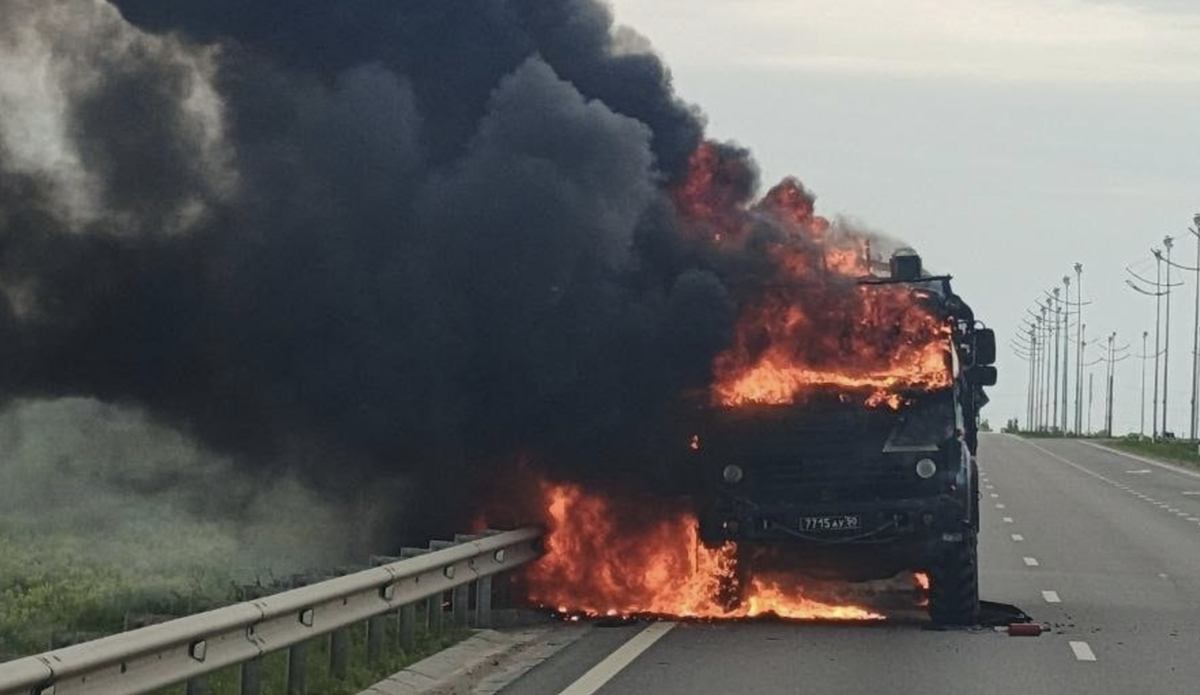
There are already signs that this approach is delivering results. Ukrainian medium-range strike drones have reportedly forced Russian forces to limit truck movement through occupied parts of the Kherson region toward Crimea. That is a meaningful development because logistics traffic is one of the lifelines of any army. If trucks cannot move freely, supply chains slow down, frontline units become more vulnerable, and operational flexibility starts to erode.
That is the deeper significance of the “Logistical Lockdown” program. Ukraine is not simply buying more drones. It is investing in a strategy meant to squeeze Russian logistics, disrupt the rhythm of resupply, and increase the cost of occupation. In a war where mobility and sustainment often determine staying power, targeting logistics may prove just as decisive as striking troops or equipment directly.
By combining direct unit funding, centralized procurement, and competitive pressure among manufacturers, Ukraine is trying to scale one of its battlefield advantages into a broader systemic effect. If successful, the program could make Russian supply routes increasingly dangerous, increasingly expensive, and increasingly unreliable.