
Ukraine’s Freya Project Aims to Deliver a Lower - Cost Ballistic Missile Shield for Europe
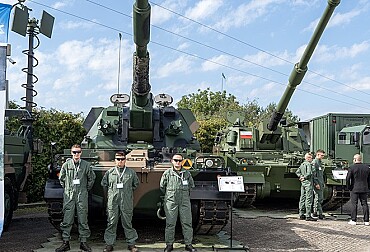
Ukraine is pushing beyond battlefield adaptation and into defense architecture design with the unveiling of Freya, a new ballistic missile defense concept built around a low-cost Ukrainian interceptor and designed for integration across European and NATO-aligned air defense networks.
The project was presented by Ukrainian defense company Fire Point, which has now joined an anti-ballistic missile coalition and positioned Freya not as a narrow domestic initiative, but as a system with continental ambitions. At the center of that message is a clear promise: create a ballistic missile interception capability that is more affordable, more scalable, and less dependent on any single supplier.
Fire Point co-founder and chief designer Denys Shtilierman framed the project in strategic terms, signaling that the company sees its role extending beyond Ukraine’s immediate wartime needs. The vision behind Freya is not simply to add another interceptor to the market, but to help build a missile defense layer that could protect cities and critical infrastructure across Europe.
What makes Freya especially notable is the problem it is trying to solve. Throughout the war, Ukraine has repeatedly faced the harsh economics of modern air defense: expensive interceptors are often used to destroy much cheaper incoming threats. That imbalance becomes even more damaging when attacks arrive in large numbers. Freya is designed as a direct response to that reality, with cost reduction placed at the core of the system rather than treated as a secondary benefit.
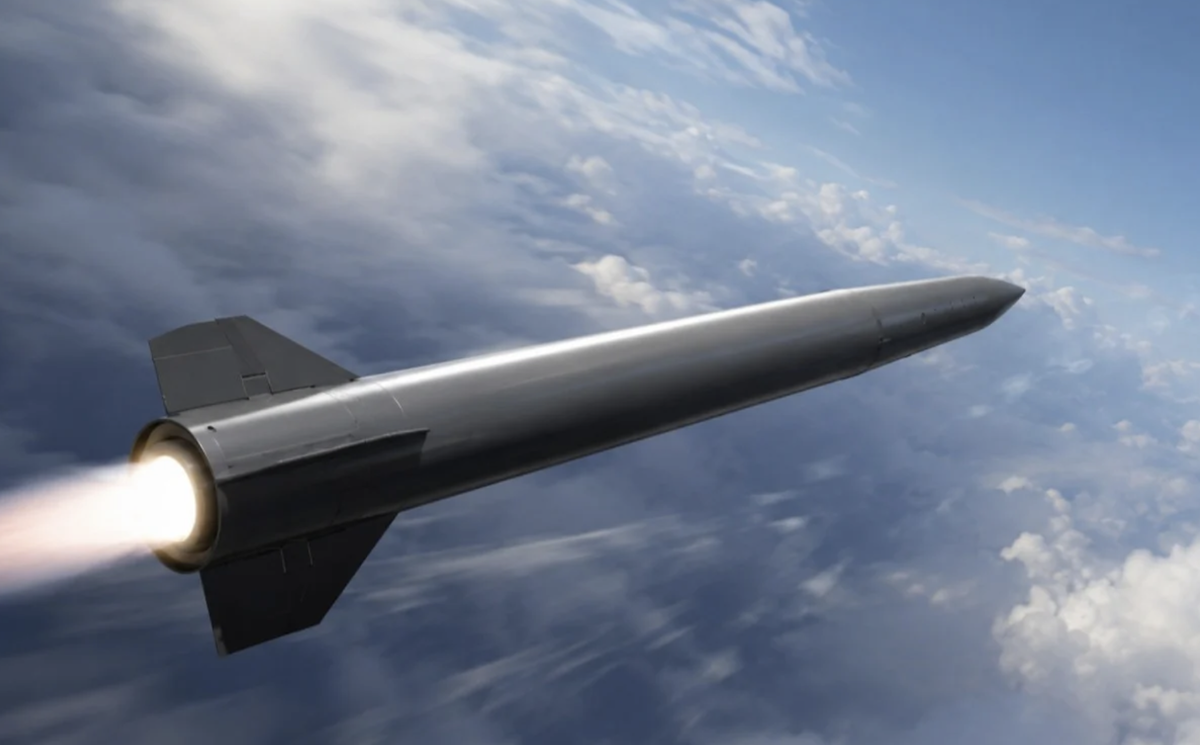
The centerpiece of the project is the FP-7.x interceptor, described as a light and compact missile built from composite materials to lower production and launch costs. Publicly disclosed specifications indicate a speed of 1,500 to 2,000 meters per second, placing it firmly in the class required to engage ballistic targets during terminal descent. The missile is listed at 7.25 meters in length, with an outer diameter of 1.15 meters including its aerodynamic drag reducer, and a fuselage diameter of 0.53 meters. Guidance is based on an Image Infra-Red seeker, while the semi-active homing seeker technology is supplied by Diehl Defence.
That combination suggests a practical design philosophy: use proven Western guidance expertise where necessary, while building the interceptor and launcher around a Ukrainian industrial base capable of producing lower-cost effectors at scale. In a European defense market now searching for both resilience and affordability, that is a commercially attractive proposition as much as a military one.
Freya’s architecture reinforces that same logic. Rather than depending on a vertically closed ecosystem, the system is designed to connect multiple NATO-standard components from different suppliers. For long-range radar coverage, the concept includes options such as SAAB Giraffe 8A/4A, Thales Ground Master 400, and Hensoldt TRML-4D. For fire control and illumination, Fire Point identifies the Weibel GFTR-2100/48 and Leonardo KRONOS Land as candidate radars able to support the continuous wave illumination needed for a semi-active homing interceptor. The launcher itself is a light mobile unit produced by Fire Point, while command and control is handled through Kongsberg’s Fire Distribution Center, an established solution already familiar across allied air defense programs.
This multinational hardware mix is more than a technical detail. It shows that Freya is being conceived as an open architecture defense product from the start. That matters because European and Ukrainian air defense environments are no longer built around uniform fleets. They are increasingly layered, mixed, and operationally diverse. A system that can connect to existing radars, command centers, and launch networks without forcing a complete replacement cycle has a much stronger path to adoption.
The protocol layer may be one of Freya’s most important strategic features. The project is built around Link-16, the NATO-standard tactical data link under STANAG 5516, which serves as the backbone for interoperability with Ukraine’s broader air and missile defense network. The presentation also notes that Ukraine signed a license agreement on May 29, 2025 for use of the non-commercial NATO CRC System Interface, enabling Link-16 use. Ukraine’s Delta situational awareness platform has already been integrated into that environment, helping create the kind of shared operational picture a distributed missile defense system requires.
Additional communications architecture includes the Asterix protocol for radar connectivity and a full-duplex datalink for in-flight course correction of the FP-7.x. In practical terms, this means Freya is not just a missile and launcher concept. It is a networked interception ecosystem designed to plug into the broader command, sensor, and communications environment that modern air defense depends on.
That focus is especially relevant in Ukraine, where a remarkably diverse set of air defense systems is already in service. The operational inventory includes NASAMS, SAMP/T, Patriot, Crotale, IRIS-T, S-300, Buk, Gepard, Stormer, and more. This mix provides resilience through diversity, but it also creates a major integration burden. Different systems come with different doctrines, interfaces, and communications standards. Freya’s use of open architecture and NATO-compatible links appears intended to turn that complexity into an advantage rather than a weakness.
The broader significance of Freya lies in timing. Europe is rearming its air and missile defense posture at speed, driven by the recognition that ballistic missile threats are no longer theoretical edge cases. Countries want layered protection, but they also need systems that are affordable enough to deploy in meaningful numbers. A lower-cost ballistic interceptor that can work with existing NATO-standard infrastructure answers both needs at once.
Fire Point’s decision to present Freya as a pan-European project is therefore highly deliberate. It positions Ukraine not only as a consumer of Western defense technology, but as a future contributor to Europe’s missile defense base. That shift in posture is important. It reflects the way Ukraine’s wartime innovation ecosystem is increasingly producing solutions with relevance far beyond the front line.
Whether Freya ultimately moves from concept to wide-scale deployment will depend on testing, production capacity, financing, and political backing. But even at this stage, the project signals something larger: Ukraine’s defense industry is no longer focused solely on survival. It is beginning to shape the next generation of European air and missile defense thinking.
In that sense, Freya is more than a missile program. It is an argument that the future of European defense may be built not only in long-established industrial centers, but also in the innovation pressures of wartime Ukraine — where the need to intercept more threats at lower cost has become a matter of national survival.