
Ukraine’s Counter-Drone Know How Is Becoming One of the Middle East’s Most Wanted Defense Assets
As Iranian-made drones continue to pressure air defense systems across the Gulf, attention is increasingly shifting toward an unlikely supplier of solutions: Ukraine.
After years of defending its cities, infrastructure, and military positions against relentless waves of Shahed-type drones, Ukraine has developed something few countries can match — practical, battlefield-tested expertise in stopping cheap aerial threats without wasting expensive missiles. That experience is now turning Ukrainian drone manufacturers and defense specialists into highly sought-after partners for Middle Eastern governments facing similar attacks.

Interest from the region is growing quickly. Ukrainian companies are receiving approaches through private firms, investment funds, government channels, and non-governmental organizations, all looking for access to the technologies and know-how Kyiv’s defense ecosystem has built under wartime pressure. For Ukraine, the appeal is obvious: foreign demand could unlock fresh capital for a defense industry that has the manufacturing capacity to grow, but not always the budget to do so.
President Volodymyr Zelenskyy has openly signaled that Ukraine sees both strategic and financial value in this momentum. He said Ukrainian teams had been dispatched to several Middle Eastern countries to demonstrate drone defense capabilities, underscoring that technology exports and new funding matter deeply for the country’s war economy. That matters because Ukraine’s defense manufacturers have long argued they could produce more systems if they had stronger financing behind them.
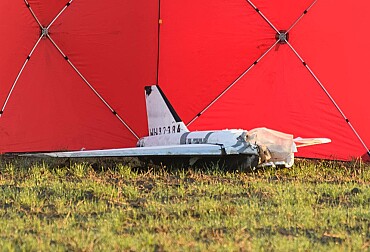
What makes Ukraine especially attractive is not that it invented a futuristic silver bullet, but that it built a working system under real combat conditions. Russia’s widespread use of Iranian-designed Shahed drones — and locally produced variants such as Gerans, Garpias, and Gerberas — forced Ukraine to rethink traditional air defense economics. When hundreds of drones can appear in a single night, it becomes unsustainable to answer each one with high-end missiles worth vastly more than the targets they destroy.
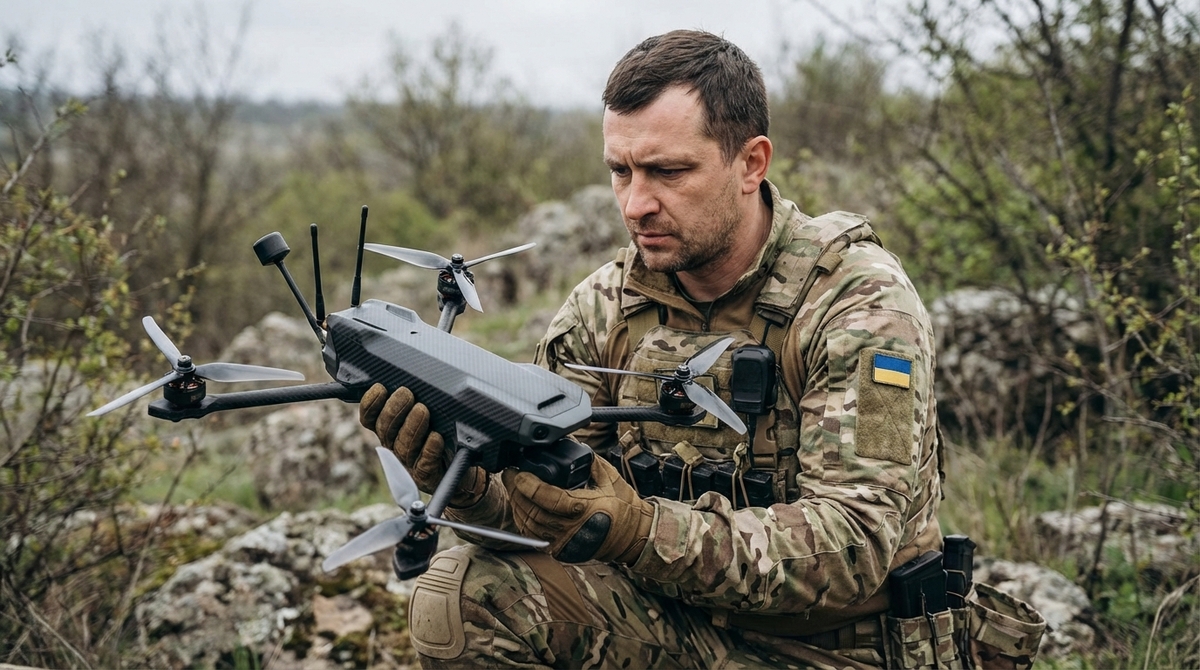
Ukraine’s answer has been layered air defense, with low-cost threats countered by lower-cost tools wherever possible. One of the most important pieces of that system is the interceptor drone: a fast, relatively simple unmanned aircraft designed to chase down and destroy hostile drones in the air. In practical terms, these interceptors evolved from the same first-person-view drone culture that became famous on the front lines of the war. Early versions were improvised tools used against surveillance drones. Over time, they became faster, more capable, and powerful enough to strike Shahed-class targets.

This is where Ukrainian industry has carved out a real advantage. Companies such as Wild Hornets and TAF Drones are among the firms helping shape this new category. Wild Hornets’ Sting is widely seen as the first mass-produced anti-drone drone in Ukraine and one of the most battle-proven models in service. The company is also working on a Sting 2 variant designed to catch faster, jet-powered Shahed versions that can outrun many existing interceptors. TAF Drones, meanwhile, produces systems including the TAF-I10 and Octopus interceptor.
The appeal of these systems is not that they are technologically exotic. In fact, their strength lies in the opposite. They are purpose-built, affordable, and designed around a specific operational problem. Many of Iran’s stockpiled Shahed drones are relatively crude, flying predictable routes at medium altitude — exactly the type of target Ukrainian interceptor drones have learned to hunt effectively.
Scale also matters. While production volumes remain sensitive, Ukrainian producers speak in terms of tens of thousands of interceptor drones. Ukraine’s top military commander, Oleksandr Syrsky, said these systems carried out 6,300 sorties in February alone. Zelenskyy has also claimed that Ukraine could produce 2,000 interceptor drones per day, while needing only half that amount for domestic use. If sustained, that leaves a significant surplus potentially available for foreign customers.
That creates a rare commercial opening. For Gulf nations under drone threat, Ukraine offers something more valuable than theory: proof. Its systems have been refined against one of the world’s largest and most sustained drone campaigns. Buyers are not just looking at product brochures — they are looking at solutions hardened by constant use.
Still, there is a major obstacle between strong interest and signed deals. Ukraine has maintained export controls on domestically produced weapons since the start of Russia’s full-scale invasion. Manufacturers may be fielding inquiries, but actual cooperation depends on government approval. Ukrainian officials and companies are signaling a cautious balance: they want to support partners and unlock revenue, but not at the expense of Ukraine’s own defense needs.
That tension will define what happens next. If Kyiv can create a controlled path for exports, counter-drone systems could become one of its most promising defense-industrial success stories. If it moves too slowly, others will fill the gap. The United States is already active in this space, including through the deployment of 10,000 Merops drones for infrastructure defense in the Middle East. Other advanced producers are also racing to build their own interceptor capabilities.
For Ukraine, the timing may be critical. Its battlefield advantage in countering drone swarms has created a short-term edge in a market that is suddenly waking up to the scale of the threat. But that edge will not last forever. As more nations develop domestic alternatives, today’s urgent demand could quickly become a crowded global competition.
There is also a geopolitical risk beneath the commercial opportunity. If Gulf states cannot access Ukrainian solutions quickly enough, some may turn elsewhere — including to Russian-linked arms networks that have long been comfortable doing business in the region. For Kyiv, that would mean not only losing revenue, but potentially watching a rival with similar operational experience profit from a problem Ukraine helped define.
For now, Ukraine holds something rare in modern defense markets: a solution born not in a laboratory, but in survival. And for countries looking for a cheaper, smarter answer to the drone wars spreading across the Middle East, that may be exactly what makes Ukrainian expertise so valuable.