Ukrainian Drone Experts Returned to Estonia - What They Found Changed Everything
The Estonian Defence Forces have made a striking leap in drone warfare readiness, and much of that progress has come from training side by side with Ukrainian operators who bring direct combat experience from the modern battlefield.
During the Spring Storm 2026 exercises, Estonia demonstrated a far stronger and more coordinated use of unmanned systems than it did a year earlier during the Hedgehog maneuvers. The change did not happen by accident. It followed a hard lesson in 2025, when Ukrainian drone teams exposed major weaknesses in NATO exercise formations in Estonia.

At that time, even a relatively small drone element was able to simulate the destruction of dozens of vehicles and disrupt multiple units. The exercise revealed how vulnerable traditional mechanized forces can be when facing FPV drones and persistent aerial reconnaissance. Large vehicle columns became easy targets. Camouflage proved inadequate. Troops were often too slow to react when drones appeared overhead.
Those failures became the starting point for a serious reassessment.
One year later, the difference was clear. A Ukrainian serviceman with the call sign “Nick,” who participated in the Estonian exercises for the second time, said the improvement was obvious. Infantry now reacts much faster to drone threats, and coordination across units has improved considerably. In his words, the performance was “much better” than in 2025.
A major part of that improvement came from the adoption of unified digital battle management tools. During Spring Storm 2026, Estonian forces used platforms that merged live feeds from multiple drones, automatically marked potential targets on a shared map, and distributed information rapidly across the force. This allowed units to make decisions faster and respond with greater precision.
Artificial intelligence also played an increasingly visible role. New systems were used to process drone footage automatically, identify vehicles and personnel, generate short clips of relevant activity, and send those clips to operators for confirmation. This kind of automation helps reduce the time between detection and action, which is critical in drone-heavy combat environments where seconds can decide outcomes.
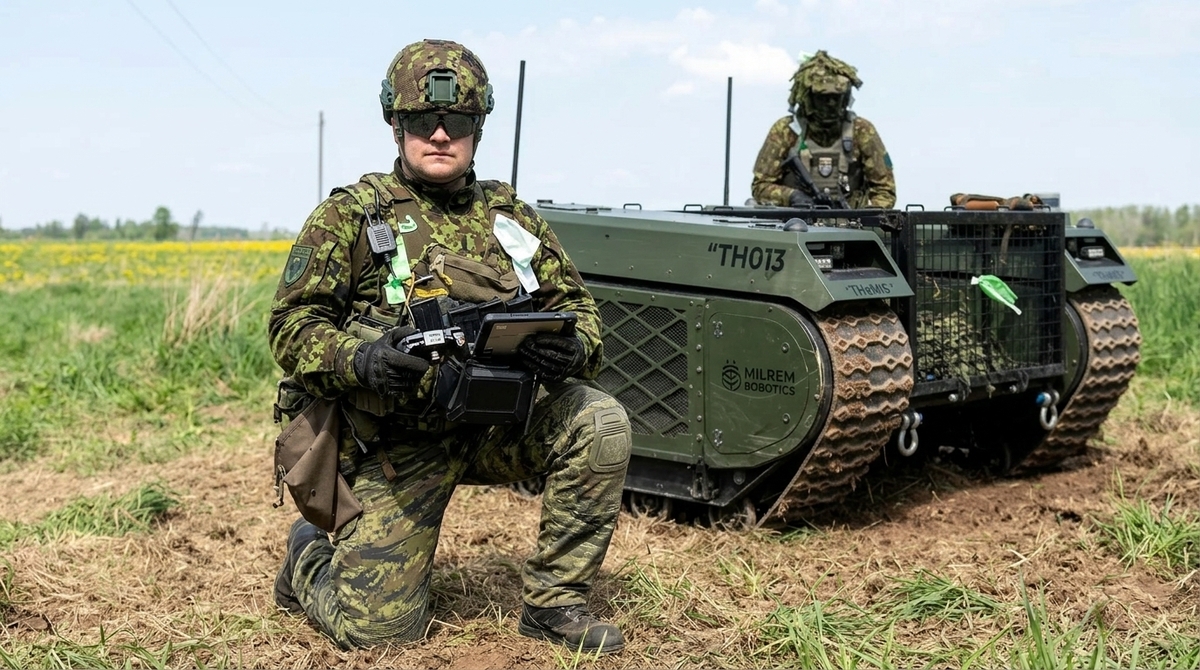
Estonia’s progress was not limited to the air domain. The exercises also highlighted a growing focus on unmanned ground systems. Tested platforms included tracked robotic vehicles and remotely controlled pickup trucks designed to carry supplies, deliver ammunition, and evacuate wounded personnel without exposing soldiers to unnecessary risk. In a practical example of layered unmanned warfare, aerial drones were also used as communication relays to keep ground robots operating even when the primary control link was interrupted.
Another notable development was the expanding role of volunteers. Estonia increasingly involved volunteer formations in the exercise, including the Defence League’s women’s drone operator unit, Naiskodukaitse, also known as the Drone Ladies. Their participation signals a broader national effort to spread drone competence beyond regular military structures and into the territorial defence network. That approach could prove especially valuable in a conflict where resilience, adaptability, and distributed capability matter as much as heavy equipment.
Estonian military planners now view unmanned systems as a core part of warfare rather than a supporting add-on. Their role goes far beyond reconnaissance and strike missions. Drones and robotic systems are becoming tools for logistics, casualty evacuation, mine delivery, and sustained support during long operations. In other words, unmanned systems are no longer just helping the fight; they are becoming part of how the fight is organized.
The most important takeaway from Estonia’s latest exercises is not simply that Ukrainian experience was observed. It was absorbed and translated into practice. What Estonia showed in Spring Storm 2026 was the beginning of a more adaptive model of defence—one shaped by recent battlefield realities rather than outdated assumptions.
Over the course of a year, Estonia appears to have moved from being exposed by drone warfare to learning how to operate within it more effectively. That shift does not mean the challenges are solved, but it does suggest that the country has built a credible foundation for the next stage of military adaptation in an era increasingly defined by unmanned technologies.