
Fresh Off the Line: Russia’s New Ballistic Missiles Are Already Hitting Ukraine
Sanctions were designed to slow Russia down—to make high-end weapons harder to build, harder to replace, and harder to field at scale. But the newest evidence coming out of Ukraine suggests a different reality: Russia is still manufacturing ballistic missiles fast enough that some are arriving over Ukrainian cities almost straight from the factory floor.
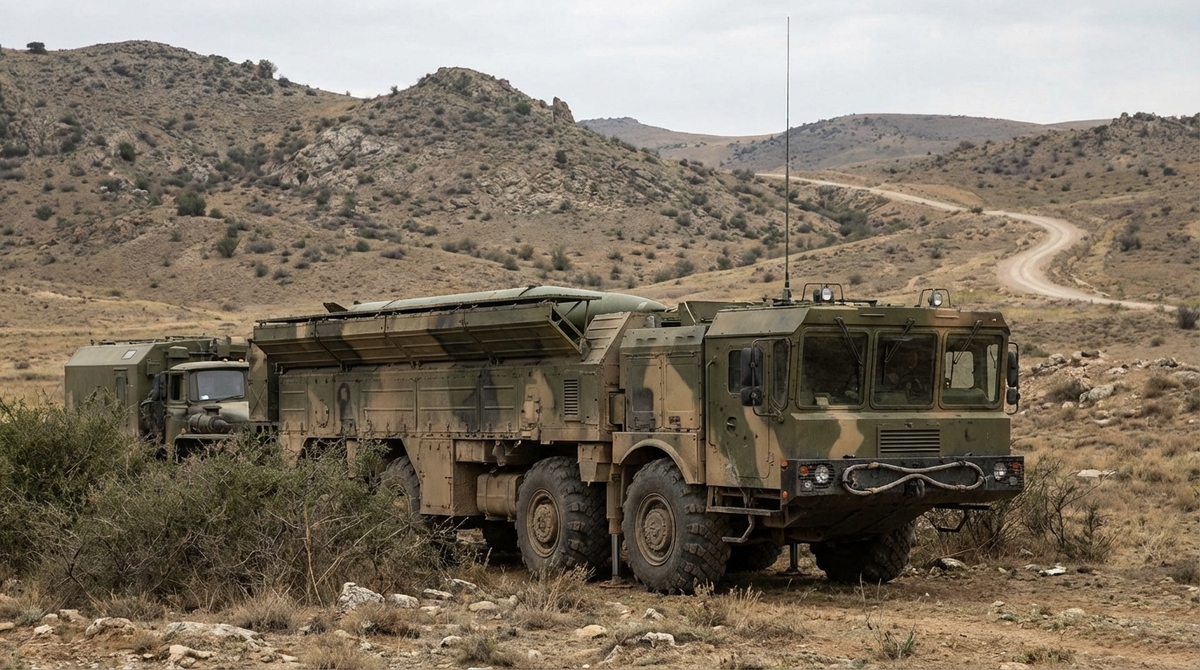
On Tuesday, February 24, Serhii “Flash” Beskrestnov—an adviser to Ukraine’s Minister of Defense—reported on his Telegram channel that Russia is attacking Ukraine with ballistic missiles manufactured in late 2025 and early 2026. The implication is stark. This isn’t a war where one side is “running out” and the other simply needs to hold on. It’s a war where industrial tempo is becoming a weapon in itself.
A production line that feeds the battlefield
Beskrestnov’s message frames Russia’s ballistic missile campaign as something closer to a supply chain than a finite arsenal. He stated that the ballistic missiles targeting Ukraine were produced in late 2025 and early 2026—meaning Ukraine is being hit with newly manufactured weapons, not only legacy reserves.
He also highlighted specifics that matter for anyone trying to understand sustainability and scale:
- Iskander missiles are made up of about 90% Russian components, according to Beskrestnov.
- Russia is producing around 60 units per month.
- In addition to Iskanders, Russia is also using C300/400 missiles.
If those figures hold, they point to a recurring challenge for deterrence-by-restriction: even when access to certain foreign inputs is constrained, a system that is largely domestically sourced can keep moving—especially when the state is willing to prioritize military output over other economic needs.
The Patriot bottleneck: one shield, limited arrows
Beskrestnov emphasized that only Patriot air defense systems can shoot down Russian ballistic missiles. That is not just a technical detail—it defines the entire defensive bottleneck.
He added another pressure point: several missiles may be needed to intercept a single ballistic target, which becomes “a huge problem for Ukraine.” In practical terms, this is the brutal math of air defense:
- The attacker can scale by producing more missiles.
- The defender must match that scale with interceptors that are scarce, expensive, and not endlessly available.
Beskrestnov’s warning is blunt: “Can we expect a steady, long-term supply of anti-ballistic missiles? Probably not. Global military resources are not unlimited.” In a long war of attrition, the limiting factor isn’t courage or intent—it’s manufacturing capacity, inventories, and the ability to replenish faster than the other side can expend.
A comprehensive response: build, partner, harden
Rather than treating ballistic defense as a single-system problem (“send more Patriots”), Beskrestnov argues for a comprehensive approach that recognizes the industrial nature of the threat.
He believes Ukraine must participate in developing anti-ballistic systems:
- Domestically, so Ukraine is not fully dependent on external supply decisions and production queues.
- Jointly with other nations, to accelerate development, share costs, and expand production capacity.
But even the best interception strategy cannot guarantee perfect coverage—especially when interceptors are limited and attacks are sustained. That’s why Beskrestnov also stresses hardening infrastructure so the country can function even under repeated strikes.
His infrastructure priorities are explicit:
“All thermal power plants and 750 kV substations must withstand missile strikes.”
That sentence carries a strategic logic: if you can’t stop every missile, you reduce the payoff of each hit. Resilience becomes a form of defense—less visible than air defense batteries, but just as decisive over time.
The production gap and the licensing idea
Beskrestnov’s broader point is that Russia’s ability to produce ballistic missiles “on an industrial scale” has become a serious problem, especially given the gap compared to the production of U.S. Patriot interceptor missiles.
If interceptors remain the choke point, one proposed remedy is structural rather than incremental: granting Ukraine a license to produce these missiles. In theory, licensing could:
- Expand manufacturing capacity beyond existing supply chains.
- Shorten delivery timelines.
- Reduce long-term dependency on limited external inventories.
It wouldn’t be a quick fix—missile production requires specialized components, quality control, and secure facilities—but it reflects the core reality this moment is exposing: in an attritional conflict, production is strategy.
Related developments in air defense
Separately, it was noted that Defense Express previously reported that the IRIS-T maker had upgraded the KDV counter-drone system supplied to Ukraine. While counter-drone systems address a different layer of the threat than ballistic missiles, the direction is consistent: Ukraine’s air defense challenge is multi-tiered, and improvements at any tier can reduce overall pressure on scarce high-end interceptors.
The takeaway: the war is being fought in factories, too
The headline isn’t only that ballistic missiles are still falling. It’s that some of them are new—fresh enough to carry a manufacturing timestamp from late 2025 or early 2026. That changes the defensive question from “How long can we endure?” to “How fast can we adapt our supply, partnerships, and infrastructure to a threat that is being replenished monthly?”
If Russia can keep feeding missiles from factory to frontline, Ukraine’s long-term advantage will depend on three things working together: interceptor availability, co-development and production, and infrastructure that can take a punch and keep running.