

Ukrainian Drones Destroy Russian $25M Tor-M1 Air Defense System Near Vuhledar
Ukrainian drone operators have destroyed a Russian Tor-M1 short-range air defense system near the temporarily occupied city of Vuhledar, delivering another blow to Moscow’s efforts to shield its forces from aerial attacks.
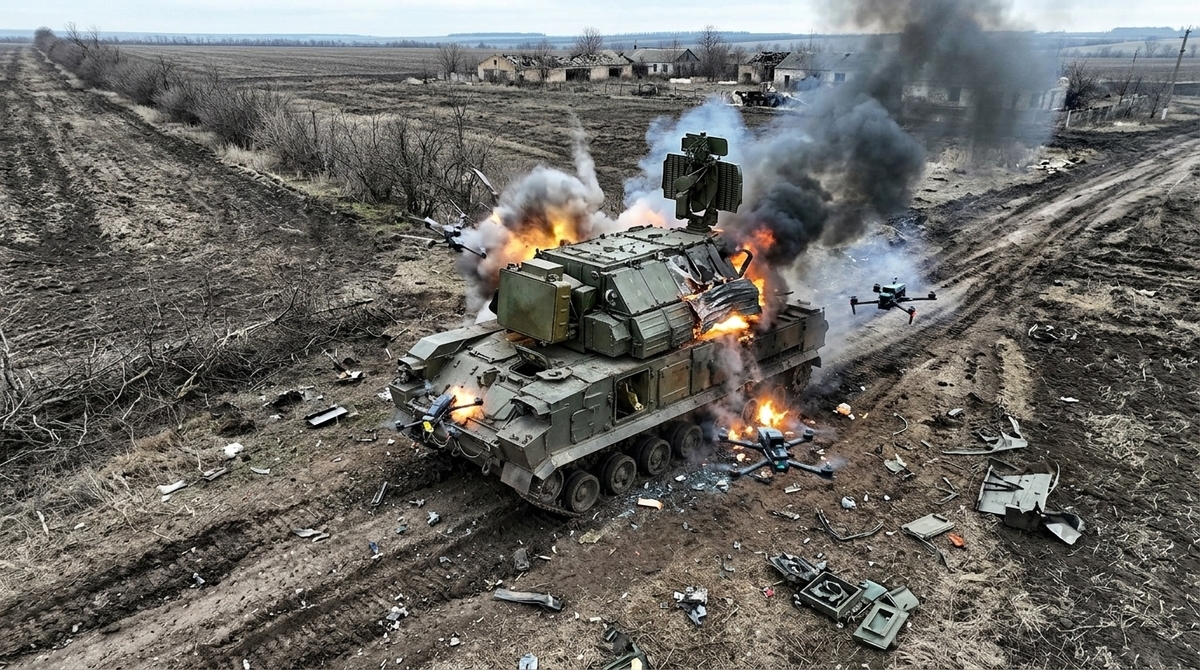
The operation was carried out by operators of the Black Sky Battalion of Ukraine’s Spartan Brigade. According to footage released by the brigade on September 14, the Russian system was first located and then struck despite being positioned away from the immediate front line.
That detail matters. The Tor-M1 was reportedly deployed in the Russian rear, where it was likely intended to protect troops, equipment, and important assets from Ukrainian drones and other aerial threats. Instead, it became a target itself.
A costly loss for Russian air defense
The destroyed system is estimated by the Spartan Brigade to be worth around $25 million. But the real impact may go beyond the financial cost.
The Tor-M1 is a mobile surface-to-air missile system designed to defend troops and key facilities against aircraft, guided weapons, and drones. Russia uses such systems to create short-range protective bubbles around valuable military assets.
When one of these systems is removed from the battlefield, it can leave a gap in the local air defense network. That gap may give Ukrainian forces more freedom to launch follow-up drone strikes against nearby Russian positions, artillery, logistics, or command assets.
In modern warfare, destroying an air defense system is often more valuable than destroying a single vehicle. It can open the door for further attacks.
The hunter became the hunted
The irony of the strike is clear: a system built to stop aerial threats was destroyed by Ukrainian drones.
Russia has relied heavily on layered air defenses to counter Ukraine’s growing use of unmanned systems. The Tor-M1 is especially relevant in this environment because it is designed for short-range protection and mobility. In theory, that mobility should make it harder to find and destroy.
But the operation near Vuhledar shows the growing effectiveness of Ukrainian reconnaissance and strike-drone teams. Even assets positioned in the rear are no longer safe if they can be detected, tracked, and attacked with precision.
The battlefield is becoming increasingly transparent. Hiding expensive equipment behind the front line is no guarantee of survival.
Why Vuhledar remains important
Vuhledar has long been one of the key areas of fighting in eastern Ukraine. The terrain around the city has seen intense combat, heavy equipment losses, and repeated attempts by Russian forces to strengthen their positions.
For Russia, protecting rear-area assets near Vuhledar is essential. Artillery, logistics, command posts, electronic warfare systems, and troop concentrations all depend on some level of air defense coverage.
That is why the loss of a Tor-M1 in this area is significant. It suggests Ukrainian drone units are not only targeting frontline armor or infantry positions, but also going after the systems that allow Russia to hold and support its lines.
This is a more strategic use of drones: not just destroying what is visible at the front, but weakening the infrastructure behind the fight.
Ukraine’s drone war keeps evolving
The strike highlights a pattern that has become increasingly visible throughout the war. Ukrainian units often combine reconnaissance drones with strike platforms to identify, track, and destroy valuable Russian equipment.
This approach turns relatively small drone teams into a serious threat to high-value systems. A target worth millions of dollars can be located by aerial surveillance and then destroyed before it has time to relocate.
The destruction of the Tor-M1 also reinforces a broader lesson from the war: air defense systems must now defend not only against aircraft and missiles, but against constant drone surveillance. If they are seen, they can be targeted. If they remain in one position too long, they become vulnerable.
For Russian crews, that creates a difficult dilemma. Air defense systems need to be active enough to protect other forces, but every movement, radar emission, or visible position can increase the risk of detection.
A tactical strike with wider consequences
On its own, the destruction of one Tor-M1 does not collapse Russia’s air defense network. But in a war of attrition, each loss matters.
A $25 million system is not easy to replace quickly. Trained crews, spare parts, missiles, maintenance capacity, and deployment planning all matter. Losing such equipment near an active combat zone forces Russia either to accept weaker coverage or move another system into the area, potentially exposing that one as well.
For Ukraine, these strikes serve several purposes at once. They remove dangerous air defense assets, create opportunities for future drone operations, and demonstrate that Russian rear areas remain vulnerable.
The message is simple: if a system is close enough to protect Russian forces near the front, it may also be close enough for Ukrainian drones to find and destroy.
The growing value of precision over mass
The operation near Vuhledar is another example of how drones have changed the economics of the battlefield. Expensive armored vehicles, artillery systems, radar units, and air defense platforms can now be threatened by much cheaper unmanned systems.
This does not mean drones replace all traditional weapons. But they have become one of the most efficient tools for identifying and striking high-value targets.
The destruction of the Tor-M1 shows how Ukraine continues to use drones not only as battlefield weapons, but as a way to dismantle Russia’s protective systems piece by piece. Each successful strike makes the next one easier.
A warning for Russian rear positions
The loss of the Tor-M1 near Vuhledar underlines one of the central realities of the current war: the rear is no longer truly safe.
Russian units may move valuable equipment away from the front line, camouflage it, or place it under cover. But Ukrainian drone operators have repeatedly shown that distance alone is not enough. If reconnaissance assets can locate the target, strike drones may follow.
For Russia, the challenge is growing. Protecting every valuable system from drones is difficult, expensive, and manpower-intensive. For Ukraine, every successful hit against air defense makes the battlefield more open.
The destruction of the Tor-M1 is therefore more than a single tactical success. It is part of a broader campaign to erode Russia’s ability to protect its forces from above.
And near Vuhledar, Ukraine’s Black Sky Battalion appears to have done exactly that: found a system built to stop drones — and destroyed it with drones.