
U.S. Army Accelerates XM30 Mechanized Infantry Combat Vehicle Amid NGCV Overhaul
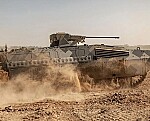
As the U.S. Army presses ahead with one of its most ambitious ground vehicle modernisation efforts, the XM30 Mechanized Infantry Combat Vehicle stands at the centre of attention in 2026. Formerly known as the Optionally Manned Fighting Vehicle, the XM30 is designed to succeed the long-serving M2 Bradley infantry fighting vehicle, bringing enhanced protection, mobility, lethality, and the flexibility of optional manning to Armored Brigade Combat Teams. Recent developments, including prototype deliveries scheduled for later this year and sustained funding in the FY2027 budget, underscore the service’s determination to field a capable next-generation platform despite programmatic adjustments and the complexities of modern battlefield threats.

The XM30 programme forms a cornerstone of the broader Next Generation Combat Vehicle initiative, which seeks to revitalise the Army’s armoured capabilities through a mix of upgraded legacy systems and new designs. Intended to carry a crew of three plus up to eight infantry soldiers, the vehicle emphasises modularity, advanced sensors, networked warfare capabilities, and adaptability for roles ranging from troop transport to command and reconnaissance variants. Its optionally manned feature allows remote operation in high-risk scenarios, reflecting lessons from recent conflicts where unmanned or lightly crewed systems have reduced personnel exposure to drones, artillery, and anti-armour weapons.
Progress in 2026 has been marked by both continuity and recalibration. General Dynamics Land Systems and American Rheinmetall Vehicles remain the primary competitors, with plans for physical prototype deliveries beginning as early as July 2026. These vehicles will undergo rigorous testing and evaluation, paving the way for low-rate initial production decisions in the coming years. The Army has allocated significant resources, including over $500 million requested in the FY2027 budget for the XM30 alongside broader land power investments exceeding $16 billion that also cover the M1E3 Abrams and Armored Multi-Purpose Vehicle programmes. This funding signals continued high-level commitment to armoured modernisation even as the service balances competing priorities.
A notable development earlier in the year added nuance to the programme’s trajectory. In February 2026, Army leadership paused finalisation of the Milestone B decision, which would have formally advanced the effort into engineering and manufacturing development. This step, taken by then-Chief of Staff General Randy George and Secretary Dan Driscoll, aimed to preserve flexibility for potential programme adjustments rather than locking in a specific path. A subsequent Request for Information sought industry input on rapid delivery of advanced 40- to 80-ton vehicles, interpreted by some observers as a mechanism to inject competition and accelerate timelines. Army officials emphasised the goal of securing cutting-edge solutions deliverable in the near term rather than decades away.
This pause does not appear to have derailed prototype work. Both competing teams continue refining designs that incorporate lessons from Ukraine and the Middle East, where infantry fighting vehicles have faced intense threats from loitering munitions, first-person-view drones, and layered anti-armour systems. Key focus areas include improved active protection, signature management, enhanced situational awareness through integrated sensors and artificial intelligence, and open architecture for rapid technology insertion. The XM30’s modular approach is intended to allow future upgrades without wholesale redesigns, addressing the Bradley’s long-standing challenge of obsolescence in a rapidly evolving threat environment.
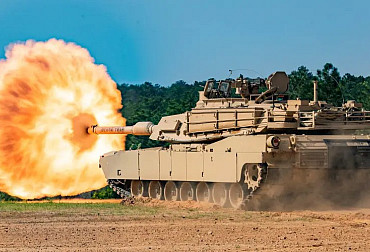
Integration with other elements of the Army’s transformation efforts adds strategic depth. The XM30 is expected to operate alongside the M1E3 Abrams main battle tank in hybrid formations that also incorporate robotic combat vehicles and unmanned aerial systems. This combined-arms concept leverages the strengths of manned platforms for decisive engagement while using autonomous assets for scouting, screening, and sustainment. Testing plans include hands-on evaluation by units such as the 1st Cavalry Division, which is slated to receive prototype platoons for operational feedback later in 2026. Such soldier-centric assessments will prove critical in refining tactics, training requirements, and human-machine teaming doctrines.
The programme’s evolution reflects broader shifts in U.S. Army thinking about future conflict. Emphasis has moved away from pure weight and armour toward survivability through a combination of protection, mobility, and information dominance. Lighter logistical demands, higher tactical speeds, and the ability to disperse forces while maintaining lethality are prized attributes. The optionally manned capability aligns with emerging concepts of operation that envision remote or supervised vehicles conducting resupply or reconnaissance in contested zones, thereby preserving combat power for critical moments.
Developing a vehicle that meets stringent protection requirements without excessive weight continues to test engineering ingenuity, particularly given demands for air deployability and fuel efficiency. Supply chain resilience, integration of classified technologies, and cost control under scrutiny from Congress will influence the programme’s pace. The February Milestone B pause highlighted internal debates over timelines and acquisition strategy, yet it also demonstrated a willingness to adapt rather than proceed with suboptimal solutions. Industry partners have responded positively, viewing the competitive pressure as an incentive to innovate and deliver faster.
International dimensions could further shape the XM30’s future. While primarily a U.S. programme, successful development may open opportunities for allies seeking compatible next-generation infantry vehicles. Collaborative testing or common components with partners could reduce costs and strengthen interoperability within NATO. At the same time, the Army must balance domestic industrial base priorities with the benefits of broader competition.
As prototype vehicles take shape on factory floors and prepare for delivery, the XM30 programme embodies the U.S. Army’s commitment to maintaining armoured superiority in an era defined by proliferating threats. The Bradley has served reliably for decades, but its replacement must excel in a far more complex battlespace where sensors, precision fires, and autonomous systems dominate. Through sustained investment, iterative design, and realistic testing, the XM30 aims to deliver a platform that not only replaces an ageing fleet but also enables new ways of fighting.
The coming months of evaluation and soldier feedback will provide pivotal insights. If the programme maintains momentum, low-rate production could begin toward the end of the decade, with initial fielding following shortly thereafter. In the meantime, the XM30’s progress stands as a bellwether for American land power modernisation – demonstrating resolve to learn from recent conflicts, harness technological opportunity, and prepare forces for the high-intensity demands of potential future wars. The outcome will influence not only U.S. capabilities but also the broader trajectory of Western armoured warfare for years to come.