What Russia’s State Budget Reveals
In military affairs, it is always important to have a good understanding of the enemy. It is not enough to know purely military factors such as the number of soldiers, tanks, aircraft, etc. It is also necessary to know the enemy's overall capabilities, their options, and their thinking, because this allows us to predict what the enemy is planning to do. Of course, knowledge of the enemy's economy also plays a role here, because, as we know, money always comes first. Money can buy weapons, tanks, aircraft, warships, and everything else that war requires.
War is always a huge drain on money—military spending is incomparably higher in times of war than in times of peace. While defense spending can be reduced to a minimum in times of peace, military spending rises dramatically in times of war and, in many cases, can consume virtually the entire national budget. To a certain extent, individual economic measures can reveal not only the state of the enemy, but also their plans. This allows us to know what to expect and prepare for it.
Europe versus Russia
This also applies to today's Europe and Russia, which is increasingly emerging as a political counterweight, but also as an open adversary of Europe. After all, Russia invaded Ukraine, a European country. Russia is also threatening other European countries (the Baltic states). Europe must therefore reckon with Russia as an adversary and rival.
Russia is a very dangerous adversary, and it would be wrong to underestimate it (just as it would be wrong to overestimate it). Russia's demographic potential plays in its favor, although it is not what it once was. Russia's mineral wealth plays an even greater role in its favor, allowing it to both rehabilitate its underperforming and outdated economy and finance the war.
The Russian economy is very specific. The state plays a major role in it, much greater than in European countries; it is a strongly statist economy. Similarly, the aforementioned extraction of raw materials, which accounts for a significant part of Russia's GDP, also plays a major role. All of this is reflected in the Russian state budget, including defense spending. So what do the figures from the Russian state budget tell us?
Russian military spending
According to official sources, Russia is expected to spend a total of 12.93 trillion rubles on its military in 2026. This is a record amount, the highest since the collapse of the Soviet Union. Perhaps even more remarkable than this absolute amount is its ratio to the total Russian state budget. Russian military spending is expected to account for approximately 30% of the state budget. It is also interesting to relate this figure to GDP. This is a completely different value, as was evident in this year's debates following the Czech Republic's commitment to increase its military spending to 5% of GDP. In relation to the state budget, this amounted to approximately 18% of all state expenditures. Unfortunately, the Russian authorities have not published this data on the ratio of military spending to GDP. However, we can proceed analogously to the case of Czech military spending. Of course, we must take into account the statist nature of the Russian economy, atypical state budget revenues in the form of profits from oil sales, etc. Nevertheless, even so, we conclude that direct Russian military spending must amount to at least 15% of GDP.
.
This is a staggering figure. However, we must realize that these expenditures are being made during wartime and that they include virtually all (but not all!) expenditures on Russia's military adventure in Ukraine. This means that they include the complete provisioning of soldiers, including supplies of ammunition, food, etc. All of this together represents a huge burden on the state budget.
It must be said that such high expenditures are not unusual. In fact, they are still relatively low. It is worth remembering that during World War II, the main belligerent states routinely spent around 40% of their GDP on the war, and Great Britain, for example, spent around 50% of its GDP at the height of its war effort. The fact that current Russian spending is lower is mainly because Russia is not using its full military potential in Ukraine and has not carried out total mobilization, etc. Nevertheless, the sums involved are staggering.
Moreover, this figure is not complete. In addition to the defense ministry's budget, ancillary expenditures for other security forces must also be taken into account. Today's Putin's Russia is characterized by the growing importance of various paramilitary forces. Most of them have merged into the Russian National Guard, which is also extensively deployed on the Ukrainian front. Even so, there are still a number of other units and institutions that perform security tasks (but this does not include the police, which is part of the Ministry of the Interior). Of course, these units also require adequate financial support. This is precisely what they are now receiving, as evidenced by the Russian state budget for 2026. These security units will receive a total of an additional 3.91 trillion rubles.
If we add up the budget of the Ministry of Defense, including spending on the war in Ukraine, and the spending on various other security forces and institutions, we arrive at the impressive figure of 16.84 trillion rubles. In relation to total government spending, this represents approximately 38% of the Russian state budget.
It is a really interesting figure. In reality, it will be around 20% of GDP. This figure is also interesting because the former Soviet Union spent around 20% of its GDP on armaments. And in some years, especially during the reigns of J.V. Stalin and L. Brezhnev, the figures were even higher, reaching 25% of GDP and sometimes even more. In fact, today's Russia may be approaching these figures. As in the case of the Czech Republic, it is necessary to add ancillary military expenditures, primarily expenditures on military infrastructure, etc. These expenditures are usually hidden under the heading of other ministries (a popular practice dating back to the Soviet era), and here too, the amounts are certainly not insignificant.
It should be remembered that, according to many economists—including Soviet and Russian ones—it was precisely this enormous arms build-up that was one of the main reasons for the economic decline of the Soviet Union. The Soviet economy simply lacked this money, which made it impossible to invest in the economy, infrastructure, etc. And it was precisely this (along with other problems, which often resulted from the weakening economy) that gradually led to the total collapse and disintegration of the state. And despite this now relatively well-documented historical experience, the current Russian leadership, headed by V. Putin, is following virtually the same path. Even worse, because the last leaders of the Soviet Union (not only M. Gorbachev, but also J. Andropov before him) tried to at least partially reduce military spending and thus rationalize the state's economy. In contrast, today's Russia is constantly and systematically increasing its military spending.
This tells us a lot about the thinking of today's Russian political leaders. It shows us that today's political leaders of the Russian state do not pay much attention to the economic, social, and demographic impacts of their policies. Similarly, this extensive armament also shows us that Russia does not expect the war to end anytime soon. If Russia were truly interested in peace, it would not only refrain from launching new attacks on Ukrainian territory, but would also try to reduce its military spending, at least partially, in order to ease the strain on its state budget. As was once the case with the Soviet Union, these enormous military expenditures are causing Russia enormous economic difficulties today. However, Russia is doing exactly the opposite.
Russia's enormous arms build-up also tells us that Russia does not expect any significant pause in its military activities. This is despite the current peace talks – it is telling, after all, that these talks have so far led to nothing. This is clearly also because Russia is deliberately setting overly high, unrealistic demands for peace, knowing that Ukraine would be unable to meet them. Russia may be willing – more for tactical reasons – to agree to a ceasefire. However, Russia could easily violate this ceasefire soon by attacking again, albeit elsewhere. Moreover, this could be an attack against another country – for example, one of the Baltic states (there is always a reason to be found).
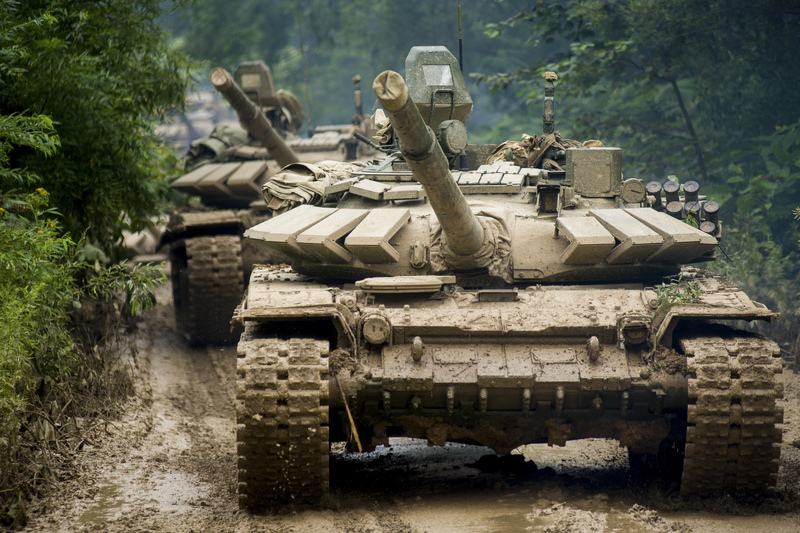
The fact that Russia is only counting on a short pause in its military activities is also indicated by where it is directing these funds, namely the acquisition of military technology. For example, Russia is purchasing additional Su-35 aircraft for its air force. Russia already has better aircraft, the Su-57, but its production is slower than that of the Su-35. If Russia only wanted to replace its war losses and was counting on a conflict in the longer term, it would certainly want to rearm with a more modern, advanced type. Nevertheless, it is purchasing the Su-35 as a fourth-generation aircraft because it can have it sooner and faster. The situation is similar with other acquisitions, other types of military equipment (tanks, cannons, IFVs). This also tells us a lot.
The fact that Russia currently spends about 20% of its GDP on defense is important to us for another reason. Like all other countries, the Czech Republic has committed to increasing its military spending in response to Russian aggression in Ukraine. This will amount to 5% of GDP, with 3.5% of GDP being direct military spending and another 1.5% of GDP being ancillary defense-related spending, such as spending on military infrastructure. This increase has provoked quite a storm of reaction—economists in particular seem to think that 5% of GDP is too much to spend on defense. However, compared to Russia's 20% of GDP, it is not much.
Of course, the question is whether NATO countries—including the Czech Republic—should spend 5% of their GDP on defense, and whether less would suffice. After all, European countries generally have a higher GDP per capita than Russia. And European countries have more inhabitants than Russia and therefore a much higher total GDP – the economy of Germany alone, just one of the European NATO members, is stronger than that of Russia. Nevertheless, we should always bear in mind that Russia's military budget amounts to approximately 20% of its GDP.