
The EU Wants to Train and Retrain 600,000 Defense Industry Workers by 2030
The European Union is launching an unprecedented continent-wide effort to train and retrain at least 600,000 workers for its defence industry by 2030, as part of a broader push to close a critical skills gap that threatens Europe’s strategic autonomy.
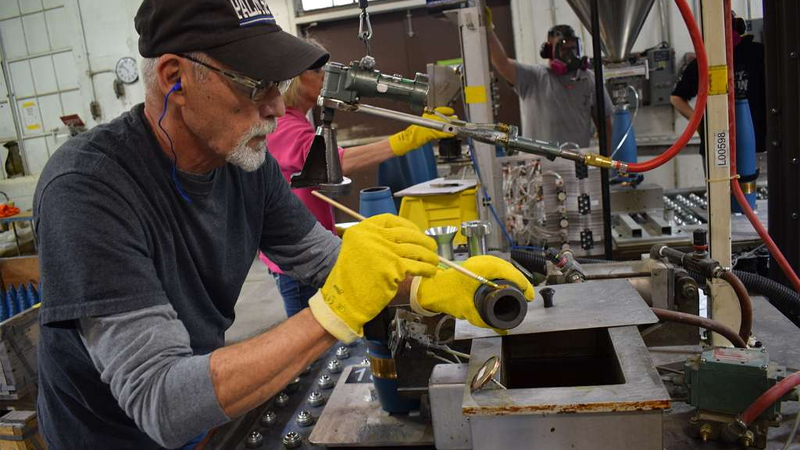
Europe’s defence sector is experiencing explosive growth. Since 2022, defence budgets across the EU have risen dramatically — collectively surpassing €300 billion in 2025 — driven by the return of high-intensity warfare to the continent, NATO’s new defence spending targets, and the need to replace equipment donated to Ukraine. Joint procurement initiatives such as the European Defence Industry Programme (EDIP), the Act in Support of Ammunition Production (ASAP), and the European Defence Industrial Strategy (EDIS) have injected billions of euros into the sector. Yet this industrial ramp-up is colliding with a severe shortage of qualified personnel.
Industry estimates suggest the European defence technological and industrial base (EDTIB) currently lacks between 150,000 and 200,000 skilled workers, with the gap projected to widen significantly by the early 2030s. Companies ranging from prime contractors (Airbus, Leonardo, Thales, Rheinmetall, Saab, KNDS) to thousands of SMEs and mid-caps struggle to recruit engineers, software developers, systems architects, production technicians, welders, machinists, and cybersecurity specialists. The problem is particularly acute in emerging domains: artificial intelligence, quantum technologies, autonomous systems, advanced materials, additive manufacturing, and space-based capabilities.

Several structural factors explain this shortage:
- Decades of under-investment in defence (post-Cold War “peace dividend”) made the sector unattractive to younger generations.
- The rapid pace of technological change has outstripped traditional training pipelines.
- High-paying civilian industries (tech giants, automotive OEMs, finance, gaming, etc.) compete fiercely for the same digital and engineering talent.
The European Commission and the European Defence Agency (EDA) have therefore made skills the cornerstone of the 2024–2027 European Defence Industrial Strategy. In March 2025, Commissioner Andrius Kubilius formally presented the Defence Skills Action Plan, which includes the ambitious target of supporting the upskilling and reskilling of 600,000 workers by 2030.
The strategy rests on four main pillars:
1. Massive reskilling of workers from declining or transitioning industries
The automotive sector — hit hard by electrification, software-defined vehicles, and overcapacity — is the primary reservoir. Hundreds of thousands of technicians, mechanical engineers, and supply-chain specialists possess transferable skills (precision manufacturing, systems integration, quality assurance). Similar transitions are planned from civil aviation subcontractors, traditional energy, and even the offshore wind sector.
2. Continuous upskilling of the existing defence workforce
Around 40–50 % of the 600,000 target concerns workers already employed in the sector who need new qualifications in AI, cybersecurity, quantum-resistant encryption, hypersonics, directed-energy weapons, or advanced composites.
3. Attracting new talent, especially youth and women
Defence careers suffer from an outdated image. The EU is funding large-scale awareness campaigns, dual-study programmes, and subsidised apprenticeships. A flagship initiative is the European Defence Talent Platform (still in development in 2025), which will function as a pan-European job and internship portal, matching students and young professionals with SMEs and large groups alike. Subsidised internships and “Defence Hackathons” are designed to showcase cutting-edge projects and counter the perception that defence is bureaucratic or ethically problematic.
4. Building long-term training infrastructure
The future European Defence Skills Academy (expected to be operational by 2028–2029) will play a coordinating role similar to the European Security and Defence College, but focused on industrial skills. It will harmonise curricula, certify competences across Member States, anticipate future needs through regular skills forecasting, and deliver both in-person and e-learning modules. Existing centres of excellence — such as the European Security and Defence College, the Kortenberg Cybersecurity Training Centre, and national defence universities — will be integrated into this network.
Funding will come from multiple sources: the European Defence Fund (€1.5 billion for 2028–2034 under the proposed EDIP regulation), national recovery plans still containing unspent RRF funds, the European Social Fund Plus, and new dedicated budget lines under the 2028–2034 MFF currently under negotiation.
Beyond the headline figure of 600,000, the initiative aims to achieve broader societal goals: reducing youth unemployment in regions affected by industrial transition, increasing the share of women in the defence industry (currently below 20 % in technical roles), and reinforcing Europe’s technological sovereignty at a time of intensifying geopolitical competition.
By transforming a potential bottleneck into a strategic opportunity, the European Union hopes not only to meet immediate production targets — such as delivering one million artillery shells per year by 2026–2027 and scaling up drone and missile production — but also to build a resilient, innovative, and attractive defence ecosystem capable of sustaining itself for decades to come.