
Will the Pentagon Cancel Major Exercises to Pay for the Iran War
As the Pentagon works up a request for supplemental funding tied to the war in Iran, one question is rising above the rest: will the department have to trim military exercises to cover wartime bills in the meantime?
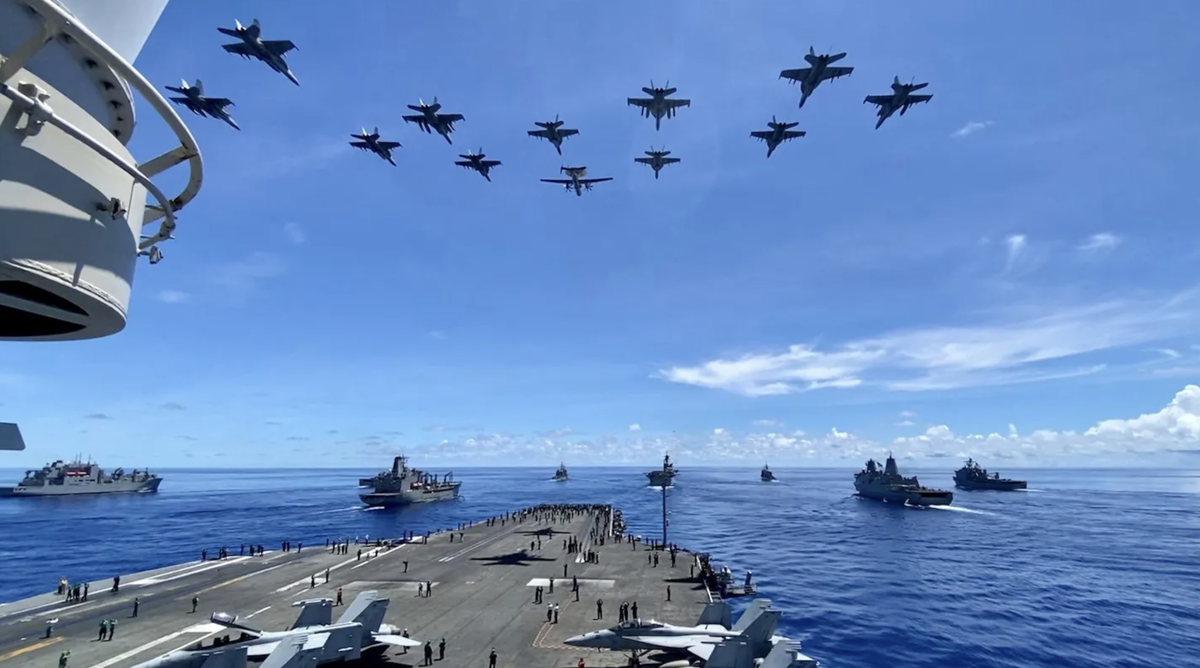
That uncertainty was at the center of a recent conversation on Pentagon Buzz, where Jules Hurst—performing the duties of the Pentagon’s comptroller—spoke with Breaking Defense Editor-in-Chief Aaron Mehta about the cost pressures the department is watching most closely: exercises, fuel costs, and the timing of any supplemental request.
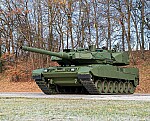
Exercises: the first place people look, but not the only lever
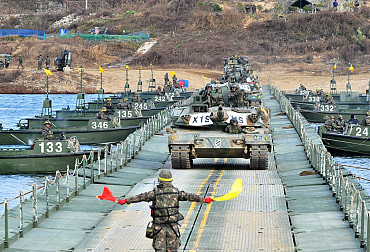
Large-scale exercises are often viewed as a “flex” point in defense spending because they can be delayed, resized, or re-scoped faster than major procurement programs. That’s why the prospect of a new war immediately triggers speculation that training events could be curtailed to free up operating funds.
In the discussion, Hurst addressed exercises directly—an implicit acknowledgement that planners are already considering how operational tempo and readiness activities interact with wartime costs, especially before Congress approves any additional funding.
Fuel costs: the budget pressure that moves fast
Fuel is one of the most sensitive near-term cost drivers in military operations. When activity levels rise—more sorties, more steaming days, more convoy miles—fuel consumption rises with it. Even without precise numbers on the table, the mere fact that Hurst highlighted fuel costs signals that the Pentagon is tracking how quickly those bills can accumulate and how they might ripple into other readiness accounts.
The key variable: when a supplemental could arrive
The biggest practical issue isn’t only the total cost—it’s timing. A supplemental request can change what trade-offs the Pentagon has to make inside its existing budget. If additional funding arrives quickly, the department may be able to sustain planned exercises and readiness activities with fewer near-term disruptions. If it takes longer, pressure can build to shift money internally to cover immediate operational needs.

Hurst also discussed “when a supplemental could come,” underscoring that the calendar matters as much as the topline.
What we know—and what we don’t yet
Based strictly on the facts provided:
- The Pentagon is preparing a supplemental funding request for the war in Iran.
- Cost questions are already surfacing around exercises and fuel.
- Jules Hurst, leading the comptroller’s office in an acting capacity, discussed these issues with Aaron Mehta on Pentagon Buzz.
What is not yet established from the information provided is whether exercise cuts will actually happen, which exercises might be affected, how large fuel-driven overruns could be, or what timeline the supplemental might follow.
Bottom line
The Pentagon is clearly anticipating cost strain and is already framing the conversation around the most immediate readiness pressure points—exercises and fuel—while watching the timing of a supplemental request that could determine whether internal trade-offs are temporary, significant, or avoidable.