Without Factories in Europe, There Will Be No Orders: Is a New Reality Emerging in the Arms Market?
The European defense industry is entering a period of profound transformation. Production capacity is expanding at an unprecedented pace in peacetime, reshaping the existing industrial base. New plants, expansions, and infrastructure projects cover millions of square meters, and analytical estimates indicate a several-fold increase in investment activity compared to the period before 2022. The onset of high-intensity warfare on NATO’s eastern flank is leading governments to build up capabilities for protracted conflicts, rather than merely replenishing stocks on a one-off basis.
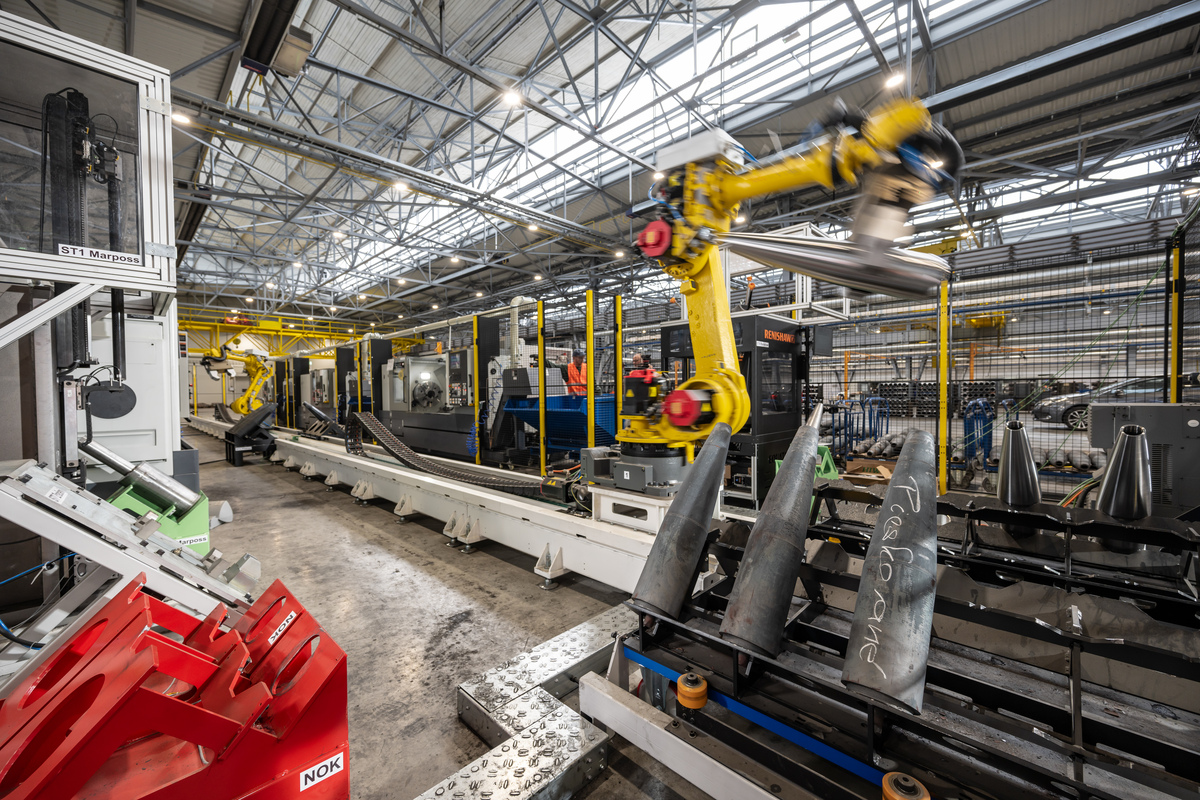
At the heart of this change lies a shift from “just-in-time” production to an industrial base capable of sustaining a high rate of delivery of ammunition, missiles, and complex weapon systems over the long term. In the 155 mm artillery ammunition segment, Europe has seen a rise in nominal annual capacity from approximately 300,000 rounds to nearly two million, with targets set for 2027 anticipating a further increase. Public funding at both the European and national levels plays a key role in this process. The EU’s Act in Support of Ammunition Production (ASAP) program and related instruments under the European Defense Industrial Strategy are directing hundreds of millions of euros to specific plants manufacturing ammunition and missiles.
In addition to European grant programs, there are extensive investments at the national level. Germany has established a debt-financed fund of 100 billion euros for the modernization of the Bundeswehr (Sondervermögen) and, in addition, a broader infrastructure package worth 500 billion euros, which will also cover dual-use projects. These funds are directed not only toward the acquisition of ready-made systems, but also toward the expansion of production lines, the development of storage capacities, and the strengthening of logistics chains in the defense sector. At the same time, banks and investment funds are increasingly willing to finance defense projects. The EU regulatory framework now explicitly confirms the compatibility of defense investments with sustainable financing while adhering to the required ESG standards.
At the same time, governments are increasingly making access to defense contracts contingent on the requirement for the widest possible local production and the involvement of domestic subcontractors. Tender documents now include minimum local production quotas, mandatory technology transfer, and the establishment of research and development centers within the contracting authority’s territory. These conditions are leading large multinational arms manufacturers to make extensive investments in Europe, relocate part of their production, and establish new branches in EU member states.
Germany serves as the main hub of this transformation, as it combines a high defense budget, political demand for a more robust industrial base, and an extensive set of public support programs. Traditional companies such as Rheinmetall, KNDS Deutschland, and Diehl Defence are joined by foreign players responding to opportunities in the ammunition, air defense systems, rocket artillery, and electronic warfare segments.
The Israeli company Elbit Systems is a prime example of adaptation to the new European landscape. Its German subsidiary is expanding its capabilities across the value chain and transferring a significant portion of its development and production to Germany. As part of the Bundeswehr’s ground operations digitization program, production of E-LynX tactical radios has been localized, with not only final assembly but also the associated supply chain, testing, and service operations taking place in Germany.
Elbit Systems Deutschland’s second wave of expansion includes the acquisition of additional real estate and the establishment of up to five new sites, with a significant increase in the number of employees compared to current levels. The company is focusing primarily on rocket artillery and air defense projects. The EuroPULS system, derived from the Israeli PULS solution, is intended to create a modular platform for the Bundeswehr capable of using various types of munitions with ranges from tens to several hundred kilometers. Candidates include EXTRA missiles with a range of around 150 kilometers or Predator Hawk missiles with a range of around 300 kilometers. The goal is to develop a solution for European production of missiles used in the EuroPULS system, with a significant share of German manufacturing.

Elbit is also developing the Iron Fist active protection system in Germany, which uses radar and electro-optical sensors to detect threats, evaluate their trajectory, and activate interceptors in front of the vehicle. Weighing approximately 500 kilograms, the solution can be integrated onto Boxer and Dingo platforms and is effective against guided missiles, kinetic projectiles, and unmanned aerial vehicles, including loitering munitions, reflecting the growing role of drones on the battlefield. In parallel, Elbit is strengthening its unmanned aerial vehicle and precision-guided munitions segment through the SkyStriker system, which combines reconnaissance with precision strike capabilities and enables extended loitering over the target. Integration into systems such as EuroPULS expands the range of effectors depending on the specific deployment scenario. At the same time, the company is strengthening its research and development efforts, with Elbit Systems Deutschland having signed an agreement with the startup Cucuyo to utilize laser communication technology for military applications. Elbit is thus fulfilling its strategy of full localization in the customer’s country, thereby strengthening its position in securing long-term contracts.
It is not only Israeli companies that are capitalizing on the current wave of localization. South Korea’s Hanwha Aerospace has announced plans to build a plant in Germany for the production of precision-guided munitions and missile systems, with the company considering several locations in the eastern part of the country. The plan builds on Hanwha’s previous activities in Europe, including the supply of K9 Thunder self-propelled howitzers and Chunmoo rocket launchers. At a meeting with German government agencies and industry partners in Berlin, company executives presented their vision of Germany as a hub for European operations.
Hanwha is also building a partner network in other European countries. In Poland, a joint venture with WB Group is being established to manufacture Chunmoo rocket launchers and guided munitions for domestic and foreign customers. Romania is preparing to produce K9 howitzers and K10 vehicles, with production expected to begin around 2027. Poland also has the ambition to become a European hub for the production of the K2 Black Panther tank through the localization of assembly and future upgrades.
This strategy by Korean companies also fits into the broader trend of the “Europeanization” of defense cooperation. Seoul seeks to be perceived as a long-term defense partner, not just as a quick arms exporter. In practice, this means an interest in building production and research centers in Europe, sharing technology, and participating in EU initiatives in the defense industry. However, European companies are also strengthening their own capabilities, so Israeli and South Korean firms must “partially Europeanize” themselves and enter the European ecosystem as “local companies.”
The overall trend is toward the creation of a robust European defense industrial base that combines national capabilities with international cooperation. Localization of production, long-term public funding, and the expanding role of non-European partners—such as South Korean and Israeli companies—are reshaping the market. Foreign companies that adopt a strategy of long-term physical presence, technology transfer, and development in Europe will gain access to significant contracts and stable markets. For countries capable of setting smart conditions, an opportunity is opening up to strengthen industrial and technological sovereignty alongside deeper integration into the European defense ecosystem.