
XM30 Procurement Launch: U.S. Army Accelerates Bradley Replacement with Next-Gen Firepower and Protection
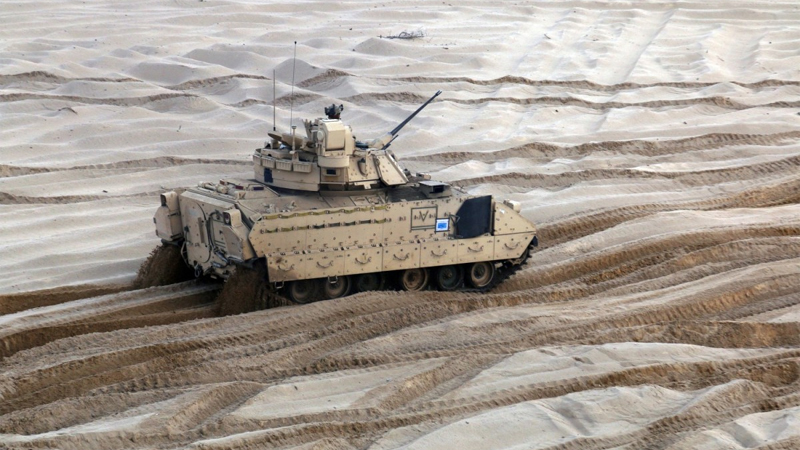
The U.S. Army has taken a major step toward modernizing its armored forces with the recent launch of procurement for the XM30 Mechanized Infantry Combat Vehicle (MICV), formerly known as the Optionally Manned Fighting Vehicle (OMFV). In the FY2027 budget request, the Army allocated $547 million for an initial batch of 19 vehicles, signaling confidence in the program’s progress after years of restarts and refinements. This marks the latest – and potentially most promising – effort to replace the aging M2 Bradley Infantry Fighting Vehicle, which has served as the backbone of U.S. mechanized infantry for over four decades.
Roots of the XM30 Project: Decades of Frustration and Adaptation
The quest to replace the Bradley dates back to the 1980s, with multiple failed programs highlighting the challenges of balancing firepower, protection, mobility, and cost in a tracked combat vehicle. Early attempts included elements of the Future Combat Systems (FCS) program in the 2000s, which envisioned lighter, networked platforms but was canceled due to technological immaturity and cost overruns. The Ground Combat Vehicle (GCV) program followed in the 2010s, aiming for a heavier, better-protected successor capable of carrying a full nine-man squad, but it too was terminated amid concerns over weight, affordability, and schedule delays.
The current effort originated as OMFV under the Next Generation Combat Vehicle (NGCV) portfolio in 2018–2019. Initial requirements were ambitious: a vehicle under 50 tons with superior protection to the Bradley, optionally manned capabilities, hybrid-electric drive, and the ability to transport a squad while fitting two per C-17 transport aircraft. A 2020 solicitation attracted limited viable bids, leading to cancellation and a reboot to foster broader competition and realistic timelines. By 2021–2022, the Army shifted to a more flexible approach using digital engineering and modular open systems architecture (MOSA). Five teams competed in the concept design phase, including offerings from BAE Systems, Oshkosh, and others. In June 2023, the program was redesignated XM30, and contracts worth about $1.6 billion were awarded to two finalists: General Dynamics Land Systems (GDLS) and American Rheinmetall Vehicles. Prototypes are expected in 2026, with a downselect for low-rate initial production targeted for late 2027 and first unit equipped around 2029. The overall program could exceed $45 billion.
This evolution reflects lessons from past failures and evolving threats, including those observed in Ukraine, such as widespread use of drones, ATGMs, and loitering munitions. The XM30 prioritizes survivability through active protection systems (APS), signature reduction, and hybrid power for silent watch modes, while embracing digital design tools for faster iteration.
Contenders: Two Strong Competitors with Distinct Approaches
The competition has narrowed to two experienced teams, each leveraging proven international platforms with U.S.-specific adaptations.
General Dynamics Land Systems proposes a design based on the Griffin III, drawing from the ASCOD 2 family (which underpins vehicles like the British Ajax and earlier Ulan/Pizarro variants). It features an unmanned turret with the XM913 50mm autocannon, hybrid-electric drive, modular armor, and integration with future digital architectures (compatible with the M1E3 Abrams). GDLS emphasizes its deep experience with U.S. Army vehicles like the Bradley upgrades, focusing on reliability, growth potential, and crew protection.
American Rheinmetall Vehicles (part of the German Rheinmetall group) advances the Lynx KF41-based design, known for its modularity and spacious interior. The U.S. variant adapts to Army requirements with a two-crew configuration (plus six dismounts), an unmanned turret (initially 30mm with upgrade path to 50mm, or directly 50mm), and advanced sensor fusion. Partners include Anduril for AI/autonomy elements and L3Harris for electronics. The Lynx has seen success in Hungary and emphasizes export-friendly modularity, silent operation via hybrid power, and 360-degree situational awareness.
Both designs incorporate a hybrid-electric propulsion system for improved efficiency, reduced signatures, and power for advanced electronics. They feature unmanned turrets to reduce crew size from the Bradley’s three to two, freeing space while maintaining squad transport (six infantry). Prototypes will undergo rigorous soldier touchpoints and testing, with the Army planning a limited competition for final selection.
Army Expectations: Transformational Capabilities for the Modern Battlefield
The U.S. Army envisions the XM30 not as a simple Bradley replacement but as a “transformational” platform for Armored Brigade Combat Teams facing near-peer adversaries. Key requirements include:
Lethality: Primary armament centers on the XM913 50mm autocannon (or upgradable 30mm), offering significantly greater range, penetration, and programmable airburst munitions than the Bradley’s 25mm M242 Bushmaster. This enables effective engagement of light armored vehicles, drones, and infantry at extended distances. Side-mounted ATGMs provide anti-armor punch.
Survivability: Emphasis on modular armor, integrated hard- and soft-kill APS (to counter ATGMs and drones), signature management (thermal/acoustic), and blast-attenuating seats. Weight is expected in the 40-55 ton range (heavier than the Bradley’s 33-40 tons in later variants), prioritizing protection over strict air-transport constraints.
Mobility and Sustainability: Hybrid-electric drive supports quiet movement, better fuel efficiency, and onboard power for sensors/networks. Tracked configuration ensures cross-country performance comparable or superior to the Bradley.
Manning and Capacity: Two-person crew (driver and commander/gunner roles automated via unmanned turret) plus six dismounts – the capacity is enabling optionally manned or robotic teaming modes in the future. MOSA allows rapid tech insertions without full redesigns.
Networking and Autonomy: Advanced sensors, 360-degree awareness, AI-assisted targeting, and integration into broader battlefield networks for controlling semi-autonomous systems.
Compared to the current Bradley (M2A4 variants), the XM30 promises decisive leaps: far superior firepower against evolving threats, better crew/infantry protection against mines/IEDs/drones, reduced logistical burden via efficiency, and upgradeability beyond the Bradley’s physical/economic limits. The Bradley remains capable with ongoing upgrades (e.g., Iron Fist APS, new engines), and both will operate alongside each other for years. However, the Bradley’s age shows in limited growth margin for new electronics and vulnerability to modern anti-armor systems.
Globally, the XM30 aims to match or exceed top-tier contemporaries:
German Puma: Highly protected (up to 43 tons with add-on armor, resistant to 30mm rounds and RPGs), with a 30mm MK30-2 cannon, MELLS ATGMs, hunter-killer optics, and modular design. It offers excellent crew survivability (3+6) and 360-degree cameras but is diesel-powered without hybrid emphasis. The XM30’s 50mm option and hybrid drive could provide firepower and silent-watch advantages, while matching protection levels through APS and modularity.
ASCOD family (e.g., Austrian Ulan, Spanish Pizarro, basis for GDLS Griffin): Proven 30mm-armed platforms with good mobility (70+ km/h), solid protection, and 3+7/8 capacity. They emphasize reliability and firepower but lack the unmanned turret/hybrid elements central to XM30. The GDLS contender directly builds on this heritage, potentially offering similar agility with U.S.-enhanced lethality and digital integration.
Polish Borsuk: A lighter (28-40 tons), amphibious design with 30mm Mk44 Bushmaster II in a remote turret, Spike-LR ATGMs, and advanced Polish optics/Obra-3 warning system. It excels in mobility (65 km/h road, 8 km/h water) and modularity on a universal platform but has less emphasis on heavy protection compared to Western peers. The XM30 prioritizes heavier armor/APS for high-intensity conflict, trading some amphibious capability for superior survivability and networked lethality against peer threats. – But the Poles are also actively developing a heavy version named Ratel. The Borsuk satisfies the need for an agile, amphibious replacement for the old Soviet-era BMP-1, while the Ratel heavy IFV addresses the requirement for a much more survivable vehicle that can fight in the same formations as Western-style heavy armor against peer threats. The Ratel’s emphasis on heavier base armor and tank-compatible survivability makes it a more direct peer to the XM30’s expected 40–55 tonne range, though the XM30 still aims for superior lethality (50 mm cannon option), hybrid-electric propulsion, and modular open-systems architecture. Both Polish designs share the ZSSW-30 turret, giving Poland excellent fleet commonality that the XM30 will seek through its own MOSA approach.
Other modern IFVs like the Swedish CV90 (highly successful exports, 30–40mm options) or Russian T-15 (heavy, 57mm-armed) set benchmarks in protection or firepower, but the XM30’s combination of 50mm cannon, hybrid power, MOSA, and optional autonomy positions it as a leader in multi-domain operations. It addresses gaps in drone defense and electronic warfare integration that many peers are still catching up on.
Challenges and Outlook
While promising, the XM30 faces hurdles: rising costs, integration risks for new technologies (e.g., APS effectiveness against swarms), and ensuring prototypes meet soldier feedback. Ukraine lessons have prompted requirement tweaks for enhanced counter-drone/ATGM defenses. Success could reshape U.S. mechanized warfare, enabling faster, more lethal combined-arms maneuvers in contested environments.
The FY2027 procurement launch indicates momentum, with prototypes and testing paving the way for fielding in the early 2030s. If delivered as envisioned, the XM30 could finally end the Bradley’s long reign while setting a new standard for infantry fighting vehicles worldwide.