
Attack Helicopters’ Twilight? Japan’s Bold Shift and the Global Future of Manned vs. Unmanned Warfare
Japan’s Ground Self-Defense Force (GSDF) is embarking on a significant transformation in its aviation capabilities, phasing out its fleet of manned attack and observation helicopters in favor of unmanned aerial systems. This shift, rooted in the country’s 2022 Defense Buildup Program, reflects broader strategic priorities amid rising regional tensions, particularly around the southwestern islands near potential flashpoints with China. The plan aims to transfer reconnaissance, surveillance, and ground attack roles from legacy platforms like the AH-1S Cobra and AH-64D Apache to a mix of multi-purpose, attack, and surveillance drones. Recent developments in Japan’s fiscal year 2026 defense budget underscore this commitment, with allocations signaling the start of a phased retirement process that could reshape the GSDF’s aerial doctrine by the early 2030s.
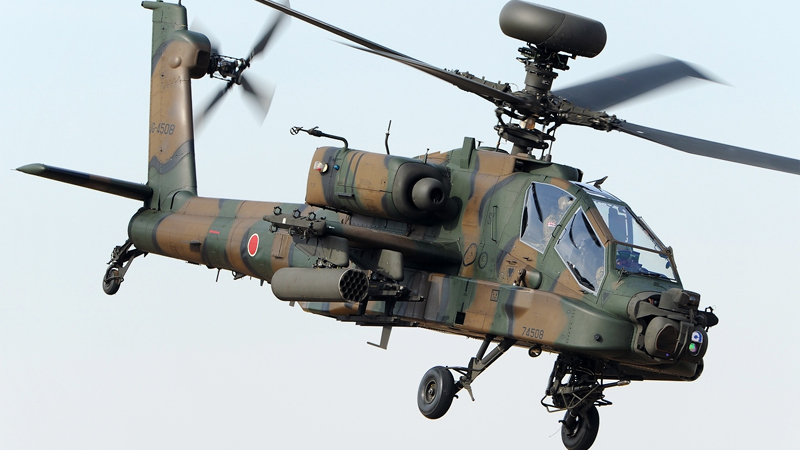
The core of Japan’s plan lies in the December 2022 Defense Buildup Program, approved by the cabinet as part of a wider effort to double defense spending and enhance deterrence. The document explicitly calls for the “elimination of obsolete equipment,” including the AH-1S anti-tank helicopters, AH-64D combat helicopters, and Kawasaki OH-1 observation helicopters. These platforms, numbering around 12 Apaches, roughly 50 Cobras, and about 37 OH-1s at the time of the announcement, are to see their firepower and reconnaissance missions handed over to unmanned systems categorized as attack/utility, miniature attack, and surveillance UAVs. The transition is gradual, with some existing helicopters potentially armed or retained minimally for interim capabilities while new units are stood up. By fiscal year 2032, the GSDF envisions establishing at least one dedicated multi-purpose unmanned aircraft unit. This move is driven by several factors: the high operational costs and maintenance demands of aging manned helicopters, the vulnerability of low-flying rotorcraft to modern air defenses as demonstrated in conflicts like Ukraine, and the advantages of drones in endurance, reduced risk to personnel, and scalability for island defense scenarios.
In the fiscal year 2026 budget, Japan has allocated approximately $69.7 million to procure five wide-area UAVs for the GSDF, marking the first concrete funding step toward this replacement. Broader investments in unmanned capabilities exceed ¥280 billion in related areas, including plans for hundreds of small attack drones. These systems are tailored for Japan’s geography, emphasizing persistent surveillance over vast maritime approaches and rapid, attritable strikes against amphibious threats or ground forces. The strategy also includes developing families of expendable attack UAVs, from short-range FPV-style loitering munitions (Type I) for tactical engagements against vehicles and personnel, to medium-range variants (Type II) for fortified targets, and longer-range options (Type III) reaching up to 100 kilometers for precision strikes on landing craft or logistics nodes. This procurement aligns with lessons from the Russia-Ukraine war, where drones have proven effective at low cost while minimizing human exposure in contested environments. Japan expects the shift to free up around 1,000 personnel previously tied to helicopter operations, allowing reallocation to other critical defense areas.
Several drone platforms are under consideration or likely to influence Japan’s selections for replacing the Cobra and Apache roles. For wide-area surveillance and multi-role missions, systems like the Bayraktar TB2 and Israel Aerospace Industries Heron Mk II have emerged as leading contenders due to their proven track records in reconnaissance and light strike operations. The TB2, in particular, offers a balance of endurance, payload capacity for munitions, and relatively low acquisition and operating costs, making it suitable for persistent patrols over island chains. Medium-altitude, long-endurance (MALE) drones akin to the MQ-9 Reaper series could handle utility and attack functions, providing hours of loiter time with advanced sensors for target acquisition. For miniature and tactical attack roles, Japan is accelerating indigenous or adapted loitering munitions, including small suicide drones deployable by infantry units. Approximately 310 such small attack drones are slated for introduction in fiscal year 2026, designed for one-way strikes on vehicles, vessels, and exposed targets. These would complement larger systems, creating a layered unmanned force capable of swarm tactics, electronic warfare support, and integration with manned assets where retained. Domestic development efforts, including partnerships for AI-enhanced autonomy, are also underway to reduce reliance on foreign suppliers and tailor platforms to Japan’s specific operational needs in anti-access/area-denial scenarios.
Japan’s bold pivot raises questions about whether attack helicopters are facing a general phase-out among major armed forces worldwide. The answer is nuanced: while drones are gaining prominence everywhere due to their affordability, attritability, and reduced risk, manned attack helicopters are not being universally retired. Instead, many militaries are integrating them with unmanned systems through manned-unmanned teaming (MUM-T) concepts, where helicopters act as command nodes directing drone swarms rather than sole strike platforms. In the United States, the Army is restructuring its aviation forces amid lessons from Ukraine, where Russian attack helicopters suffered heavy losses to portable air defenses and drones. The service is cutting hundreds of legacy helicopters, including older Apaches, reducing attack formations by up to 50 percent in some brigades, and canceling programs like the Future Attack and Reconnaissance Aircraft (FARA). Procurement of new AH-64E variants has slowed, with emphasis shifting to drone swarms for low-cost attacks and sustainment of upgraded Apaches as anti-drone hunters equipped with proximity-fused munitions. However, the Army continues investing in Apache modernization, viewing the platform as enduring through at least the 2030s when paired with unmanned effectors, rather than a full replacement. Black Hawk replacements like the FLRAA tiltrotor proceed, but pure attack helicopter roles are being augmented, not eliminated outright.
In Europe, trends vary by nation. Poland has committed aggressively to manned helicopters, signing for 96 AH-64E Apaches in a major deal to bolster its eastern flank against Russia, signaling confidence in upgraded rotorcraft for high-intensity conflict. Other NATO members are modernizing existing fleets while experimenting with drones, but budget constraints and the need for versatile platforms in diverse terrains keep attack helicopters in the mix. Russia, despite significant losses of Ka-52 and Mi-28 helicopters in Ukraine, continues operating and upgrading them, adapting tactics for standoff missile use and terrain masking rather than abandoning the category. China maintains a robust helicopter force, including the Z-10 and Z-19 attack variants, alongside rapid drone development for reconnaissance-strike roles. Beijing appears to favor a hybrid approach, using helicopters for mobile firepower in contested littorals while expanding UAV capabilities for swarm and long-endurance missions. South Korea notably canceled a large follow-on Apache order in 2025, citing cost and vulnerability concerns in favor of greater unmanned investment, echoing aspects of Japan’s rationale.
Globally, the Ukraine conflict has accelerated drone adoption across armed forces, highlighting the vulnerability of slow, low-flying manned platforms to cheap FPV drones, MANPADS, and electronic warfare. Drones excel in persistence, mass, and risk acceptance, often at fractions of helicopter operating costs – a TB2 might fly for under $1,000 per hour versus thousands for an Apache. Yet, attack helicopters retain unique strengths: superior payload for heavy ordnance, rapid response in dynamic battles, all-weather crewed decision-making, and the ability to operate in environments where communications are jammed. No major power has fully phased them out; instead, the consensus leans toward evolution. The U.S. and others are pursuing “system of systems” models where helicopters oversee drone teams, combining human judgment with unmanned scale. Japan’s plan stands out as one of the most decisive moves toward unmanned dominance in attack and recon roles, driven by its island defense focus and personnel efficiencies. It may inspire similar shifts in resource-constrained forces, but for peer competitors with vast territories or expeditionary needs, helicopters are likely to persist in hybrid formations for decades.
This transition in Japan represents more than equipment replacement; it signals a doctrinal evolution toward attritable, technology-driven warfare. By embracing drones for roles once dominated by Cobras and Apaches, the GSDF aims to enhance survivability, stretch budgets further, and deter aggression through persistent, low-signature presence. Challenges remain, including integration hurdles, autonomy reliability in contested electromagnetic environments, and ensuring robust command links. As other nations observe and adapt, the future of aerial ground attack appears increasingly collaborative between manned and unmanned assets, with Japan’s aggressive timeline potentially serving as a benchmark for how quickly legacy platforms can yield to innovation.