Blueprints for Storm Shadow: Britain’s Decision Could Arm Ukraine with Precision Strike Power
In a significant escalation of Western support for Ukraine’s defence efforts, British Prime Minister Andy Burnham authorised the release of classified technical data on British-made components of the Storm Shadow cruise missile during his first overseas visit to Kyiv on 24 August 2026. Timed to coincide with Ukraine’s Independence Day commemorations, the decision removes a critical legal and industrial barrier, allowing Ukraine and France to move forward with establishing local assembly and production lines for the Anglo-French weapon, also known as SCALP in French service. This follows earlier French commitments and enables Ukrainian facilities to pursue component production, integration, and certification, aiming to reduce dependence on depleting European stockpiles by the end of 2026. Burnham emphasised unwavering British backing, stating the United Kingdom stands with Ukraine “today and for as long as it takes,” while underscoring the need to maintain pressure on Russia.
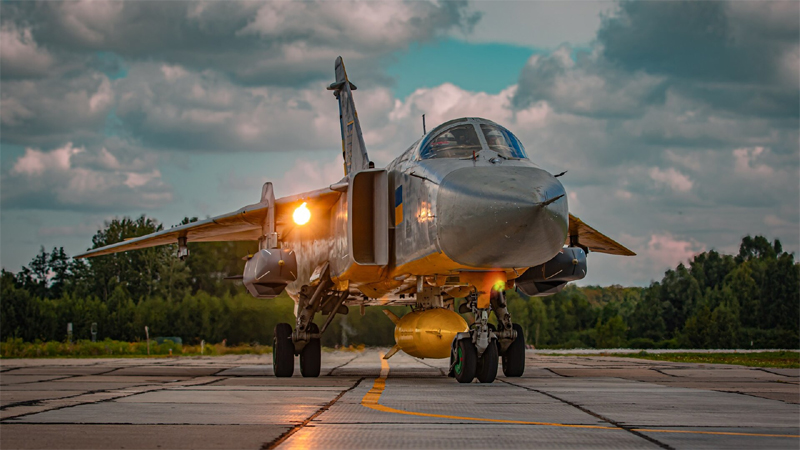
The Storm Shadow traces its origins to the mid-1990s as a collaborative Franco-British project developed by Matra and British Aerospace, later consolidated under MBDA. Evolving from the French Apache anti-runway missile, it was adapted to meet the United Kingdom’s conventionally armed stand-off missile requirement. A development and production contract was signed in 1997, with the missile entering service with the Royal Air Force around 2003-2004 and the French Air Force shortly thereafter. It first saw combat use by British forces during the 2003 Iraq War, followed by employment in the 2011 Libya intervention where it achieved high success rates against fixed targets, and later operations including strikes in Syria. Since 2023, the United Kingdom and France have supplied the missile to Ukraine, where it has been integrated onto Soviet-era Sukhoi Su-24 bombers through rapid adapter development by British engineers, enabling strikes on targets in occupied Ukrainian territories and deeper into Russian territory.
Weighing approximately 1,300 kilograms and measuring 5.1 metres in length with a body diameter of around 0.48 to 0.63 metres and a three-metre wingspan, the Storm Shadow is a low-observable, air-launched, subsonic cruise missile powered by a Microturbo TRI 60-30 turbojet engine. It cruises at high subsonic speeds of Mach 0.8 to 0.95, typically at low altitudes of 30 to 40 metres to evade detection. Operational range figures vary by source and variant, generally cited between more than 250 kilometres and up to 550 kilometres for the full-capability version, with export configurations often limited closer to 250-290 kilometres. Guidance combines inertial navigation, GPS, terrain profile matching (TERPROM), and an imaging infrared seeker for terminal accuracy, allowing autonomous fire-and-forget operation even in contested environments. Its defining feature is the 450-kilogram BROACH (Bomb Royal Ordnance Augmented Charge) tandem warhead: an initial penetrator charge clears obstacles or breaches hardened structures, followed by a main charge that detonates inside, enabling destruction of bunkers, reinforced concrete up to several metres thick, and buried facilities. Designed for precision attacks on high-value fixed or stationary targets, it excels against command-and-control nodes, airfields, ammunition depots, bridges, ports, power infrastructure, and hardened military installations.
Ukraine’s capacity to produce the Storm Shadow domestically builds on existing industrial strengths in aerospace, missile technology, and rapid wartime manufacturing, particularly demonstrated in drone and simpler munitions production. Negotiations with France for SCALP-EG licensing had already advanced by mid-2026, with Ukrainian Defence Minister Mykhailo Fedorov confirming talks after high-level discussions between Presidents Zelenskyy and Macron. The British data release on UK-specific components completes the intellectual property package needed for MBDA to support local efforts. Production is expected to begin with assembly of imported or partially local sections, progressing toward greater domestic content, certification, and integration. Challenges remain significant: the missile involves complex multi-national supply chains, sophisticated guidance and warhead systems, and stringent quality controls never previously fully transferred outside original partners. Ukrainian officials and partners target meaningful output by late 2026, though scaling to substantial volumes could require additional months or years amid wartime constraints on specialised materials, skilled labour, and secure facilities. This initiative complements the UK’s Project Brakestop, which seeks cheaper, faster long-range alternatives free of certain foreign dependencies. While Ukraine has proven agile in adapting and innovating under fire, full independent serial production of a system as advanced as Storm Shadow represents a substantial technological leap rather than an immediate mass-production boom.
Estimating quantities is inherently uncertain. Original orders included roughly 900 for the UK, 500 for France, and 200 for Italy, with additional exports elsewhere, and MBDA having produced or contracted several thousand across operators historically. Significant numbers have been expended in prior conflicts and donated or used by Ukraine since 2023, prompting production restarts in 2025 to replenish stocks. Domestic Ukrainian output will initially be modest, focused on sustaining supply rather than matching the high volumes of cheaper drones or artillery. Analysts note that even limited additional numbers of these expensive, precision weapons—each historically costing around one to two million pounds or dollars—can deliver outsized effects when prioritised against critical nodes, far more efficiently than saturating with less capable munitions. Exact production rates remain classified or speculative, but the goal is a sustainable flow that eases pressure on allied inventories while Ukraine develops complementary indigenous systems such as longer-range cruise missiles.
With enhanced availability, Ukraine could intensify strikes on high-value targets that drones often struggle to neutralise effectively, particularly hardened or deeply buried sites. Potential priorities include Russian command posts and headquarters, ammunition and fuel depots, air bases and aircraft shelters, naval facilities and ships in port (as previously demonstrated against vessels in Crimea), bridges and logistics hubs supporting the front, oil refineries and energy infrastructure funding the war effort, and reinforced bunkers or underground storage. The missile’s penetrator warhead and stand-off range allow launches from relatively safer distances, complicating Russian air defences and enabling deeper interdiction that disrupts logistics, command coherence, and industrial support for the invasion. Combined with Ukrainian long-range drone campaigns, a domestic Storm Shadow capability would amplify pressure on Russian rear areas and occupied zones.
Russia’s reaction has been predictably hostile. Kremlin spokesman Dmitry Peskov accused Britain of adding “fuel to the fire” of the conflict and methodically obstructing peaceful settlement, framing the UK as an active participant on Ukraine’s side. The Russian Embassy in London warned of inevitable consequences and a higher price for deeper involvement. More pointedly, Andrei Fedorov, a Kremlin adviser and former deputy foreign minister, suggested that semi-military actions against British factories producing drones or missile components for Ukraine could not be entirely ruled out, potentially via cyber means or attacks attributed to “unknown sources.” Russian officials indicated they are gathering intelligence on production facilities for possible targeting. Burnham responded sharply, questioning who started the fire in the first place and reaffirming resolve. These exchanges occur against a backdrop of already deteriorated relations, including the departure of the Russian ambassador from London earlier in 2026.
Overall, the transfer of Storm Shadow blueprints marks a qualitative shift from merely supplying finished munitions to enabling Ukrainian industrial sovereignty in a key precision-strike domain. While not an immediate game-changer that alters the war’s trajectory overnight, it signals sustained European commitment, bolsters Ukraine’s long-term capacity for deep strikes against hardened targets, and forces Russia to contend with a more resilient Ukrainian arsenal. Implementation will test Ukraine’s industrial resilience and Western industrial cooperation under wartime conditions, with the coming months determining how quickly these sophisticated weapons transition from allied gifts to domestically sustained tools of defence.