Croatia Joins Framework Contract for Tatra T-815 Vehicles
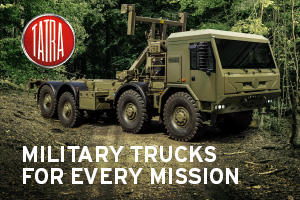
Croatia officially joined the framework contract for the procurement of Tatra T-815 military trucks today. Its representatives at the Ministry of Defense of the Czech Republic signed a relevant amendment, which allows the Croatian Armed Forces to order up to 420 vehicles in 6×6 and 8×8 configurations under the agreement.
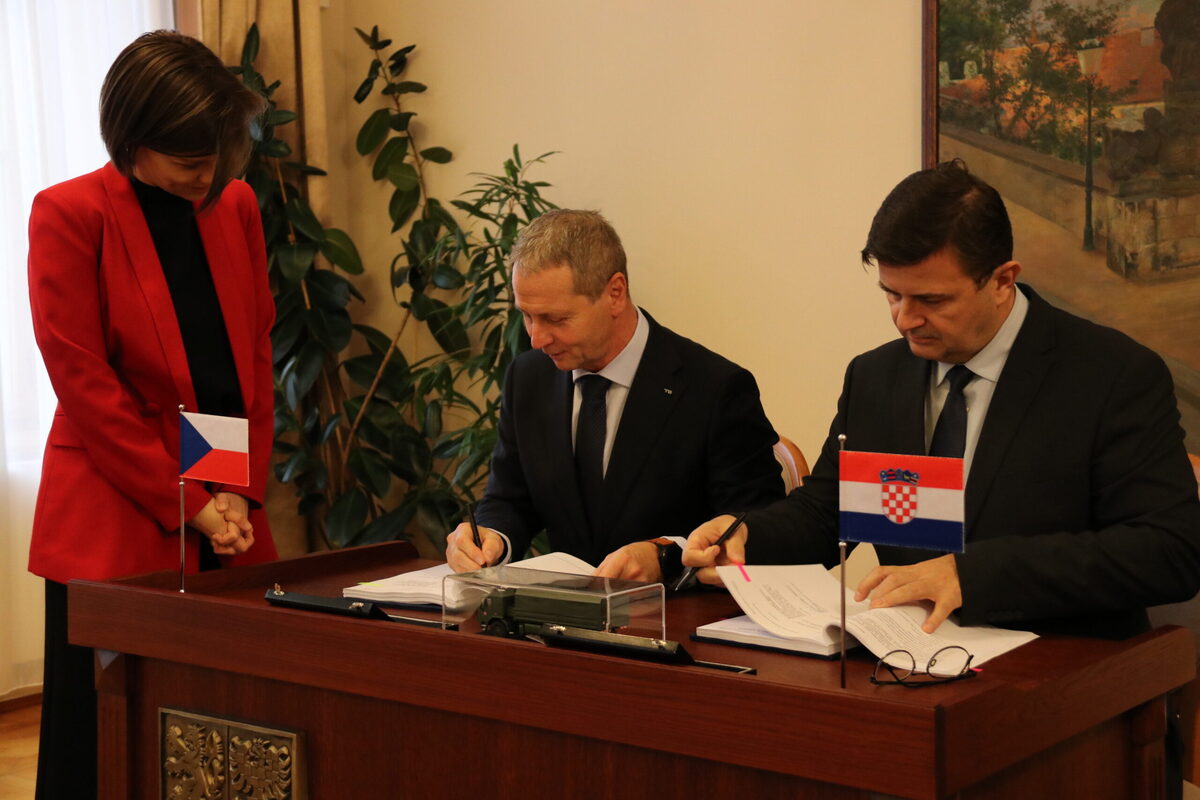
The amendment was signed in the presence of Lubor Koudelka, Director General of the Armament and Acquisitions Section of the Ministry of Defense of the Czech Republic, Ivica Grebenar, Director General of the Armament Directorate of the Republic of Croatia, and representatives of the partner countries involved in the framework agreement. Marek Sekanina, Managing Director of TATRA DEFENCE SYSTEMS, attended on behalf of the company.
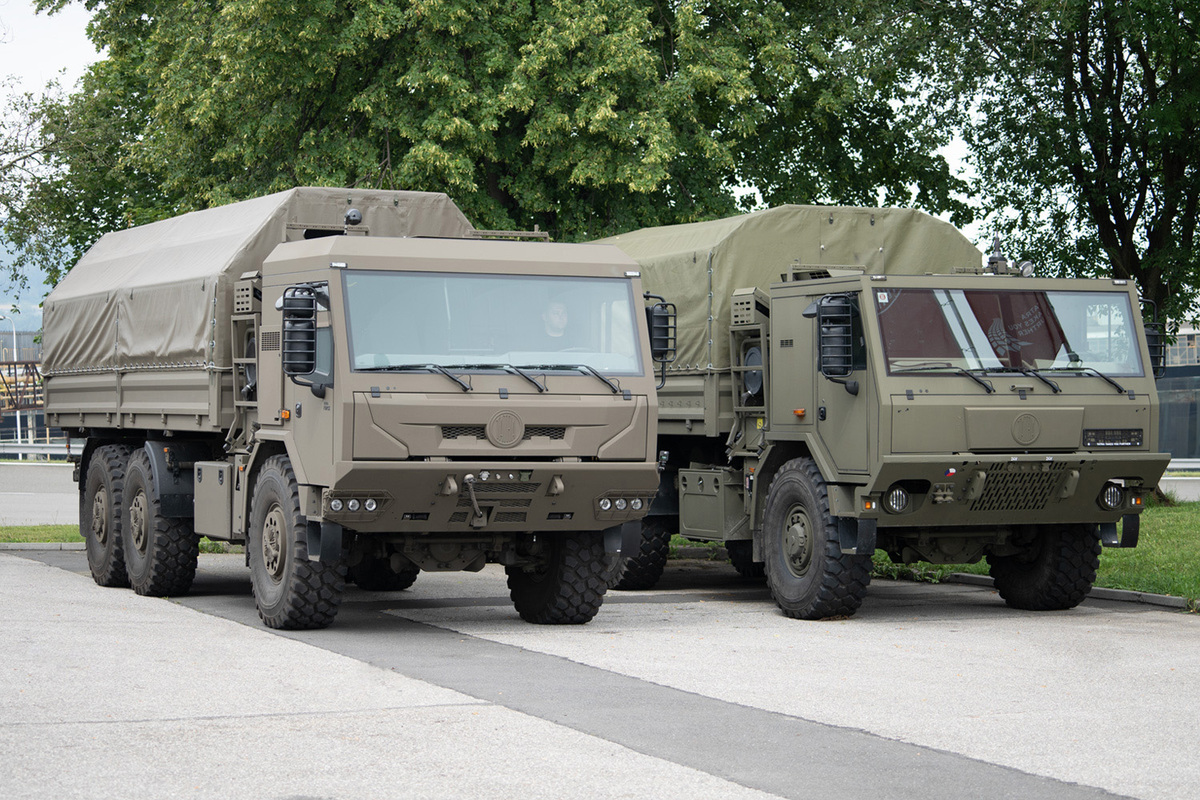
Croatia's accession follows the involvement of the Slovak Republic and confirms the growing interest of allied armies in the proven Tatra platform. The joint contract strengthens international cooperation in the field of defense technology, enables more efficient procurement of military vehicles, and supports the long-term export activities of the Czech defense industry.
The new generation of the Tatra Force series for military use
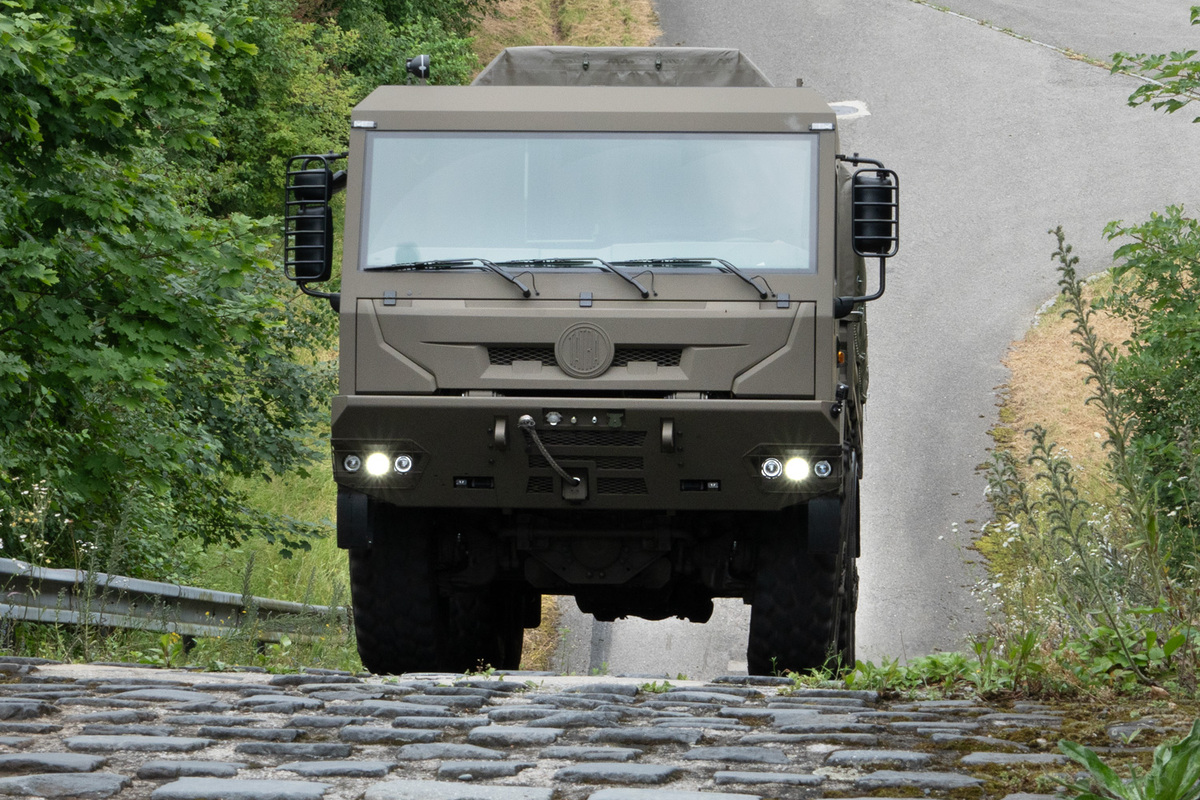
The most visible elements of the latest 3rd generation of the Tatra Force model line are the newly designed cabins, both in short (two-door) and long (four-door) versions with a number of above-standard safety features, an improved interior or a digitised dashboard and modern electronics. Compared to the previous generation, the cabins have a redesigned skeleton with modern design elements that bring increased crew safety and a better view. The two- and four-door cabins will be variable, the automaker will offer a low version that will facilitate passage in low profiles, but also, for example, loading into large-capacity transport aircraft, etc., as well as a version with a higher roof.
The digitised instrument panel meets all current requirements for ergonomics and will be in fact the same as in the civilian version of the Tatra Force model line. Instrument panel represents a combination of classic switches and control via a graphic interface (digital touch screen), which will enable the required data to be gathered in one place without the need to deploy another set of displays in the cabin. A multifunctional steering wheel will be used for the driver, and it will be possible to install air-suspended seats in the cabin (depending on the size of the tires used).
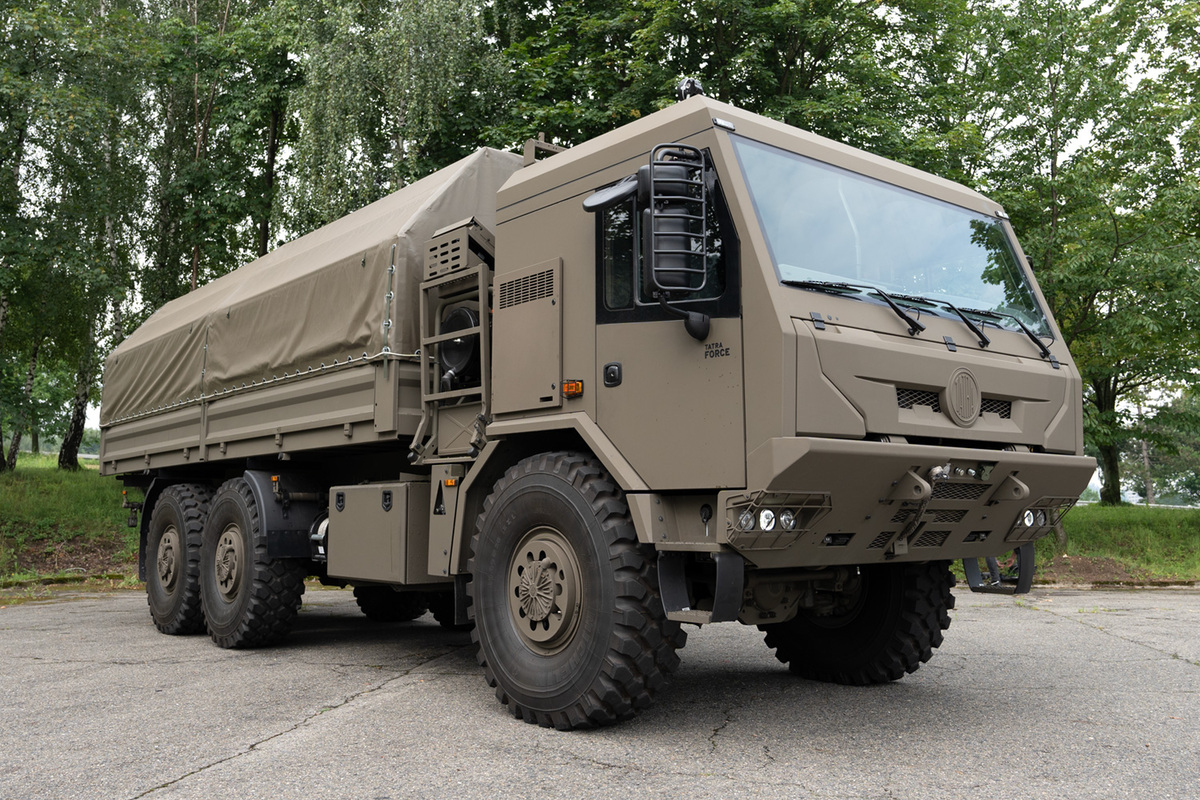
The 3rd generation of the Tatra Force series, like the previous generation, is designed with regard to the possibility of installing armoured cabins. Therefore, the vehicles will be equipped with exchangeable elements for attaching and folding the cabin, and the installation of electrical and air cables and lines will also be adapted so that it is possible to replace the standard cabin quickly and easily with an armoured one even in field conditions. This is also the reason why Tatra will no longer offer mechanical transmission control, but only electronic control.
The chassis has a proven Tatra concept with a central backbone tube and swinging independently suspended half-axles. Thanks to this – and also due to the above-average approach angles – the third generation of Tatra Force series is expected to have even better riding characteristics on paved roads and off-road than the second generation. The new generation Tatra Force trucks will be offered as standard in a configuration with 4x4, 6x6 and 8x8 chassis, with the option of equipping the vehicles with either drum or disc brakes on all wheels. As with previous generations, however, multi-axle versions with various numbers of driven and steerable axles will also be available.
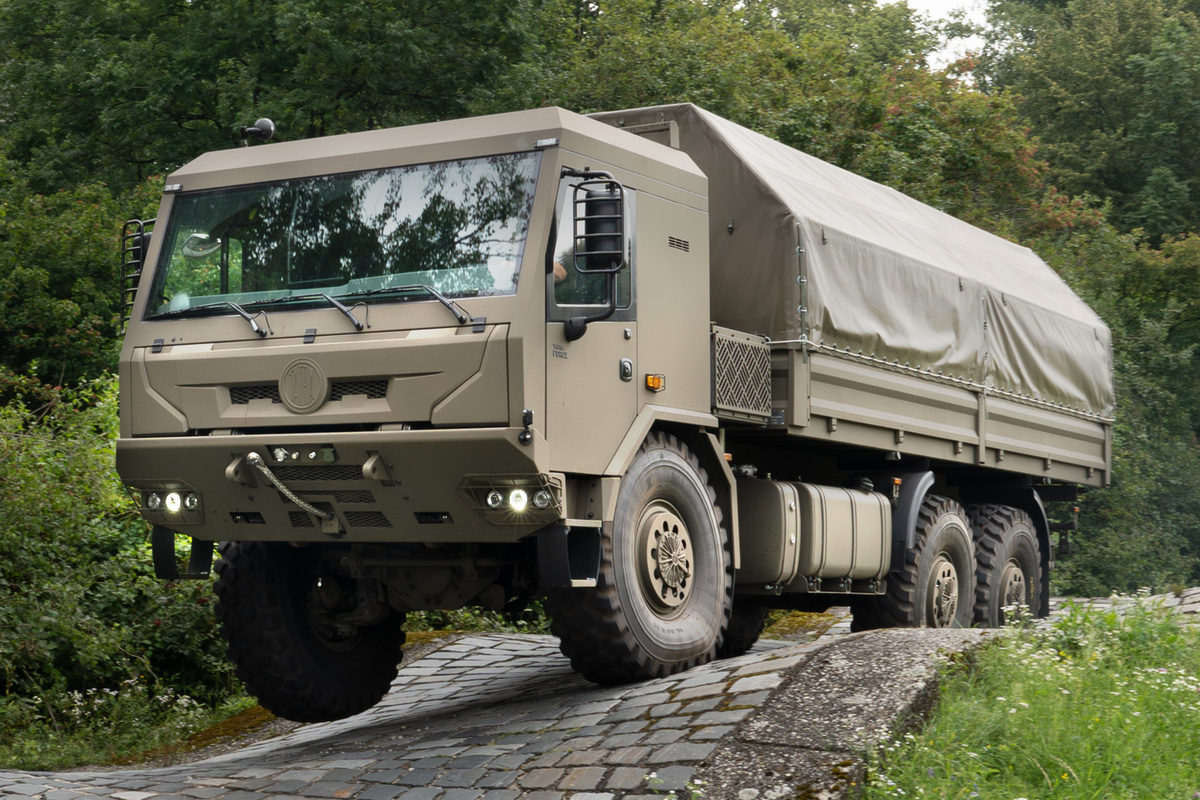
Compared to the previous generation of the Tatra Force series, the new generation offers the possibility of an alternative engine mounting under the front part of the cabin above the front axle, or under the rear part of the cabin behind the front axle. If the engine is installed in the front, the cabin will be 110 mm higher than if the powerpack unit is installed in the rear. A mask with one or two vents will also match the position of the engine. It will be possible to place Tatra air-cooled engines and foreign liquid-cooled engines under the Tatra Force cabins. For the front-engine version, the cooling system of selected liquid-cooled engines can now be placed under the cabin in the front part, eliminating the need to install a cooling system behind the cabin, which is a distinctive feature of the second generation of Force vehicles.
In the case of Tatra engines, either an electronically controlled air-cooled eight-cylinder engine with an output of 340 kW or a twelve-cylinder engine with an output of 440 kW will be available (both engines will still retain the option of using standard military fuel F-34 or high-sulphur diesel), in both cases meeting the Euro 3 standard, alternatively also Euro 5. Above all, liquid-cooled Cummins engines (in the displacement range of 7 to 15 litres) will also be on offer for foreign buyers. The use of a Caterpillar C9.3B engine with a volume of 9.3 litres is a complete novelty, the interesting feature of which is the ability to switch to “combat mode” while driving, when its power increases from 392 kW to 447 kW and torque up to 2250 Nm.
Ten or fourteen-speed Tatra gearboxes with improved electronic shifting can be connected to the engines. The twelve-speed automatic transmission ZF TraXon and the automatic version ZF EcoLife 2 are newly in the offer. Six- or seven-speed Allison automatic transmissions are already standard.
The further development of the Tatra Force family of vehicles also moves towards the use of alternative types of drive systems for military purposes, within the range marked as e-Drive. In Tatra, for example, they are working on hybrid vehicles with an internal combustion engine and an electric motor, which could use a purely electric drive mode in combat and otherwise exposed areas to reduce the sound and infrared track, or on vehicles in which the internal combustion engine fulfils the role of a range extender.