
Poland Secures U.S. Approval for PAC-3 MSE Production and Strengthens Layered GBAD
The recent preliminary authorization granted by the United States to Poland for the domestic production of Patriot PAC-3 MSE missiles marks a significant milestone in transatlantic defense cooperation and European industrial resilience. Announced on May 26, 2026, by Polish Deputy Defense Minister Cezary Tomczyk following months of negotiations in Washington, the decision reflects not only Poland’s growing role as a key NATO partner but also the broader pressures facing Western defense industries. As demands for advanced air defense munitions surge due to ongoing conflicts and regional tensions, the move underscores the limitations of current production capacities and the strategic imperative to diversify manufacturing bases across the Alliance.
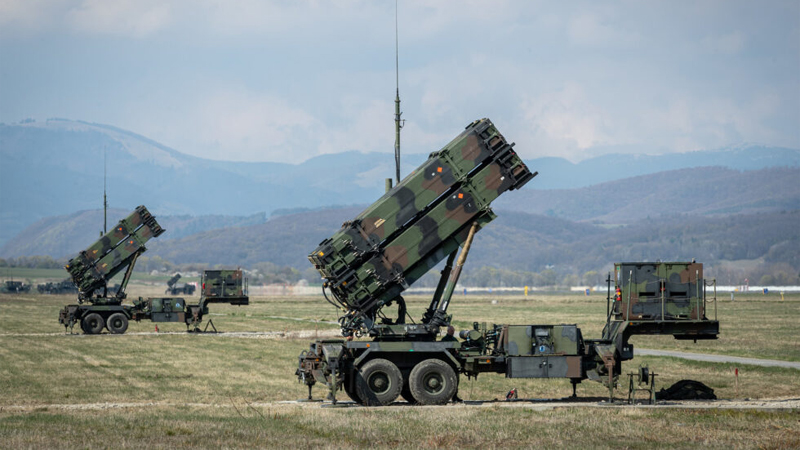
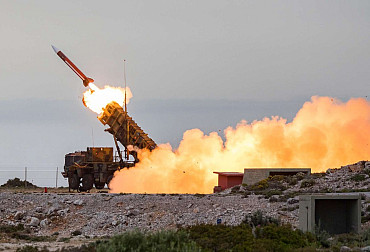
This authorization comes at a critical juncture. The PAC-3 MSE interceptor, a cornerstone of the Patriot system, is designed to counter a wide array of aerial threats, including aircraft, drones, cruise missiles, and ballistic missiles in their terminal phase. Its hit-to-kill technology and advanced seekers make it one of the most capable solutions available. However, global demand has outstripped supply. Since Russia’s full-scale invasion of Ukraine in 2022, Western stockpiles have been heavily drawn upon to support Kyiv, while simultaneous operations in the Middle East have further strained U.S. resources. Current annual production of PAC-3 MSE missiles hovers around 700 units, a figure that Lockheed Martin aims to increase to 2,000 by 2030. Even this ambitious target may prove insufficient for prolonged high-intensity scenarios.
Poland, with its substantial investments in air and missile defense under programs like Wisła, emerged as a logical partner. The country already operates two Patriot batteries and has additional systems on order, alongside a firm commitment of hundreds of PAC-3 MSE missiles. Warsaw’s defense industry has demonstrated growing sophistication, with Polish firms already contributing components such as launch tubes and containers for the Patriot ecosystem. Establishing full missile production would represent a deeper level of localization, involving a consortium of Polish enterprises under the Polish Armaments Group (PGZ) framework. While initial skepticism existed in Washington regarding Poland’s readiness for such complex, high-tech manufacturing, the evolving security environment – particularly the vulnerability of supply lines on NATO’s eastern flank – has shifted priorities toward geographic dispersion of production.

This step aligns with Poland’s broader strategy of industrial sovereignty. Beyond Patriots, discussions have touched on local production of other U.S. systems, including elements for HIMARS rockets and Hellfire missiles. For Poland, the benefits are multifaceted: enhanced deterrence against potential aggression from the east, job creation and technological upskilling in the defense sector, and a stronger position within NATO’s integrated defense architecture. Production would not ramp up overnight; significant investments in facilities, workforce training, and technology transfer are required. Yet, building on existing offsets from Wisła contracts – such as launcher production by Huta Stalowa Wola – the foundation is solid. Poland could become one of only a handful of nations outside the U.S. capable of producing these advanced interceptors.
The decision also illuminates systemic challenges within Western defense industries. Decades of post-Cold War budget constraints left production lines optimized for peacetime or limited operations rather than sustained conflict. The war in Ukraine has exposed these vulnerabilities across munitions categories, from 155mm artillery shells to precision-guided weapons. By empowering allies like Poland, the U.S. aims to bolster overall Alliance output while mitigating risks associated with over-reliance on American soil manufacturing. This approach disperses industrial capacity, reduces logistical chokepoints, and fosters interoperability through shared standards and maintenance capabilities.
A comprehensive understanding of this development requires context on Poland’s Ground-Based Air Defence (GBAD) architecture. Poland is rapidly transforming its air defense from Soviet-era legacies into a modern, multi-layered, integrated system capable of addressing threats across the spectrum – from low-flying drones and helicopters to high-altitude ballistic missiles. This layered approach emphasizes redundancy, mobility, and network-centric operations, increasingly centered on the U.S. Integrated Battle Command System (IBCS), which Poland was the first NATO ally to adopt.
At the upper tier, the Wisła program provides medium- to long-range capabilities via Patriot systems. With initial operational capability achieved and progress toward full readiness, Poland fields advanced PAC-3 MSE and potentially lower-cost SkyCeptor missiles. These batteries, supported by IBCS, enable seamless integration of sensors and effectors, allowing one battery to control multiple launchers and draw on distributed radar data for 360-degree coverage and enhanced resilience against saturation attacks. Additional batteries under procurement will significantly expand coverage, protecting key population centers, infrastructure, and military assets along the eastern border.

Complementing Wisła is the Narew program, focused on short- to medium-range defense. Leveraging the British-Italian CAMM-ER missile (with ranges exceeding 40 km), Narew will equip over 100 launchers and produce more than 1,000 missiles domestically. Highly mobile and designed for rapid deployment, Narew systems will shield ground forces, airbases, and urban areas, filling the gap between very short-range assets and Patriot coverage. Integration with IBCS ensures that Narew and Wisła operate as a unified network, sharing targeting data in real time.
At the lower end, Pilica and Pilica+ systems, along with portable solutions like Piorun MANPADS, provide very short-range protection. Pilica+ incorporates CAMM missiles, Polish radars (such as Bystra), and command systems, creating cost-effective, layered defense against drones and low-flying threats. These are supplemented by self-propelled anti-aircraft guns and legacy systems undergoing upgrades. Poland also fields or plans NASAMS-like capabilities in certain configurations, though the emphasis remains on indigenous development and European cooperation where it complements U.S. systems.
Overall, Poland’s GBAD capacities are among the most ambitious in Europe. The combination of Patriot for strategic defense, Narew for operational maneuver forces, and Pilica/Piorun for point defense creates a robust, multi-tiered shield. Investments exceed tens of billions of zlotys, driven by the recognition that air superiority – or at least effective denial – will be decisive in any future conflict. Challenges remain, including full integration timelines, radar coverage gaps, and sustaining high munitions stockpiles, but the trajectory is clear: Poland is positioning itself as a net contributor to NATO air defense rather than a consumer.
The push for Patriot missile production fits seamlessly into this framework. Local manufacturing would ensure faster replenishment, reduce dependency on transatlantic shipping vulnerable to disruption, and allow customization for regional threats. It also signals confidence in Polish industry, which has already proven itself through launcher and container production. As Western allies confront the realities of industrial warfare, Poland’s initiative could serve as a model for others, such as potential expansions in Germany or Romania.
Critically, this development occurs against a backdrop of heightened geopolitical tension. Russia’s missile and drone campaigns in Ukraine demonstrate the attritional nature of modern air defense battles, where quantity matters as much as quality. Hybrid threats, including massed low-cost UAVs, further strain systems. By localizing production, Poland not only bolsters its own security but contributes to Alliance-wide resilience.
Looking ahead, the path to full production will involve detailed intergovernmental agreements, certification processes, and phased capability builds. Success hinges on sustained political will, adequate funding, and close collaboration between Polish firms, Lockheed Martin, and the U.S. government. If realized, it could accelerate NATO’s adaptation to an era where defense industrial base strength is as vital as operational readiness.