

Defense Industry Becomes a Sought-After Employer
Just five years ago, the industrial and technology group CSG had to go to great lengths to recruit candidates for management positions. Today, candidates are approaching the company on their own, including people from Rheinmetall, BAE Systems, and Raytheon. The military is reporting a similar shift, and arms exports are breaking records. This change is no coincidence. It reflects a shift in how people in the Czech Republic and throughout Europe perceive security, work, and their own future.
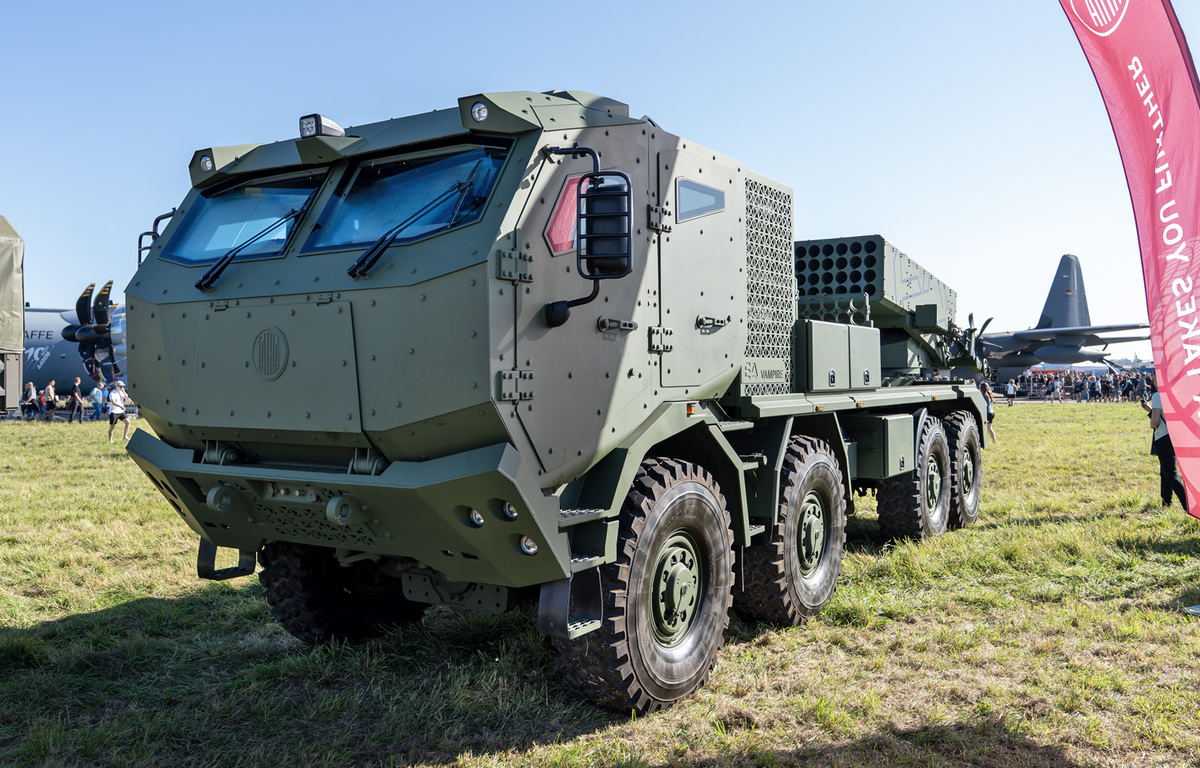
The war in Ukraine has changed the mindset of the entire continent. At the June 2025 summit in The Hague, NATO member states approved a new common goal: to increase defense spending to 5 percent of GDP by 2035. Of that, 3.5 percent will go directly to defense, and the remaining 1.5 percent to related infrastructure and security. The Czech government has promised to move more quickly: the defense budget is set to rise by 0.2 percent of GDP annually and is expected to reach 3 percent as early as 2030. NATO’s new requirements for the Czech Republic include, among other things, two mechanized brigades, an upgrade to fifth-generation F-35 aircraft, strengthened air defense, and strategic ammunition reserves. These figures are not abstract policy. They directly translate into demand for people who can manufacture ammunition, repair equipment, or command units.
Czech defense exports have experienced rapid growth over the past four years: from 15.2 billion crowns in 2021 to 94 billion in 2024. Last year, they surpassed 100 billion for the first time, reaching 112.6 billion crowns. Excalibur Army, one of the key domestic arms manufacturers, increased its revenue to a record 83.2 billion crowns and its net profit to 12.5 billion. The company hired nearly 300 new employees last year and, for the first time in its history, surpassed 1,000 employees. Michal Strnad’s entire CSG, which went public this past January, is following a similar trajectory. Human Resources Director Alena Kozáková summed it up succinctly: the company used to have to persuade candidates to join; today, they apply on their own.
Interest in military service is also growing. The army currently has about 28,000 soldiers on its roster, and according to new NATO requirements, it aims to reach 37,500 in the coming years—a significant increase that must be reflected in recruitment efforts. People aren’t interested in military and defense careers out of nostalgia. They’re looking for job security, a competitive salary, and the feeling that they’re doing something that truly matters.
The defense industry is transforming from a marginal sector into one of the engines of the economy. This has two dimensions. The first is positive: it provides stable wages, investment in research, and export revenues at a time when the rest of the industrial sector faces uncertainty. The second dimension is riskier. An economy dependent on arms production is sensitive to political cycles, and any peace agreements could quickly dampen demand. Furthermore, the military and defense contractors will have to compete ever more fiercely for young people, because the generations entering the labor market today are, according to long-term demographic trends, smaller than previous ones.
Future conflicts are also changing. Drones, cyber capabilities, and the speed of ammunition production—not just the number of soldiers in the field—will be decisive factors. This also changes the types of people the sector needs: more and more engineers, software specialists, and technicians, and fewer purely military professions in the traditional sense. Moreover, for many people, the choice to work in the defense sector remains not only a personal decision but also an economic one.
The Czech Republic has the opportunity to become a Central European hub for the defense industry within NATO, just as it became a center for automotive manufacturing after 1989. For this to succeed, growing budgets and one-time recruitment drives alone will not suffice. Defense contractors and the military will have to offer people not only competitive salaries but also a clear path for how a newcomer can become a specialist whom the industry will still need ten years from now. Public interest in this sector already exists. The question remains whether the government and companies can transform this wave into a long-term, sustainable structure, so that it is not merely a temporary effect of a single crisis-ridden (half) decade.