Denmark Launches 11-Month Military Service. Conscripts Are Also Heading to Greenland
Denmark is among a small group of European countries that have never completely abolished or suspended compulsory military service. In 2005, however, it reduced the duration from one year to a largely symbolic four months of basic training. Approximately 5,000 conscripts, mostly volunteers, went through this training each year. Only when their numbers were insufficient did the army fill the necessary ranks through a lottery. This system reflected the Danish military’s focus at the time on foreign missions, with compulsory military service serving largely as a means of recruiting professional soldiers. However, in the current security situation – which, in Denmark’s case, is shaped not only by Russian aggression against Ukraine but also by tensions surrounding Greenland, an autonomous part of the Kingdom of Denmark – this system has proven inadequate.
Eleven Months of Service: From Drones to Greenland
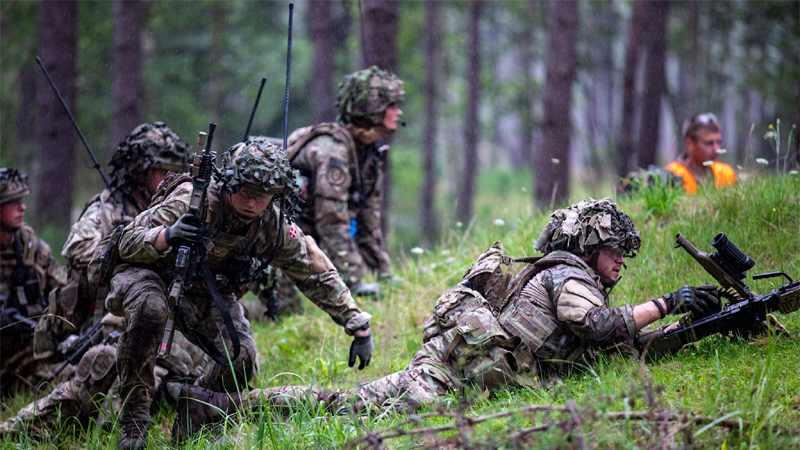
Denmark has therefore approved a sweeping reform of mandatory military service in recent years, which it began implementing this year. Conscripts will now serve for eleven months instead of the previous four. After five months of basic training, they will spend another six months with specific units, where they will continue their specialized training and carry out operational tasks. They may serve, for example, as drone operators, radar assistants, or naval operators, or perform guard and standby duty. They are thus intended to provide the Danish military with a truly useful personnel reinforcement. Another major change is the gender neutrality of military service. While under the previous model women could only enlist voluntarily, they will now be included in the draft lottery on an equal footing with men in the event of a shortage of volunteers. By 2033, Denmark aims to increase the total number of conscripts to 7,500 per year, of whom 6,500 are to serve directly in the armed forces and the remainder in the civil defense system.
The status of Greenland is a separate issue. Young Greenlanders are not subject to conscription, but they may voluntarily enlist either in the Danish armed forces or in the six-month Arctic Basic Training program, which combines military, police, maritime, and rescue training. Danish conscripts, on the other hand, can now be deployed directly to Greenland. The short, four-month deployment model made such assignments practically impossible, whereas the eleven-month service provides sufficient time for both preparation and subsequent operational deployment. As early as the beginning of August, approximately one hundred conscripts from the Schleswig Infantry Regiment departed for Greenland. As part of the Arctic Endurance exercise, they performed guard duties there, trained in Arctic conditions, and cooperated with allied units.
No Shortage of Volunteers So Far
So far, the reactions of the conscripts themselves and military instructors to the extension of service have been largely positive. All approximately 1,600 participants in the first full intake under the new model were volunteers. Some of them appreciate that, unlike under the previous short-term format, they can actually learn something during the eleven months and put the skills they’ve acquired to use. Instructors, for their part, highlight the conscripts’ motivation. The real test, however, will come in the coming years, when the army will have to recruit and train significantly more young people. The military has not disclosed the total number of applicants, so it is impossible to determine whether the current level of interest among volunteers would be sufficient to fill larger intakes. Moreover, concerns extend beyond young people’s willingness to serve to the military’s own capabilities. Some instructors point in particular to staff shortages and high levels of overtime, limited housing capacity, and organizational procedures that have not yet been finalized. How the general public will receive the new model – and whether the military will have the capacity to handle its expansion – will therefore only become clear as the number of recruits gradually increases.