DGAP: Europe Needs Foreign Defense Companies Too, but France Strongly Disagrees
A July report by the German think tank DGAP calls for greater involvement of non-European companies in Europe’s defense industrial base. These companies can contribute key technologies as well as diversified production and supply structures that will improve the resilience of European defense. The goal is to “Europeanize” these foreign entities, integrate them into European industrial ecosystems, and reduce foreign dependencies in critical capabilities. France strongly opposes this approach, viewing foreign defense equipment manufacturers as a threat to the continent’s geopolitical autonomy.
The DGAP (Deutsche Gesellschaft für Auswärtige Politik) views the current increase in European defense spending as a means of achieving greater European sovereignty, particularly in light of the United States’ waning commitments to European defense and the growing Russian threat to European NATO members. U.S. trade restrictions and policies that openly seek to make Europe dependent on American technologies, as well as the recent disruptions to shipping through the Strait of Hormuz, have reinforced the need for greater European self-sufficiency. In its role as a “catalyst” for European defense planning, the EU has become the primary instrument for advancing strategic autonomy in the defense sector. Several EU initiatives, including SAFE, EDIP, and Rearm2030, therefore prioritize procurement within the EU.
The German think tank also emphasizes the need to reduce dependency on foreign suppliers. “However, European autonomy would not be served by excluding defense companies from trusted allied countries outside the European Union,” states the DGAP analysis. If they meet the necessary conditions, these companies can help Europe build industrial capacity and improve interoperability worldwide. To this end, EU NATO members and foreign defense companies must work together to “Europeanize” non-European defense firms, particularly by localizing production and support throughout the product lifecycle and ensuring European control over intellectual property and technologies.
In addition to providing access to cutting-edge technologies and maintaining close ties with key defense partners, such as the United States, opening the EU defense market to foreign entities offers three advantages.
First, the mutual exchange of imports and exports enables EU member states to build their own defense industries. While imports may shift part of procurement spending abroad, these costs are offset by improved access to export markets. This allows European defense companies to expand and remain competitive without relying solely on domestic or pan-European contracts.
Second, a diversified network of partners and production facilities increases the flexibility of European defense production, enables a rapid ramp-up of production when needed, and reduces the risks of disruptions to production located in Europe. It must be acknowledged that this may also carry the risk of creating dependencies on foreign production at the expense of domestic resources, particularly if foreign contracts are concentrated in the hands of just a few suppliers.
Ultimately, European defense capabilities are based on interoperability within open systems, which enables flexibility and shared logistics. Particularly in the Atlantic and Pacific regions, cooperation with allies leads to a higher level of standardization, which allows for joint operations using uniform equipment. Joint procurement of military equipment with non-EU allies expands the scope of shared logistics chains and creates an ecosystem of interoperable capabilities – provided, of course, that foreign partners are willing to adhere to the principle of interoperability.
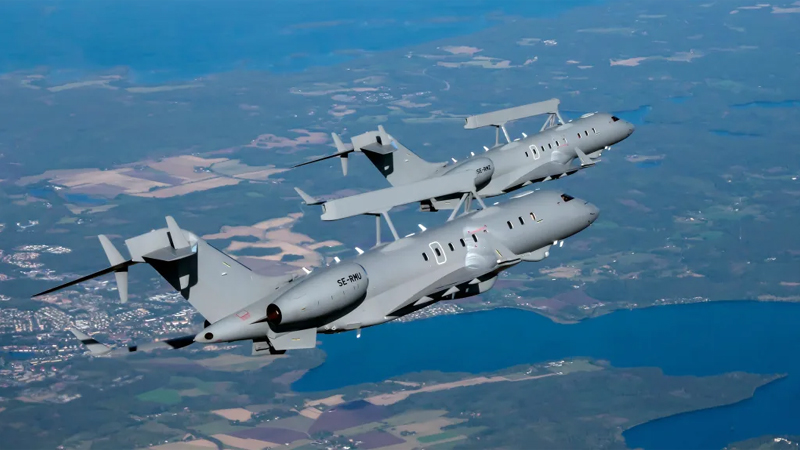
According to a German think tank, procuring defense equipment manufactured outside Europe can also offer the advantage of increasing industrial production beyond the scope of European manufacturing capacities. In some cases, this can shorten delivery times: for example, South Korean industry regularly redirects equipment originally intended for its own military to expedite deliveries to export customers. Furthermore, the joint development of key capabilities benefits all partners in the collaboration. For example, SAAB’s GlobalEye reconnaissance aircraft combines European surveillance technologies with a Canadian platform.
Nevertheless, the EU’s priority in negotiations with foreign defense companies should be to support investment in manufacturing facilities in Europe. This can foster the creation of joint partnerships with European industry. Ukrainian companies have demonstrated how a mutually beneficial cross-border defense industry ecosystem can gradually expand: for example, the success of the EU-Ukraine joint venture Quantum Frontline Robotics spurred the creation of the subsequent joint venture Quantum Tencore, as well as partnerships between other Ukrainian and European companies, such as Diehl and MBDA. This network of industrial partnerships provides EU countries with access to leading Ukrainian technologies and strengthens long-term defense relations.
Similar industrial partnerships can also be established outside of Ukraine. Encouraging foreign companies to invest in Europe can gradually “Europeanize” them – that is, integrate them into the regional defense-industrial ecosystem – and reduce dependencies that would otherwise remain foreign dependencies. Non-European companies should demonstrate a credible long-term commitment to Europe through significant investments in capital and resources, such as manufacturing facilities and supply chains. Since defense contracts operate in cycles that often span decades, new market entrants must demonstrate their enduring commitment to a European presence.
Furthermore, defense projects often lead to a long chain of follow-on investments in further development, training, maintenance, and modernization—activities that are often more important than production itself when it comes to building industrial relationships. As a result, long-term agreements on support and maintenance for foreign defense systems may, in some cases, be more valuable to European industry than securing production contracts themselves—even when production takes place abroad.
The greatest uncertainty in opening up European defense to foreign investment lies in ensuring control over the use and development of these systems. Several key systems, including European platforms such as the JAS 39 Gripen fighter jet, are subject to the U.S. International Traffic in Arms Regulations (ITAR), which may restrict their sale and use. For this reason, new European projects such as the Eurodrone prioritize development free from ITAR restrictions to avoid foreign restrictions on exports, deployment, and further development.
It is precisely in this area that foreign companies are particularly vulnerable. For example, Germany’s purchase of American F-35 fighter jets raised concerns about sovereignty because the aircraft’s MADL data link is not compatible with the established Link 16 system. Similarly, Lockheed Martin refused to allow the use of M31 rockets in other launchers in order to strengthen the market position of its HIMARS system. Both examples illustrate the risks of creating dependencies on foreign-controlled weapons systems.
European defense companies are aware of these risks. For example, in the field of combat drones, the German company Helsing offers its CA-1 “Europa” system as an independent alternative to the Rheinmetall-Anduril, Rheinmetall-Boeing (Australia), and Airbus-Kratos joint ventures, all of which rely on technologies from outside the EU. Technology control is an area where exporting companies and their governments are reluctant to compromise, though some are more flexible than others.
To address this issue, European customers can structure their purchases so that intellectual property is located in more favorable jurisdictions. For example, the German Navy purchased a combat management system from Lockheed Martin’s Canadian subsidiary, thereby preventing further U.S. involvement while reducing dependence on a single supplier country. Similarly, for Lockheed Martin, developing this product at its Canadian subsidiary reduced the political risk associated with concentrating activities in a single country. Boeing emphasizes the Australian, rather than American, origin of its MQ-28 drone, while Rheinmetall highlights its latest partnership with an American provider of satellite imagery, with control of the system and intellectual property transferred to Europe.
Non-European defense companies will always face initial barriers when entering EU defense markets. To overcome these barriers, they must offer potential government customers sufficient guarantees regarding security of supply and technology control. By relocating production, maintenance, and development to Europe – and, where appropriate, transferring technological control to allies – companies can gain the trust of European governments. Conversely, NATO member states within the EU should support such new market participants, urges the DGAP.
France has long maintained a very restrictive stance toward the involvement of non-European (particularly American) companies in European defense programs. Paris has long advocated for the European defense industry to develop independently of third countries, such as the U.S., and has pushed for rules in negotiations on key EU instruments (EDF, EDIRPA, EDIP) that prevent non-European companies from benefiting significantly from them. The Nordic and Baltic states, the Czech Republic, Poland, and Germany, on the other hand, have advocated for more open rules allowing for the participation of non-European companies.
A dividing line had already emerged during the EDIRPA negotiations in 2023. Germany and the Netherlands wanted to allow the purchase of U.S. weapons manufactured under license in Europe (e.g., STINGER missiles) using EU funds. France countered by limiting EU support to equipment for which European entities hold the intellectual property rights. The same divide then resurfaced in exactly the same form during the SAFE and EDIP negotiations. The rules advocated by France effectively shut the door on most non-European equipment, including advanced systems manufactured under license in the EU. There are also concerns that France’s hardline stance could result in the exclusion of EU funding for factories producing Patriot interceptor missiles, since they involve U.S. technology.
The DGAP report thus highlights a fundamental challenge for European defense policy: how to reconcile the desire for strategic autonomy with the reality that European industry alone cannot cover rising defense expenditures. France views autonomy as control over intellectual property and independence from the U.S., even at the cost of slower rearmament, while the DGAP, along with Germany, Poland, the Baltic states, and the Czech Republic, is banking on pragmatic engagement with trusted allies. This dispute is actually reflected in the SAFE and EDIP instruments, which will determine the allocation of hundreds of billions of euros for rearmament through 2030. In other words, it will determine whether European companies will be able to continue purchasing American technologies such as Patriot or STINGER with EU support, or whether the funds will flow almost exclusively to companies with purely European intellectual property. For the export-oriented and transatlantically integrated Czech defense industry, this is a sensitive issue, and Prague will therefore likely seek a middle ground between supporting European industry and maintaining access to trusted allies.