
End of an Ambitious Dream: FCAS Cancelled. What Comes Next for European Air Power?
The Future Combat Air System (FCAS), once heralded as the cornerstone of European defence sovereignty and a symbol of Franco-German cooperation, has officially been cancelled. French President Emmanuel Macron and German Chancellor Friedrich Merz agreed to scrap the manned Next Generation Fighter (NGF) component of the programme following years of intractable disputes between industry giants Dassault Aviation and Airbus. While elements of the broader system – such as remote carrier drones and a combat cloud networking architecture – may survive in scaled-back form, the core ambition of a jointly developed sixth-generation fighter jet to replace France’s Rafale and Germany and Spain’s Eurofighter Typhoon has come to an abrupt end.
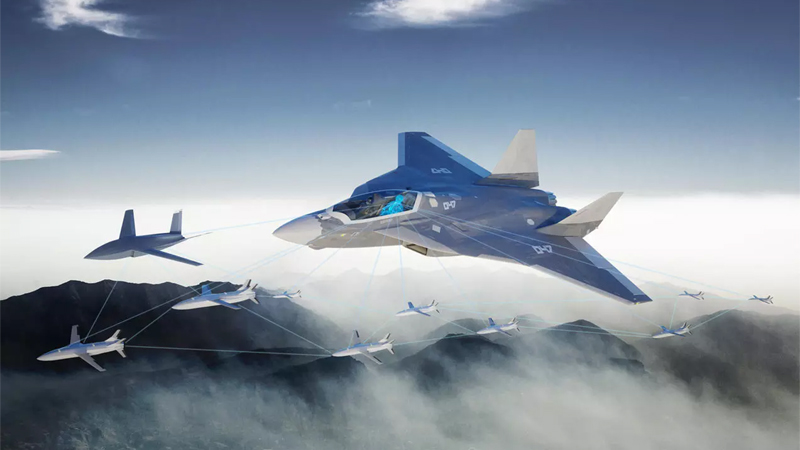
The decision marks a significant blow to European efforts to reduce reliance on American technology and assert greater strategic autonomy in an era of rising global tensions. Valued at over €100 billion, FCAS was intended not merely as an aircraft but as a “system of systems” integrating a stealthy manned fighter with swarming unmanned drones and advanced data-sharing capabilities. Its failure highlights deep structural challenges in multinational defence projects: competing national industrial interests, differing operational requirements, and the perennial difficulty of aligning political rhetoric with commercial realities.
The conceptual roots of FCAS trace back to the early 2000s through the European Technology Acquisition Programme (ETAP), which explored future air combat concepts involving both manned and unmanned platforms. A more concrete Franco-British effort emerged in the 2010s under the Lancaster House Treaties, focusing on technologies like the Dassault nEUROn and BAE Systems Taranis demonstrators. However, Britain ultimately pursued its own path with the Tempest programme, announced in 2018.
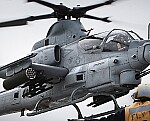
France and Germany relaunched FCAS in 2017 as a bilateral initiative, with Spain joining in 2019. Dassault was designated lead for the NGF fighter, while Airbus took primary responsibility for the remote carriers and combat cloud. Phase 1A research began in 2020, followed by Phase 1B in late 2022, which involved hundreds of millions of euros in contracts for technology maturation. Demonstrator flights were originally eyed for around 2027-2028, with full operational capability targeted for 2040.
Tensions surfaced early. Disputes over workshare, intellectual property rights, and leadership roles plagued the programme. France insisted on preserving its industrial sovereignty and expertise in fighter design, viewing Dassault as the natural prime contractor. Germany, through Airbus, sought a more balanced partnership reflecting its financial contributions and growing defence ambitions. Differing requirements added friction: France needed a carrier-capable, nuclear-certified platform for its Charles de Gaulle successor, while Germany prioritised land-based stealth and networked operations. By 2025, public spats between Dassault CEO Éric Trappier and Airbus executives intensified, with France reportedly demanding up to 80% of the fighter workshare. Mediation attempts failed, leading to the political decision to cancel the fighter element in June 2026.
Spain, as the junior partner, aligned largely with German positions but expressed disappointment at the outcome. Observers like Belgium, which had shown interest, are now reassessing their options.
Comparison to Other Sixth-Generation Projects
FCAS’s cancellation leaves Europe without a unified sixth-generation fighter programme at a time when competitors are advancing. The United States leads with the Next Generation Air Dominance (NGAD) programme, centred on the Boeing F-47. Selected in March 2025, the F-47 emphasises advanced stealth, adaptive engines, AI-driven autonomy, and collaborative combat aircraft (CCAs) – loyal wingman drones. Despite some budgetary scrutiny and delays pushing service entry to the mid-2030s, NGAD benefits from massive U.S. funding and a single-nation decision-making process that avoids the compromises inherent in multinational ventures. It aims to succeed the F-22 Raptor with superior range, sensors, and survivability in contested environments.
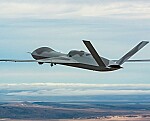
The most direct European rival is the Global Combat Air Programme (GCAP), also known as Tempest. Launched by the UK, Italy, and Japan, with a demonstrator targeted for 2027 and entry into service around 2035, GCAP appears more agile. It builds on Britain’s Tempest concepts, incorporating Japanese expertise in materials and engines, and Italian industrial capabilities. The programme has made steady progress on digital engineering, sensors, and international contracts, recently attracting observer interest from Canada and overtures from Germany. Its timeline is more ambitious than FCAS’s original 2040 goal, and its trilateral structure seems to have navigated industrial disputes more effectively so far.
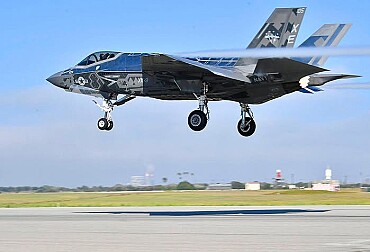
China’s secretive sixth-generation efforts, believed to include projects from Shenyang and Chengdu, and Russia’s conceptual MiG-41 are harder to assess but underscore the global pace. Both emphasise hypersonic capabilities, directed-energy weapons, and AI. FCAS’s implosion risks leaving European nations dependent on U.S. F-35s or potential GCAP participation for the foreseeable future, widening a capability gap as adversaries field advanced systems.
In contrast to NGAD’s scale and GCAP’s momentum, FCAS suffered from overly ambitious timelines, political symbolism over pragmatic engineering, and an inability to reconcile Dassault’s fighter heritage with Airbus’s broader systems integration strengths. While the U.S. and GCAP partners benefit from clearer hierarchies, Europe’s project became mired in zero-sum negotiations.
How France and Germany Might Proceed
With the fighter cancelled, both nations are pivoting. Officials in Paris and Berlin have indicated continued cooperation on non-fighter elements, particularly the combat cloud for data fusion and remote carrier drones. These “loyal wingman” systems could enhance existing fleets like the Rafale and Eurofighter in the near term, offering a lower-risk path to networked warfare capabilities. Mid-July 2026 meetings are planned to reset smaller collaborative projects.
France, fiercely protective of its independent strike capabilities, is likely to accelerate national or bilateral upgrades to the Rafale, potentially incorporating sixth-generation technologies such as improved sensors and AI. Dassault may pursue a “Plan B” solo or with limited partners, drawing on nEUROn experience for a future French-led fighter. Nuclear certification and carrier compatibility remain non-negotiable priorities for Paris. Interest from India in co-development could provide an alternative avenue for French industry.
Germany faces a more existential choice. Lacking recent experience in indigenous fighter design, Berlin has already signalled openness to joining GCAP/Tempest. Chancellor Merz has emphasised that German industry must prove its capabilities, potentially through greater involvement in the UK-Italy-Japan effort. This would allow Germany to acquire advanced platforms without restarting a full national programme, while strengthening ties with reliable partners. Spain may follow a similar path or deepen Rafale acquisitions from France.
Both countries will likely increase interim investments in fourth-and-a-half and fifth-generation platforms. Germany continues to integrate more F-35s, while France pushes Rafale exports and upgrades. Broader EU defence initiatives, such as the European Defence Fund, may channel resources into enabling technologies like propulsion, materials, and unmanned systems rather than a single flagship fighter.
The cancellation is not the death of European defence cooperation but a sobering lesson in its limits. It underscores that shared threats do not automatically produce shared solutions when industrial champions and national doctrines diverge. As Europe confronts pressure from Russia, an unpredictable transatlantic alliance, and rising powers in Asia, France and Germany must now chart pragmatic paths – whether through deeper GCAP integration, enhanced bilateral projects, or selective national efforts. The skies of the 2030s and 2040s will demand advanced capabilities; how successfully Europe fills the FCAS-shaped void will shape its security for decades to come.