
RAF Eurofighter Typhoons Gain Rapid Low-Cost Anti-Drone Capability with Laser-Guided APKWS Rockets
The Royal Air Force has taken a significant step in enhancing its operational flexibility against the growing threat of unmanned aerial systems by integrating the Advanced Precision Kill Weapon System, or APKWS, onto its Eurofighter Typhoon fighter jets. This development, announced by the UK Ministry of Defence, transforms standard unguided rockets into precision-guided munitions capable of engaging drones and other small targets at a fraction of the cost of traditional air-to-air missiles. The rapid rollout underscores the urgency with which Western air forces are seeking economical solutions to counter proliferating low-cost drone attacks in contested regions.
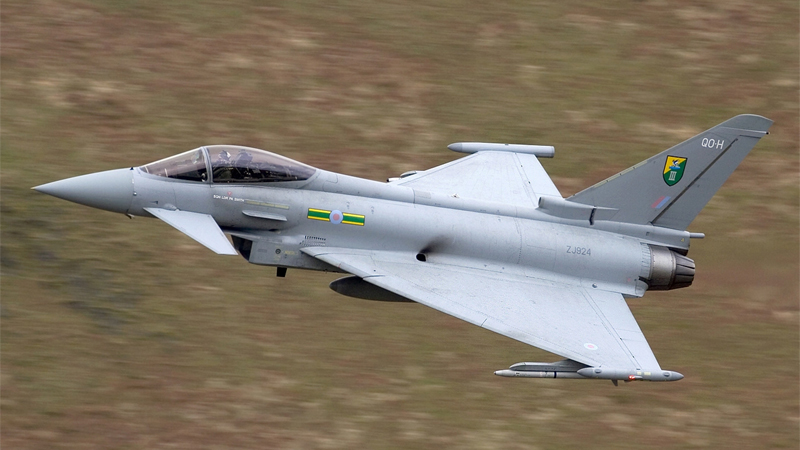
At the heart of this capability is the APKWS, a laser-guidance kit produced by BAE Systems that converts 70mm Hydra rockets into smart weapons. These rockets, once unguided and primarily used for area suppression, now benefit from semi-active laser homing, allowing pilots to designate targets with a laser and achieve high accuracy against fast-moving or small-profile threats such as one-way attack drones. The system offers a cost-effective alternative to expensive missiles like the AIM-132 ASRAAM or AIM-120 AMRAAM, which are better reserved for high-value manned aircraft or more sophisticated threats. Defence officials have emphasized that this approach provides a more sustainable way to address the asymmetric challenge posed by swarms of inexpensive drones.
The integration process has been remarkably swift. Just two months prior to operational deployment, the RAF, supported by BAE Systems and QinetiQ, initiated a targeted program to equip Typhoons with the system. In March, a successful ground-target strike was conducted during trials at a UK military range using a test and evaluation aircraft. By April, pilots from the 41 Test and Evaluation Squadron had executed successful air-to-air firings, validating the weapon’s performance against aerial targets. This accelerated timeline – from concept to combat readiness – highlights the agility of British industry and military collaboration when operational needs demand quick adaptation.
Typhoons from No. 9 Squadron, currently operating from RAF Akrotiri in Cyprus, are now equipped with the APKWS and actively participating in defensive missions in the Middle East. These aircraft form part of a broader UK contribution to protecting commercial maritime traffic and allied interests, particularly in and around the Strait of Hormuz. Alongside the Type 45 destroyer HMS Dragon, mine countermeasures assets, and surface drones, the Typhoons provide an air component ready to intercept potential aerial threats. The deployment aligns with multinational efforts, including cooperation with France, to safeguard vital sea lanes against disruptions.
This capability arrives at a critical juncture. Conflicts in the Middle East have seen increased use of Iranian-supplied or inspired drones by various non-state actors, targeting shipping, military installations, and partner nations. RAF Typhoons and those of allied Gulf states have already been engaged in intercepting such threats. Traditional high-end missiles, while effective, impose a heavy logistical and financial burden when used repeatedly against low-value targets. The APKWS addresses this economic imbalance directly. A guided rocket engagement can cost significantly less – potentially orders of magnitude cheaper per shot – while still delivering the precision needed to neutralize incoming drones before they reach their objectives.
Beyond cost savings, the system enhances the Typhoon’s multi-role versatility. The Eurofighter, long the backbone of the RAF’s air defense and NATO commitments, was designed primarily as a highly capable air superiority platform with strong air-to-ground features. Adding APKWS expands its utility against emerging threats without requiring major structural modifications to the aircraft. The rockets are typically carried in seven-round launchers mounted on underwing pylons, allowing pilots to maintain a mixed loadout suitable for diverse mission profiles. This adaptability is particularly valuable in dynamic environments where threats can shift rapidly from aerial drones to ground targets or even small surface vessels.
Defence Minister Luke Pollard has highlighted the strategic importance of the Typhoon fleet in this context. The aircraft not only defend UK airspace and the eastern flank of Europe against potential Russian drone incursions but also support operations in the Middle East to protect partners. By fielding affordable precision weapons, the RAF can sustain longer-duration patrols and respond more frequently to threats without depleting stocks of premium munitions. This approach contributes to a more resilient and enduring deterrent posture.
The technology itself is not entirely new. The United States has extensively used APKWS from various platforms, including fighter jets and helicopters, with notable success against Houthi and other drones in the Red Sea and broader Middle East theater. American experience demonstrated the system’s reliability in real-world conditions, paving the way for quicker adoption by allies. For the RAF, leveraging this proven kit through partnership with BAE Systems allowed for a tailored integration focused on the Typhoon’s avionics and targeting systems. The laser designation can come from the launching aircraft or other assets, providing tactical flexibility in coordinated operations.
Experts note that while fast jets like the Typhoon offer speed, altitude, and sensor advantages for drone interception, questions remain about the overall economics of using high-hour-cost platforms against mass drone attacks. Operating a Typhoon incurs substantial expenses per flight hour, prompting ongoing discussions about complementary solutions such as dedicated drone interceptors, ground-based systems, or electronic warfare tools. Nevertheless, having the APKWS option provides commanders with an immediate and effective tool in the layered defense toolkit. It bridges the gap until longer-term programs, such as directed-energy weapons or next-generation effectors, mature.
The broader implications extend to NATO and allied interoperability. As drone threats proliferate globally, from Eastern Europe to the Indo-Pacific, shared capabilities like APKWS foster common tactics and logistics. The RAF’s rapid success may encourage other Typhoon operators – such as Germany, Italy, and Spain – to explore similar integrations, amplifying the platform’s relevance in an era of budget-conscious defense spending. For the UK, this also reinforces its industrial base, with BAE Systems playing a central role in both development and potential export opportunities.
In practice, a typical engagement would see a Typhoon pilot acquire a target via onboard sensors or datalink, designate it with a laser pod, and ripple off one or more guided rockets. The APKWS kit’s folding fins and guidance section ensure the rocket adjusts its trajectory mid-flight for pinpoint accuracy, even against maneuvering drones. Success rates in testing and allied operations have been high, offering confidence for operational use. Video footage released by the Ministry of Defence illustrates the dramatic visual effect of these engagements, with rockets streaking toward targets and delivering precise kinetic impacts.
This initiative reflects a pragmatic evolution in air power doctrine. Rather than solely relying on exquisite, gold-plated solutions for every contingency, militaries are increasingly layering affordable, attritable capabilities. The Typhoon’s new role as a low-cost drone killer does not diminish its primary strengths in beyond-visual-range combat or strike missions; instead, it augments them, ensuring the aircraft remains relevant against the full spectrum of modern threats. As geopolitical tensions persist in the Middle East and elsewhere, such innovations will likely prove vital in maintaining air superiority without unsustainable expenditure.
Looking ahead, further enhancements could include expanded integration across more Typhoon squadrons, refinements to employment tactics, and potential adaptations for additional target sets. The speed of this particular program sets a positive precedent for future rapid capability insertions. In an era where adversaries exploit cheap technology to challenge expensive platforms, the ability to respond proportionally and economically may well determine success in prolonged confrontations. The RAF’s Typhoons, now armed with APKWS, stand better prepared to meet that challenge.