Europe Opens the Door to Space, Yet Remains a Space Dwarf
The German company Isar Aerospace has reached a historic milestone. Its Spectrum rocket successfully launched five CubeSats and one technology experiment into orbit. The “Onward and Upward” mission, which launched on September 5 from the Andøya Space launch site in Norway, thus became the first commercial orbital flight carried out from Europe. However, Europeans still have a lot of work ahead of them if they are to achieve the space capabilities of other geopolitical powers.
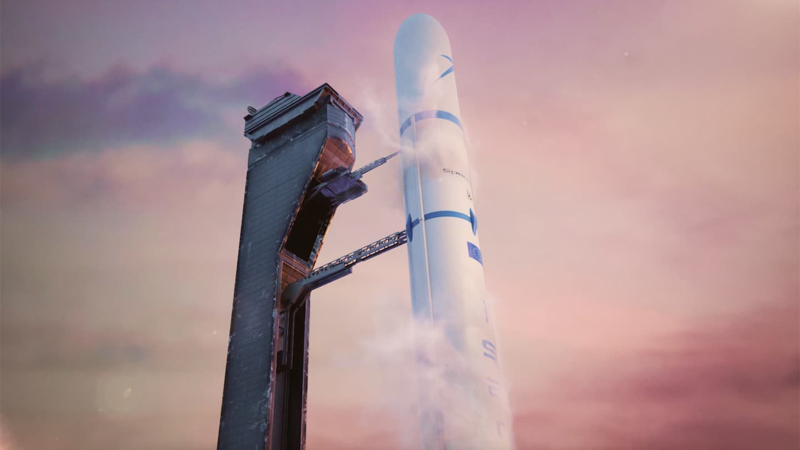
CEO and co-founder Daniel Metzler described September’s success as a historic breakthrough for the European space sector: “Today, Isar Aerospace opened the door to space for continental Europe.” The Spectrum rocket delivered a payload – consisting mainly of experimental satellites from European universities and research institutions in Germany, Norway, Austria, Slovenia, and Bulgaria – into orbit at an altitude of 500 kilometers. The payloads were selected by the German Space Agency as part of the Microlauncher program, funded through the ESA Boost! initiative, which aims to facilitate access to space for startups and educational institutions.
This success is all the more significant given that it is only the Munich-based company’s second attempt to reach orbit. The first launch, eighteen months ago, ended in a crash thirty seconds into the flight, and the second attempt faced repeated delays due to adverse weather, technical complications, and safety restrictions at the launch site. According to Daniel Metzler, Europe now has the opportunity for independent and flexible access to space. The next challenge will be to increase production capacity, fulfill a growing portfolio of orders, and meet the rapidly growing global demand for satellite launches.

The success of the “Onward and Upward” mission is linked to a broader transformation of the European space sector. For many years, Arianespace – owned by the Airbus and Safran groups – was the traditional leader in European rocket launches. However, in an era dominated by the American company SpaceX, the European sector faces growing pressure to become more competitive, lower prices, and provide faster access to orbit. A significant step forward was the launch of the new heavy-lift Ariane 6 rocket, which made its maiden flight from French Guiana in 2024 and has since successfully completed several satellite missions.
At the same time, a new generation of “New Space” companies is gaining ground in Europe, focusing on smaller, more flexible, and more affordable launch vehicles. Alongside Isar Aerospace, the most prominent players include the German company Rocket Factory Augsburg, the Spanish company PLD Space, and the French company MaiaSpace. These companies aim to build a European alternative to U.S. players and respond to the rapidly growing demand for satellite launches. Isar Aerospace sees this as its greatest opportunity. Capacity for its Spectrum rockets is already fully booked through 2028, and the company plans to conduct dozens of launches each year.
In addition to its current spaceport in Andøya, Norway, Isar Aerospace plans to utilize a launch center in Nova Scotia, Canada. The new location will enable launches into medium- to high-inclination orbits, which is crucial for Earth observation satellites and communication systems. At the same time, the company is continuing to build Europe’s largest launch vehicle manufacturing facility, which will enable the planned increase in production and launch frequency.
Following the successful flight, Daniel Metzler also pointed out the persistent unmet demand for satellite launches. “There is hardware all over the world that is literally stuck on Earth right now,” said the CEO of Isar Aerospace. “Satellite companies, governments – in short, everyone – is on the waiting list of just a few providers. I think that’s going to change now. We have a massive order backlog worth tens of billions of euros that needs to be fulfilled.”
Metzler’s company, founded in 2018, can be considered one of the most promising European space startups. Investor confidence is further confirmed by the latest funding round in June 2026, during which the company raised 270 million euros and achieved a valuation of approximately two billion euros.
However, Isar Aerospace’s success must be viewed within a broader geopolitical context. Europe is striving not only to create a competitive space industry but also to gain greater strategic autonomy. Russia’s invasion of Ukraine, growing technological rivalry between the United States and China, and mounting concerns about the long-term reliability of transatlantic ties have prompted European governments to accelerate the development of their own space capabilities, particularly in the areas of reconnaissance, navigation, and communications satellite systems.
Nevertheless, Europe remains significantly behind the world’s major powers in terms of access to space. In 2025, European entities carried out only seven successful orbital launches, all of which used the spaceport in French Guiana. In contrast, the United States conducted approximately 180 launches, the vast majority of which were carried out by SpaceX, while China carried out around 90 launches.
Furthermore, the U.S. is speaking more and more openly about preparing for potential conflicts in space. The Pentagon recently confirmed that it possesses orbital weapons designed to protect U.S. forces against hostile activities. Troy Meink of the U.S. Department of Defense described their existence as part of preparations for new threats from adversaries. He also emphasized the need to ensure the United States’ ability to operate in an environment where space systems are increasingly viewed as legitimate military targets.
Concerns about the militarization of space have accompanied these developments for many years. Critics warn of the risk of a new arms race and the growing vulnerability of satellite infrastructure, on which modern armies, economies, and the day-to-day functioning of society depend. Meink, however, rejected such arguments, citing the activities of geopolitical rivals: “Does anyone even doubt that the Chinese and Russians are developing similar weapons? We are focusing on ensuring we are capable of defending ourselves and operating in such an environment.”
It is precisely this security dimension that is driving the growing pressure for European investment in space technologies. In Brussels and in major European cities, there is a growing conviction that dependence on the capabilities of other nations could pose a strategic risk in the future. We may view the ability to launch satellites independently, operate our own communications and reconnaissance systems, or one day send our own astronauts into space as a matter of technological prestige; ultimately, however, it is about preserving political and security sovereignty.
Josef Aschbacher, head of the European Space Agency, has repeatedly drawn attention to this fact. According to him, Europe must significantly accelerate the development of its own capabilities if it does not want to remain dependent on foreign technologies and infrastructure. “Europe really needs to catch up in terms of its capabilities and also its autonomy in certain technologies,” Aschbacher said. He also pointed out that currently, only Russia, China, and the U.S. have the capability to send astronauts into space. “So some may ask… what’s wrong with Europe? Why doesn’t Europe have this capability, and why is Europe unable to achieve it? That’s exactly the question I’m asking myself.”
The European Commission is already preparing the secure IRIS² satellite constellation, with the first satellites scheduled to be launched into orbit in 2029. At the same time, Germany has allocated 35 billion euros for its own space-related defense projects and plans to build a national satellite constellation. For the Bundeswehr, the success of the Spectrum rocket represents an important step toward the “Responsive Space” concept – that is, the ability to launch new satellites quickly and flexibly in response to the current security situation. This capability will enable Berlin to replace destroyed or malfunctioning space assets within days or weeks, or to rapidly add new capabilities in the areas of communications, reconnaissance, or navigation. Other German satellites under the “Schwert” and “Schild” programs are to be launched into space exclusively by German launch vehicles, reflecting the effort to create a fully national and European value chain from satellite production through to launch.
As a result, the military’s demand for launch capacity is growing exceptionally fast. As Daniel Metzler emphasized, over the past twelve months, the share of defense-related orders has risen from approximately 15% to roughly 60% of total demand. This shift is directly linked to the changing security environment. “With Trump’s second term, Europe is painfully learning that we must have our own sovereign capabilities,” Metzler said.
However, the development of European space programs is not limited solely by finances or technology. It is becoming increasingly clear that the availability of a skilled workforce will be a decisive factor. In this regard, the experience of the United States serves as an important warning. The U.S. space sector is already facing a severe shortage of specialists in all key categories. Although nearly three million engineers with college degrees work in the U.S., only 3 percent of them are employed in sectors directly related to the space industry, such as satellite communications, semiconductors, or the manufacture of specialized optics. These sectors account for approximately 7,000 of the total 208,000 engineering positions opened each year. Furthermore, the space sector is losing the battle for talent to companies focused on artificial intelligence, software, and data analytics, which often offer higher salaries and more attractive working conditions.
This leads to an important conclusion for Europe. Building its own rockets, satellites, and defense space systems will depend both on investment and on creating a sufficient pool of engineers, technicians, and scientific specialists capable of designing, manufacturing, and operating these programs. If Europe underestimates the importance of developing human capital, it may find itself in the same situation as the United States, where, despite its dominant position in space, a shortage of skilled workers represents one of the main constraints on further growth.