
Surviving the First Strike: Proliferated Architectures and Rapid Reconstitution in Low Earth Orbit
Space-based intelligence, surveillance, and reconnaissance has shifted from a small number of exquisite, high-value satellites in higher orbits to dense constellations of smaller spacecraft operating primarily in low Earth orbit. This change is driven by the recognition that traditional architectures are highly vulnerable to both kinetic anti-satellite weapons and non-kinetic effects such as jamming, dazzling, and cyber intrusion. Proliferation – placing hundreds or thousands of satellites into orbit – aims to ensure that the loss of individual platforms degrades rather than eliminates capability. The National Reconnaissance Office’s proliferated architecture program, which by early 2026 had already delivered more than two hundred satellites and generated over 160,000 images, exemplifies the new approach. Similar efforts under the Space Development Agency’s Proliferated Warfighter Space Architecture provide missile warning, tracking, and data transport layers designed to absorb attrition while maintaining essential services.
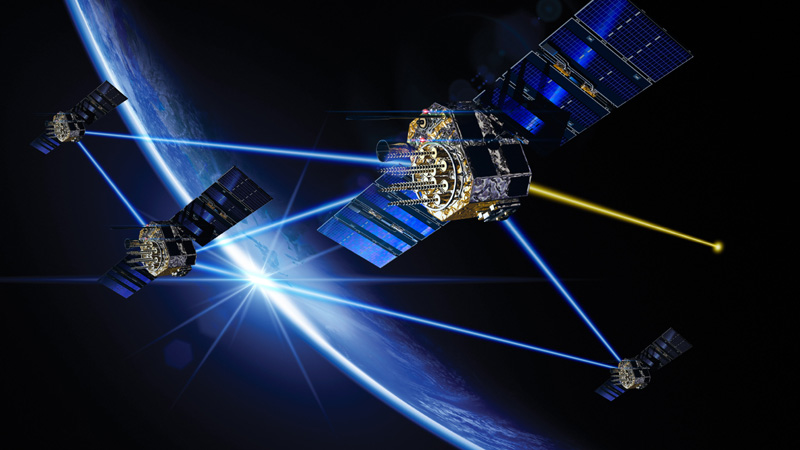
Commercial mega-constellations reinforce this trend. Large fleets originally built for broadband connectivity have demonstrated military utility in recent conflicts, delivering resilient communications and imagery even under electronic attack. Their scale raises the cost of kinetic engagement dramatically: destroying a meaningful fraction of a constellation requires far more interceptors than most adversaries can expend without generating debris that also endangers their own systems. Yet numbers alone do not guarantee resilience. Ground stations remain concentrated points of failure susceptible to cyber attack, directed energy, or conventional strikes. Operators must therefore proliferate ground infrastructure, incorporate mobile and commercial nodes, and develop greater onboard autonomy so that constellations can continue functioning when links to terrestrial command centers are disrupted.
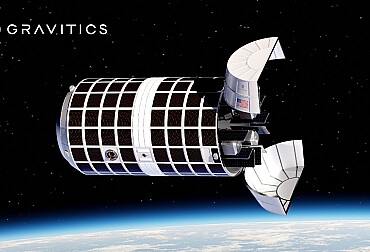
On-orbit servicing is emerging as a complementary pillar of resilience. In July 2026 the DARPA Robotic Servicing of Geosynchronous Satellites payload launched aboard Northrop Grumman’s Mission Robotic Vehicle, marking the first privately owned operational robotic servicing mission in geosynchronous orbit. Equipped with dual dexterous manipulator arms, the vehicle is designed to install mission extension pods that can prolong the life of existing satellites by years and perform inspection, repair, and relocation tasks. Parallel demonstrations planned for 2026 and 2027 will test hydrazine refueling, autonomous rendezvous, docking, and maneuver. These capabilities allow operators to extend the usefulness of high-value assets, relocate spacecraft away from threats, and maintain constellation health without waiting for new launches. Over time, servicing vehicles themselves may become part of a responsive logistics network that supports both commercial and military fleets.
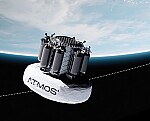
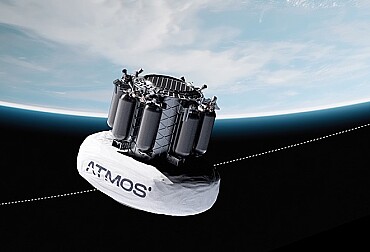
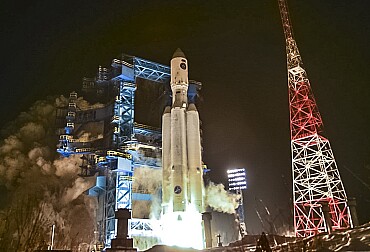
Rapid reconstitution addresses the residual risk that even proliferated systems can suffer significant losses. The Space Force’s Tactically Responsive Space missions have demonstrated the ability to prepare and launch replacement spacecraft on compressed timelines measured in weeks or even days. DARPA continues to seek technologies that can restore critical services within hours to weeks after an attack or debris event. Success depends on ready stocks of satellites, flexible launch capacity, and pre-planned integration procedures so that gap-filler capabilities can be brought online before operational effects cascade to terrestrial forces.
Threats continue to evolve. Direct-ascent and co-orbital anti-satellite systems remain active development priorities for several nations. Directed-energy weapons, whether ground-based or space-based, offer reversible or non-reversible effects against optical sensors and solar arrays. Cyber operations targeting ground segments or the software stacks of commercial constellations have already proven capable of disrupting large numbers of user terminals without destroying a single satellite. Debris generation from kinetic engagements or collisions poses a long-term risk of cascading failures that could render entire orbital regimes unusable. Heterogeneous architectures spanning multiple orbits, frequency bands, and ownership models – military, commercial, and allied – complicate an adversary’s targeting problem and limit the impact of any single attack vector.
The net result is a space domain that is denser, more contested, and more dynamic than at any previous point. Space-based ISR will remain indispensable for targeting, missile warning, and situational awareness, yet its continued availability will depend less on the invulnerability of individual satellites and more on the ability to absorb losses, repair and reposition assets on orbit, and rapidly replace those that cannot be recovered. The combination of mega-constellations, on-orbit servicing, and tactically responsive launch offers a practical path toward that resilience. Realizing it will require sustained investment in both space and ground segments, closer integration of commercial capabilities under clear operational control, and doctrines that treat attrition as an expected rather than exceptional condition of future conflict.