
From LAV-25 to ARV-30: the USMC Is Modernizing Mobile Reconnaissance for Future Conflicts
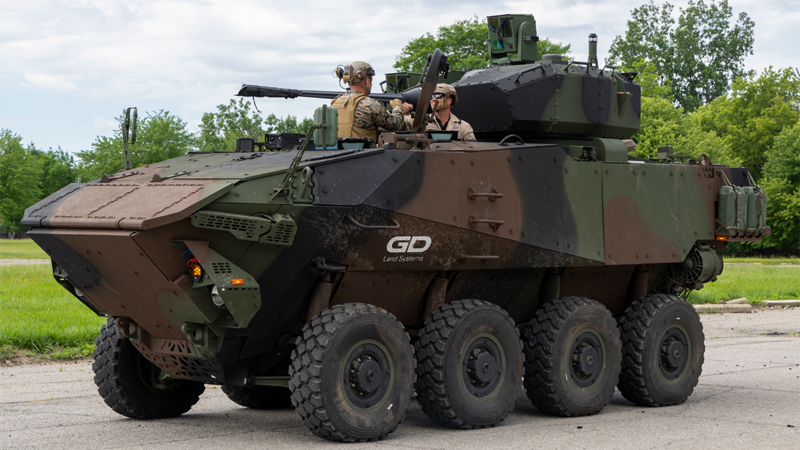
The United States Marine Corps is advancing a critical modernization effort as it evaluates competing Advanced Reconnaissance Vehicle prototypes designed to succeed the long-serving Light Armored Vehicle-25. In June 2026, reconnaissance Marines conducted hands-on assessments of 30 mm-armed ARV-30 designs from General Dynamics Land Systems and Textron Systems at Detroit Arsenal. These evaluations form part of a broader program to equip Mobile Reconnaissance Battalions with platforms that retain the amphibious agility of their predecessors while delivering greater lethality, sensor integration, and networked command capabilities demanded by contemporary and future battlefields.
The LAV-25 traces its origins to the late 1970s and early 1980s, when the Department of Defense sought a light armored vehicle for rapid deployment forces amid rising tensions in the Middle East. After competitive trials at Twentynine Palms and Yuma, the Marines selected an eight-wheeled amphibious design derived from the Swiss MOWAG Piranha family, license-produced by General Motors of Canada and later associated with General Dynamics Land Systems. Funding constraints led the Army to drop its parallel effort, leaving the Marine Corps as the primary operator. The first vehicles entered service in 1983, with the service ultimately acquiring 758 LAVs across multiple variants.
Over more than four decades the LAV-25 has proven itself a versatile workhorse. It first saw combat during Operation Just Cause in Panama in 1989–1990, then played prominent roles in the Persian Gulf War, operations in Somalia, Haiti, the Balkans, and extensively throughout the Iraq and Afghanistan campaigns. In Light Armored Reconnaissance battalions the vehicle has enabled fast-moving scouting, screening, and limited direct-fire support, often operating far ahead of heavier forces. Variants expanded its utility: the LAV-AT carried anti-tank missiles, the LAV-M mounted an 81 mm mortar, the LAV-C2 provided command-and-control functions, logistics and recovery models supported sustained operations, and specialized electronic-warfare versions appeared as well. Service-life extension programs produced the LAV-25A1 and A2 configurations, adding appliqué armor, improved thermal sights, exhaust management, and other upgrades that kept the fleet relevant well into the 2020s. As of recent tables of organization a typical LAR battalion fields dozens of LAV-25s alongside supporting variants.

In its baseline reconnaissance form the LAV-25 carries a three-person crew plus up to four scouts. Its primary armament is the M242 25 mm Bushmaster chain gun, supported by coaxial and pintle-mounted 7.62 mm machine guns. Road speeds approach 62 mph, while twin waterjets allow limited amphibious movement. Protection against small-arms fire and artillery fragments can be augmented with add-on armor kits capable of defeating heavier machine-gun rounds. These attributes made the vehicle ideal for the expeditionary, ship-to-shore and rapid inland operations that define Marine Corps doctrine. Yet the platform’s age, relatively light armor, 25 mm firepower, and limited sensor and communications suites increasingly constrain its effectiveness against modern threats that include better-protected armored vehicles, long-range precision fires, and proliferating unmanned systems.
The Advanced Reconnaissance Vehicle program addresses these shortfalls by creating a family of purpose-built platforms rather than a simple one-for-one replacement. The ARV-30 variant under current testing centers on a remotely operated turret mounting the Northrop Grumman Mk44 Bushmaster II 30×173 mm automatic cannon. This weapon offers greater range, higher muzzle energy, and compatibility with programmable airburst and armor-piercing fin-stabilized discarding-sabot ammunition capable of engaging protected targets, trench lines, and light-to-medium armor more effectively than the older 25 mm system. An anti-tank guided missile capability is also required, allowing sections to handle heavier threats while reserving the cannon for closer or more numerous targets. Beyond firepower, the Marine Corps expects the new vehicles to integrate modern command, control, communications and computer systems with unmanned aerial systems, enabling real-time data sharing, extended situational awareness, and coordination with forces operating beyond line of sight.
Amphibious mobility remains non-negotiable, as does the ability to operate across varied terrain at high speed. Survivability improvements, advanced sensors, and a modular architecture that supports multiple mission variants – including C4/UAS, logistics, precision fires, counter-UAS, and recovery – are central to the requirement. The program aligns with Force Design 2030 priorities that emphasize distributed, mobile reconnaissance capable of sensing, communicating, and if necessary striking in contested littoral environments. Prototypes from both GDLS and Textron underwent earlier C4/UAS evaluations beginning in 2023; contracts for ARV-30 prototypes followed in 2024, with a second rapid-prototyping phase awarded in 2026 covering multiple variants. Each company is to deliver pre-production vehicles for competitive testing, with deliveries expected later in the decade and a production decision targeted for the early 2030s. Fiscal year 2027 budget requests allocate substantial research and development funding to mature subsystems and integrate the designs.
Marine feedback from the June 2026 Detroit Arsenal events – focused on crew stations, fire-control ergonomics, turret operation, vehicle handling, and overall combat effectiveness – will refine the baseline configuration before larger numbers of vehicles are built. The resulting ARV family is intended not merely to match the LAV-25’s historic mobility and scout capacity but to expand the Marine Corps’ ability to conduct independent, networked reconnaissance in the face of peer and near-peer adversaries. By combining enhanced direct-fire lethality, anti-armor options, sensor fusion, and robust communications, the new systems aim to preserve the speed and amphibious character that made the LAV-25 indispensable while equipping the next generation of reconnaissance Marines for the complexities of modern warfare.