
The U.S. Air Force Pushes to Replace the MQ-9 Reaper With Far Cheaper MALE Drones
The U.S. Air Force entered fiscal year 2026 with only 165 MQ-9A Reaper medium-altitude, long-endurance drones instead of the minimum 189 it needed. Attrition during Operation Rough Rider against Houthi forces in Yemen in March 2025 had already thinned the fleet. Losses then accelerated during Operation Epic Fury, launched on 28 February 2026 against Iran. According to reporting cited by French defense site Opex360 and U.S. outlets, at least 45 Reapers have been lost since that campaign began, even though American and Israeli forces were assumed to control Iranian airspace. The deficit is now described by senior officers as “concerning.”
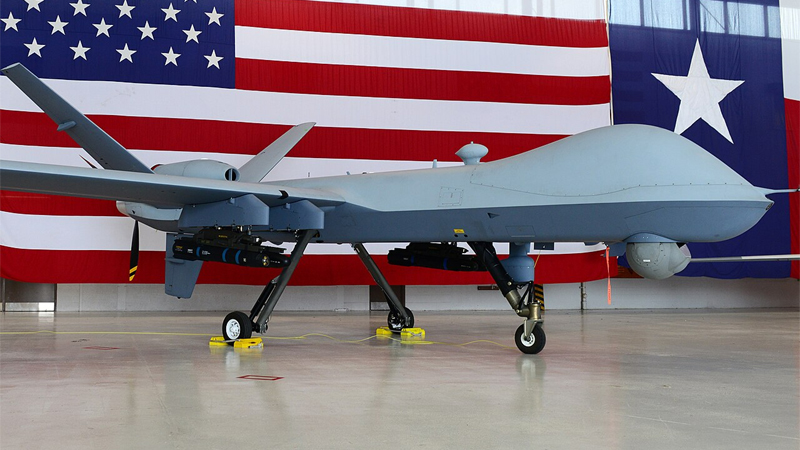
Those losses matter because no other platform, Air Force Chief of Staff General Kenneth S. Wilsbach said in May, matches the Reaper in the volume of strikes it can deliver. Its ability to loiter for many hours allows it to find dynamic targets and pass targeting data to fighters, rocket artillery, and missile launchers. The same aircraft also conducts intelligence, surveillance and reconnaissance, electronic warfare, and communications-relay missions. Yet General Atomics has stopped producing the MQ-9A, and a fully equipped airframe still costs between 30 and 50 million dollars. Buying the larger MQ-9B SkyGuardian would be even more expensive. “There is a misconception that because the MQ-9B is in production we could write a big check and have 100 this year,” Lieutenant General Christopher Niemi, the service’s modernization chief, has said.
That budget and industrial reality is driving the Massed Modular Aircraft program, run with the Defense Innovation Unit. The goal is a MALE drone that can strike, collect ISR, jam, and relay communications at a unit cost two or three times lower than a Reaper – officials have more recently spoken of a target near 10 million dollars before mission equipment. The Air Force wants at least 20 operational aircraft by fiscal 2031 and a fleet of 180 or more thereafter, and it is now trying to compress that schedule. The philosophy is explicit: high-intensity conflict will produce attrition, so the force must be designed to accept it rather than treat every airframe as irreplaceable.
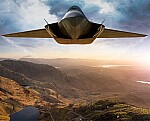
The Reaper itself grew out of a simpler predecessor. Abraham Karem’s General Atomics MQ-1 Predator, a piston-engined surveillance aircraft, proved in the early 2000s that an unmanned platform could both watch and shoot. General Atomics then built a larger, more powerful machine originally called Predator B. The proof-of-concept first flew on 2 February 2001 with a Honeywell TPE331 turboprop of about 950 shaft horsepower – roughly eight times the Predator’s power. The Air Force evaluated early examples from 2002, used a prototype for border security in 2003, and renamed the type Reaper in 2006. It reached initial operational capability in 2007 with the 432nd Wing at Creech Air Force Base. Extended-range modifications followed in 2015. More than 300 airframes have been produced; operators include the U.S. Air Force, Customs and Border Protection, Italy, and the United Kingdom. Combined flight hours with the Predator family now exceed two million.
What made the Reaper distinctive was not speed – cruise is typically around 230–240 knots – but persistence and payload. Wingspan is about 20 meters on the A model and longer on extended-range and B variants. Maximum takeoff weight is in the 4,760–5,670 kilogram range depending on version. Endurance exceeds 27 hours on internal fuel and can stretch past 34 or even 40 hours with extra tanks. Service ceiling is 50,000 feet. Six underwing hardpoints can carry roughly 1,700 kilograms of weapons and sensors: AGM-114 Hellfire missiles (up to eight or more in some loads), GBU-12 Paveway laser-guided bombs, GBU-38 JDAMs, and later small-diameter bombs. The Multi-Spectral Targeting System ball provides electro-optical and infrared video, a laser designator, and other sensors; some aircraft carry synthetic-aperture radar or wide-area surveillance pods. Two operators on the ground – a pilot and a sensor operator – fly the aircraft remotely, though increasing autonomy has been added over time. The same airframe has been used for close air support, overwatch of convoys and raids, combat search and rescue, and targeting for other shooters. High-value individuals killed by Reapers include Qassem Soleimani and senior Taliban and ISIS figures.
Those capabilities were optimized for permissive or semi-permissive airspace. Against layered air defenses that can fire cheap missiles, a 30-to-50-million-dollar slow turboprop becomes a liability. Niemi has argued that the Reaper’s uniqueness does not come from exotic speed, altitude, or materials; the airframe uses decades-old technology. Smart design compromises, he said, should therefore allow a much cheaper successor that still performs the same missions. Repeating the old acquisition approach would simply reproduce the old price.
Possible replacements fall into two categories. The near-term industrial option is the MQ-9B SkyGuardian or SeaGuardian, still in production at General Atomics, with greater payload, longer endurance, and civil-airspace certification features. Officials have rejected a large immediate buy because of cost. The longer-term path is MMA itself: an open-architecture, modular aircraft intended to fly individually or in massed groups, carry at least 2,800 pounds of payload, achieve an unrefueled combat radius of 2,300 nautical miles and a one-way ferry range of 8,000 nautical miles, and operate from relatively short runways. Prototypes are supposed to fly within roughly a year to 21 months of contract award. General Atomics has already offered a clean-sheet design called Wildfire, claiming a 10,000-nautical-mile ferry range, the ability to carry four long-range anti-ship missiles, and semi-autonomous control of large formations. Other traditional primes and newer high-rate production firms are expected to compete; the Air Force wants multiple awards and sustained competition to hold prices down. Related Collaborative Combat Aircraft “loyal wingman” drones, such as General Atomics’ YFQ-42A and Anduril’s YFQ-44A, occupy a different, faster, more fighter-like niche and are not direct Reaper substitutes. Cheaper foreign MALE types such as Turkey’s Bayraktar Akinci illustrate what lower-cost production can achieve, but they are not currently the U.S. program of record.
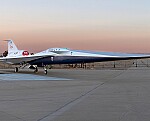
Whether industry can deliver Reaper-class persistence and payload at a fraction of the price, on a compressed schedule, remains an open question. The Air Force no longer has the luxury of waiting until the last MQ-9A reaches the end of its planned service life around the mid-2030s. Combat has already written off a quarter of the fleet. The service that turned the hunter-killer drone into doctrine now intends to treat the next generation as something closer to reusable, mass-produced flying munitions trucks – still capable of the missions that made the Reaper indispensable, but cheap enough that losing them does not break the force.