
From Tempest Roots to Global Ambition: GCAP is Redefining Combat Air Power
In the high-stakes arena of modern airpower, few initiatives carry the weight of the Global Combat Air Programme. Launched as a trilateral endeavor uniting the United Kingdom, Italy, and Japan, GCAP stands as a bold response to the evolving demands of 21st-century warfare. At its core, the program seeks to deliver a next-generation combat aircraft by 2035, one that will replace aging fleets like the Eurofighter Typhoon and Japan’s Mitsubishi F-2 while embodying the principles of a true sixth-generation system. This is not merely about building a faster or stealthier jet; it represents a comprehensive vision for integrated, networked air dominance in an era defined by artificial intelligence, unmanned teaming, and multi-domain operations.

The roots of GCAP trace back to national ambitions that converged through necessity and opportunity. In the United Kingdom, the Tempest program emerged in the late 2010s as a successor to the Typhoon, driven by the need to sustain sovereign combat air capabilities and advanced industrial expertise. Parallel efforts in Japan focused on the F-X project, motivated by regional security concerns, particularly the growing capabilities of adversaries in the Indo-Pacific. Italy, already a Typhoon operator with deep ties to European defense collaboration, joined the conversation.
By December 2022, these strands merged officially into GCAP, formalized through a treaty in 2023 that established a dedicated international government organization. This fusion allowed the partners to pool resources, share technological risks, and accelerate development in ways that unilateral programs could not. The creation of Edgewing, a joint venture encompassing BAE Systems, Leonardo, and Japanese industry leaders, further streamlined industrial delivery, marking a pragmatic departure from more fragmented multinational efforts.
As of mid-2026, GCAP has transitioned firmly into active development. Following earlier concept work, the program received a critical boost with a £686 million stopgap contract in April, followed by a substantial £4.6 billion 18-month agreement in early July. These funds, channeled through the GCAP Agency, support completion of the advanced concept and assessment phase while pushing forward detailed design and joint development activities. A technology demonstrator aircraft, under construction primarily by BAE Systems, is on track for its first flight around 2027. This piloted supersonic platform will test key technologies in real conditions, building on digital engineering advances, additive manufacturing, and AI-driven design tools already yielding efficiencies.
While formal production decisions lie ahead, the momentum appears strong, with partner nations committing billions to ensure the aircraft reaches initial operating capability by the target 2035 date. Challenges remain, including securing long-term funding amid domestic budgets and navigating complex technology integration, yet recent contracts have alleviated earlier concerns over delays, particularly those voiced by Japan.
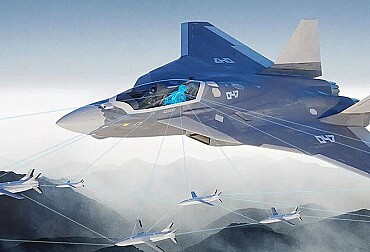
The aims of GCAP extend far beyond producing a single airframe. The program envisions a “system of systems” approach, where the crewed fighter serves as the central node in a networked ecosystem. This includes loyal wingman drones for collaborative combat, advanced sensors for unparalleled situational awareness, and AI-enabled decision support to manage high-volume data in contested environments. Key performance goals include exceptional stealth, supersonic cruise potential, extended range, and seamless interoperability across air, land, sea, space, and cyber domains.
Adaptability stands as a hallmark: the aircraft should evolve over decades through open-system architectures, allowing rapid upgrades in software, weapons, and electronic warfare capabilities. Economically, GCAP promises substantial returns through high-skilled jobs, supply chain growth, and export opportunities. Industry leaders project sales of several hundred aircraft beyond the partner nations, positioning the jet as a viable alternative for allies seeking advanced capabilities without full reliance on U.S. platforms.
Export potential is particularly promising; as the only fully funded European-led sixth-generation effort following the troubles of rivals, GCAP could appeal to nations in Europe, the Asia-Pacific, and the Middle East. Its emphasis on exportability from the outset, including provisions for technology transfer under controlled conditions, differentiates it in a market wary of restrictive end-user agreements. If successful, the program could not only enhance the defensive postures of its partners but also strengthen alliances, fostering deeper industrial and operational ties between NATO and Indo-Pacific frameworks.
Comparisons with other sixth-generation initiatives highlight GCAP’s distinctive strengths and the broader competitive landscape. The most direct European counterpart, the Future Combat Air System (FCAS) pursued by France, Germany, and Spain, has faced significant hurdles. Plagued by industrial disputes over workshare between Dassault and Airbus, as well as differing national priorities, FCAS has seen delays and even partial collapse, with Germany signaling openness to alternatives. Where FCAS emphasized a heavily integrated “system of systems” with ambitious timelines that slipped repeatedly, GCAP benefits from a leaner three-nation structure, a unified prime contractor in Edgewing, and clearer governance. This has allowed faster progress toward milestones, positioning GCAP as the more credible near-term European option.
Across the Atlantic, the United States’ Next Generation Air Dominance (NGAD) program, sometimes associated with the F-47 concept, pursues an even more advanced family of systems, including collaborative combat aircraft (CCA) drones. NGAD prioritizes air dominance in the Pacific theater, with heavy investment in stealth, range, and manned-unmanned teaming. However, its costs – potentially hundreds of millions per unit – and recent pauses for review underscore the fiscal pressures of cutting-edge development.
GCAP, while less resourced individually, spreads risks across partners and targets a more affordable multirole platform suitable for a wider range of operators. China, meanwhile, has demonstrated impressive speed with prototypes like the Chengdu J-36 and Shenyang J-50, which have flown publicly since late 2024. Russia’s efforts, such as the PAK DP interceptor, appear more modest and constrained by sanctions and economic realities.
In this crowded field, GCAP’s potential stems from pragmatism. It avoids the pitfalls of overly ambitious or politically fraught collaborations while embracing international synergy. Success will depend on sustained funding, technological breakthroughs in areas like directed-energy weapons or adaptive cycle engines, and the ability to attract additional partners or customers without compromising core requirements. As global tensions drive demand for advanced airpower, GCAP could emerge not only as a formidable combat system but as a model for how middle powers can collectively shape the future battlespace.