
From Rule of the Waves to Reliance on Allies: The Royal Navy’s Inability to Escort Its Carriers Exposed
In early March 2026, amid escalating conflict in the Middle East involving Iran, the United States, and regional actors, reports emerged that the United Kingdom was contemplating the deployment of one of its Queen Elizabeth-class aircraft carriers – likely HMS Prince of Wales – to the region. This potential mission would aim to safeguard British interests, including sovereign base areas in Cyprus such as RAF Akrotiri, which had come under Iranian drone attack, and to contribute to broader maritime security efforts in a theater marked by threats to shipping lanes like the Strait of Hormuz.
.jpg)
Yet what should have been a straightforward demonstration of British naval power quickly highlighted a stark vulnerability: the Royal Navy appears incapable of independently providing a full escort for its own carrier strike group (CSG) in high-threat environments. Reports from reliable sources indicate that London may need to request assistance from allies most notably France – to fill gaps in escort vessels. This scenario is not merely logistical; it represents a profound operational incapacity rooted in years of fleet reductions, maintenance backlogs, delayed replacements, and insufficient investment in surface combatants.
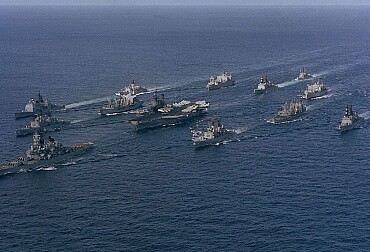
A modern carrier strike group is not just a carrier plus a few accompanying ships; it is a layered defensive formation designed to operate in contested waters. The carrier itself – whether the 65,000-tonne Queen Elizabeth or Prince of Wales – serves as the centerpiece for power projection through its embarked air wing of F-35B Lightning II stealth fighters. Protecting this high-value asset requires a suite of specialized escorts: Air defense ships to counter missile and aircraft threats, typically destroyers with advanced radars and surface-to-air missiles, anti-submarine warfare platforms to detect and neutralize submarine threats, general-purpose escorts for multi-role protection, including anti-surface warfare, and often, a nuclear attack submarine for underwater screening and intelligence.
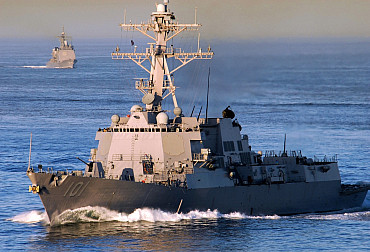
In U.S. Navy terms, a full group might include one carrier, one cruiser, several destroyers, frigates, submarines, and logistics support. The Royal Navy’s doctrine for its Queen Elizabeth-class CSG envisions a similar composition: ideally 2–4 destroyers/frigates for layered defense, plus submarine support. As of March 2026, the Royal Navy’s surface combatant fleet is alarmingly small and strained. The force includes six Type 45 Daring-class destroyers, optimized for area air defense with the Sampson radar and Aster missiles. These are the primary air-defense escorts for carriers. And around seven remaining Type 23 Duke-class frigates, focused on ASW but aging rapidly. This totals 13 major surface escorts – far below historical norms or the needs of sustained global operations. Compounding the issue is availability: many vessels are unavailable due to refits, repairs, or upgrades.
The Type 45 class has been particularly afflicted. Designed with the Rolls-Royce WR-21 gas turbines, these ships suffered chronic power issues in warm climates, leading to the Power Improvement Project (PiP). As of early 2026, only three Type 45s – HMS Dauntless, HMS Dragon, and HMS Duncan – are fully operational. Others, including HMS Daring (out for years), Diamond, Defender, and others, remain in extended maintenance or upgrades. Even post-PiP ships face competing demands: one Type 45 (HMS Dragon) was rushed toward the eastern Mediterranean to protect Cyprus following attacks, but delays occurred due to defects and armament needs.
The Type 23 frigates fare little better. Several have been decommissioned prematurely or are nearing end-of-life, with replacements – the Type 26 (ASW-focused) and Type 31 (general-purpose) – still in build or early trials. In early 2026, the frigate force has shrunk to seven or fewer fully available hulls, with ongoing retirements exacerbating the shortfall.
Forming a credible carrier strike group for a Middle East deployment – requiring sustained operations in a high-threat zone with risks from Iranian missiles, drones, submarines, and proxies – demands at least four to six escorts plus submarine cover. With only a handful of operational destroyers and frigates stretched across NATO commitments, home waters defense, and other global tasks, the math simply does not add up. Crew shortages, training cycles, and rest periods further reduce surge capacity.
This incapacity is not new but has reached a critical point in 2026. The Royal Navy’s surface fleet has declined dramatically since the Cold War era, when dozens of destroyers and frigates were routine. Post-2010 Strategic Defence and Security Reviews prioritized carriers but slashed escort numbers. Promises of fleet growth (e.g., toward 24 frigates/destroyers) remain aspirational, delayed by budget constraints and shipbuilding timelines.
Enter France. Under the 2010 Lancaster House Treaties, Paris and London have deepened naval interoperability. British ships have escorted the French carrier Charles de Gaulle on missions; joint exercises are routine. In March 2026, France demonstrated robust capability by deploying its Charles de Gaulle carrier strike group to the eastern Mediterranean, plus eight additional warships and two helicopter carriers – totaling a significant reinforcement. President Macron announced defensive escorts for shipping in the Strait of Hormuz once intense phases subside.
France’s Marine Nationale maintains a more balanced fleet, with the Charles de Gaulle routinely supported by sufficient frigates (including air-defense Horizon-class and multi-role FREMM). This contrast is stark: while Britain contemplates seeking French escorts for its carrier, France independently surges a full group to the same theater.
The prospect of French warships – perhaps a FREMM or Horizon destroyer – escorting HMS Prince of Wales is militarily sensible and politically feasible under bilateral agreements. It underscores European burden-sharing. Yet it also exposes British vulnerability. A navy unable to independently protect its capital ships risks diminished credibility and reliance on allies in crises.
This situation demands urgent reflection. The carriers represent a £6–7 billion investment each, symbolizing post-Brexit "Global Britain." But without adequate escorts, they become liabilities in contested seas. Solutions include accelerating Type 26/31 deliveries, addressing manpower shortages, and increasing defense spending toward NATO’s target of 3,5% of GDP with emphasis on naval renewal. Until then, the Royal Navy’s escort incapacity remains a glaring strategic weakness – one that, in a volatile 2026 Middle East, forces uncomfortable dependencies on partners like France.