
UK–Estonia Team Rolls Out Low-Cost Naval System to Stop Drone Swarms
In the face of the explosive growth of drones in modern warfare, particularly low-cost one-way attack (kamikaze) drones, a significant industrial partnership has emerged between the United Kingdom and Estonia. On January 7, 2026, British defense giant Babcock International Group and Estonian startup Frankenburg Technologies signed a Memorandum of Understanding (MoU) to jointly explore and develop a new, affordable maritime counter-drone air defense system.
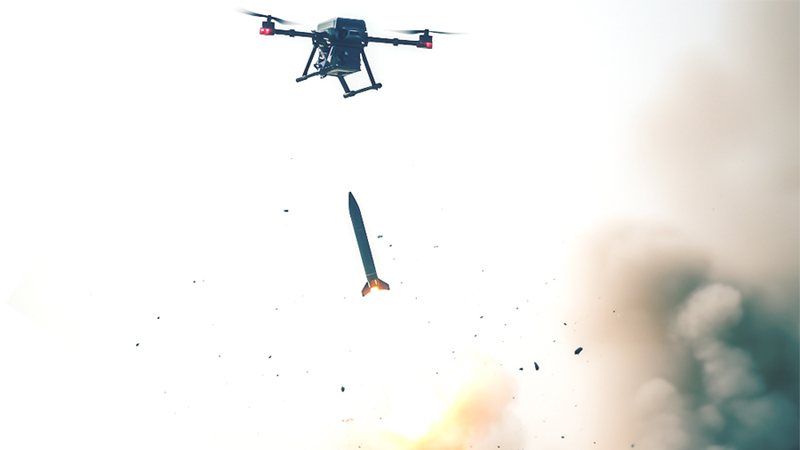
This collaboration directly responds to the dramatic rise in asymmetric attacks using inexpensive, hard-to-detect unmanned aerial vehicles (UAVs), as vividly demonstrated in conflicts like Ukraine and Houthi operations in the Red Sea. These “suicide” drones — often costing just thousands of dollars — can overwhelm traditional high-end air defense systems, creating a highly unfavorable cost-exchange ratio for defenders. For instance, intercepting a single low-cost drone with a legacy missile worth hundreds of thousands (or millions) of dollars quickly becomes economically unsustainable when attackers deploy them in swarms or salvos.
Babcock, a FTSE 100 company with over 135 years of experience in complex maritime and naval engineering, specializes in designing and manufacturing launch systems for ships and coastal platforms. Frankenburg Technologies, a fast-rising Tallinn-based firm led by CEO Kusti Salm (a former Estonian Ministry of Defence official) and featuring engineering leadership from former Diehl Defence executive Andreas Bappert, focuses on next-generation lightweight interceptors optimized for mass production and countering unmanned aerial systems.
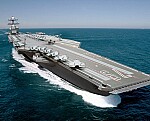
At the core of the partnership is the development of an innovative, cost-effective maritime C-UAS (counter-unmanned aerial systems) solution. The system features two main components:
- A containerized launch platform — engineered by Babcock — that is modular, scalable, and designed for rapid “bolt-on” installation on a wide range of naval vessels, auxiliary ships, or fixed coastal infrastructure. This approach minimizes costly and time-consuming platform modifications, enabling quick deployment even on legacy assets.
- Low-cost guided missiles (notably the Mark 1) supplied by Frankenburg. Billed as the world’s smallest guided missile at approximately 60 cm long, the Mark 1 uses a solid-fuel rocket motor and commercially available (COTS) components. It promises to be roughly 10 times cheaper and up to 100 times faster to manufacture than conventional short-range air-defense missiles. Frankenburg aims for high-volume output — with plans for up to 100 missiles per day in Estonia’s new Defence Industry Park — allowing defenders to match the mass and speed of attacking drone swarms.
This “hard-kill” kinetic solution seeks to fundamentally reverse the economic imbalance in drone defense. Traditional systems like advanced surface-to-air missiles are engineered for high-value, sophisticated threats (e.g., cruise missiles or fighter jets), not waves of cheap UAVs. By pairing affordable interceptors with a flexible naval launcher, the partners aim to enable sustainable engagements against saturation attacks, preserving expensive assets and crew while maintaining operational tempo.
From a broader strategic and industrial perspective, the MoU strengthens European sovereign defense capabilities. With much of the engineering work led from the United Kingdom, the project is expected to generate skilled jobs, foster innovation in modular maritime systems, and position both companies for global exports. Navies worldwide — from NATO allies protecting Baltic and North Sea routes to those facing threats in the Indo-Pacific or Red Sea — increasingly require scalable, economical counters to drone proliferation.
The initiative aligns with lessons from recent conflicts, where drone warfare has “changed the character of warfare,” as emphasized by the CEOs. Babcock’s David Lockwood noted: “Defence has entered a new era with the rapid development of drone warfare and industry needs to respond to this growing threat.” Frankenburg’s Kusti Salm added: “The drone threat has changed the character of warfare, and every layer of defence now needs to be designed for mass and speed from the outset.”
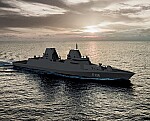
While still in the exploratory phase (an MoU rather than a full production contract), successful integration could deliver a deployable capability in the coming years, complementing soft-kill measures like electronic warfare and guns in layered maritime defense architectures. This UK-Estonian tie-up exemplifies how agile startups and established industrial players can accelerate responses to 21st-century threats.