
Historic $76.6 Billion Contracts Cement U.S. Undersea Dominance with Next-Generation Virginia and Columbia Submarines
In late July 2026 the U.S. Department of Defense awarded contracts totaling approximately $76.6 billion to General Dynamics Electric Boat and Huntington Ingalls Industries’ Newport News Shipbuilding, marking one of the largest single investments in American undersea forces in recent history. Far from a simple refurbishment program for aging hulls, this package advances the construction of nine Virginia-class Block VI nuclear-powered attack submarines (with material for a tenth) and five Columbia-class Build II ballistic-missile submarines, while allocating roughly $5 billion for shipyard productivity improvements, workforce development, and industrial-base strengthening. Work under the awards is expected to extend through July 2038, underscoring a long-term commitment to recapitalizing the fleet amid intensifying strategic competition, particularly in the Indo-Pacific.
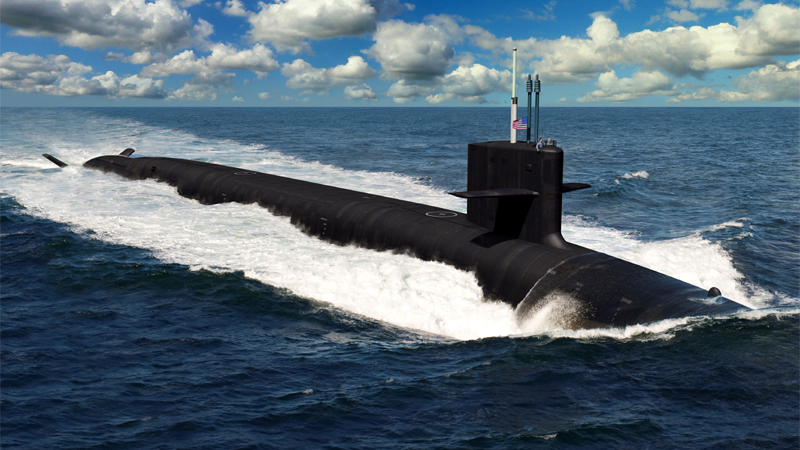
The Virginia-class Block VI boats represent the latest evolutionary step in the Navy’s primary fast-attack submarine line. Building on the Virginia Payload Module introduced in Block V, which adds a mid-body section with large-diameter vertical launch tubes, Block VI designs incorporate further enhancements in stealth, propulsion efficiency, sonar performance, and multi-mission flexibility. These include improved acoustic quieting drawing from earlier experimental advances, enhanced ability to sense and interact across the water column from surface to seabed, expanded payload capacity that can exceed forty Tomahawk land-attack missiles in some configurations, and integration of unmanned underwater vehicles or tethered drones for extended intelligence, surveillance, and reconnaissance. The boats retain the class’s fly-by-wire ship control for superior littoral handling, photonics masts, and advanced combat systems while preparing technologies that will inform the eventual next-generation SSN(X). Of the $76.6 billion total, about $42.1 billion supports these nine attack submarines and associated long-lead materials.
Simultaneously, the five Columbia-class Build II boats (SSBN-828 through SSBN-832) continue the once-in-a-generation replacement of the Ohio-class ballistic-missile submarines that form the most survivable leg of the U.S. nuclear triad. Each Columbia will displace roughly 20,810 long tons submerged, measure about 560 feet in length, and carry sixteen Trident II D5LE (or later D5LE2) submarine-launched ballistic missiles – fewer tubes than the Ohio’s twenty-four but sufficient, given improved accuracy and reliability, to meet strategic requirements with a smaller overall force of twelve boats. Key design features include a life-of-ship reactor core that eliminates the need for a mid-life refueling overhaul, an electric-drive propulsion system for superior quieting, X-shaped stern control surfaces for enhanced maneuverability, modular construction techniques that increase efficiency, and state-of-the-art sensors and fire-control systems. The $29.5 billion portion of the contract covers these five hulls, bringing the total number of Columbias under contract to seven and ensuring the sea-based deterrent remains continuous as the first Ohio-class boats begin retiring later this decade.
These contracts form part of a broader modernization and expansion of the U.S. nuclear submarine force, which remains entirely nuclear-powered and comprises several classes performing complementary missions. As of 2026 the attack-submarine force includes roughly two dozen remaining Los Angeles-class boats (the long-serving backbone now steadily retiring), three highly capable Seawolf-class submarines (including the specialized USS Jimmy Carter with its multi-mission platform), and approximately twenty-six commissioned Virginia-class boats, with more under construction or on order. On the strategic side, fourteen Ohio-class SSBNs continue to provide continuous at-sea deterrence, supplemented by four Ohio-class boats converted to guided-missile submarines (SSGNs) capable of launching large salvos of conventional cruise missiles and supporting special operations. Overall force levels hover near seventy boats, though attack-submarine numbers are projected to dip temporarily in the early 2030s as Los Angeles retirements outpace Virginia deliveries before recovering.
New construction currently centers on the Virginia and Columbia programs. Virginia production aims for a sustained rate approaching two boats per year, incorporating successive block upgrades, while the Columbia program targets delivery of the lead ship USS District of Columbia in the late 2020s followed by one boat annually thereafter until the class of twelve is complete around the early 2040s. Industrial challenges – workforce shortages, supply-chain constraints, and the concurrent demands of the AUKUS partnership that will transfer Virginia-class boats to Australia – have slowed earlier schedules, making the productivity investments in the recent contracts especially significant. Looking further ahead, the Navy is already examining the SSN(X) concept that will eventually succeed the Virginia class with even greater speed, payload, and acoustic superiority.
Maintaining a robust nuclear submarine fleet is foundational to U.S. national security for both strategic and conventional reasons. The ballistic-missile submarines constitute the most survivable element of the nuclear triad; their ability to remain undetected for months while carrying a substantial fraction of the nation’s strategic warheads provides a credible second-strike capability that underpins deterrence against peer adversaries. Attack submarines, meanwhile, deliver unmatched stealth for intelligence collection in contested waters, anti-submarine and anti-surface warfare, land-attack strikes, protection of carrier strike groups, and special-operations support. In an era of expanding Chinese and Russian undersea ambitions, quantitative and qualitative superiority beneath the waves helps secure sea lines of communication, deny adversaries freedom of action in key theaters, and preserve the United States’ ability to project power globally. The endurance of nuclear propulsion – decades of operation without refueling – combined with acoustic advantage and multi-mission versatility makes these platforms uniquely difficult to counter and therefore indispensable.
The $76.6 billion commitment therefore represents more than the purchase of fourteen advanced hulls. It signals sustained prioritization of undersea dominance, industrial resilience, and technological edge at a moment when those advantages are both more contested and more consequential than at any time since the end of the Cold War. By fielding quieter, more heavily armed Virginia Block VI boats and ensuring the seamless transition to the Columbia-class deterrent, the Navy is positioning its submarine force to remain the silent, decisive instrument of American maritime power well into the middle of the century.