
Iron Beam Goes Live: Israel’s Laser Weapon Is About to Rewrite the Economics of Air Defense
Israel has taken a historic step in revolutionizing its air defense capabilities. In late December 2025, the Israeli Ministry of Defense announced the delivery and operational integration of the Iron Beam, the world’s first high-power laser interception system. Developed primarily by Rafael Advanced Defense Systems, with key contributions from Elbit Systems, this groundbreaking technology complements Israel’s renowned multi-layered air defense architecture. By neutralizing short-range aerial threats at a fraction of the cost of traditional interceptors, Iron Beam not only enhances operational efficiency but also sends a powerful message of technological deterrence to adversaries in a volatile region.

The Iron Beam operates on a straightforward yet advanced principle: a high-energy laser beam, typically in the 100-150 kW class, is precisely directed at incoming threats, superheating and destroying them in mid-flight. This directed-energy weapon targets rockets, mortar shells, unmanned aerial vehicles (drones), and other low-cost projectiles that have become hallmarks of asymmetric warfare. Unlike kinetic interceptors, which physically collide with targets, the laser transfers intense thermal energy almost instantaneously, as it travels at the speed of light. There is no projectile flight time, enabling rapid engagement and the ability to handle saturation attacks—scenarios where adversaries launch barrages of dozens or hundreds of threats simultaneously to overwhelm defenses.
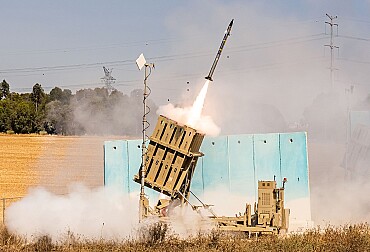
Iron Beam forms the innermost layer of Israel’s sophisticated multi-tiered defense system. It works alongside established platforms: Iron Dome for short-range rockets and artillery; David’s Sling for medium-range threats; and Arrow 2/3 for ballistic missiles. This layered approach ensures comprehensive coverage, with each system optimized for specific threat profiles. Iron Beam focuses on the most numerous and inexpensive attacks—those often employed by groups like Hamas in Gaza or Hezbollah in Lebanon—freeing up missile-based systems for higher-end dangers. Tests conducted over years, including live interceptions of drones and rockets, have demonstrated the system’s precision, reliability, and ability to engage multiple targets in quick succession.
One of the most transformative aspects of Iron Beam is its dramatically reduced operational cost. Traditional interceptor missiles, such as those used by Iron Dome, can cost $40,000–$100,000 per shot. In contrast, a single Iron Beam engagement is estimated at just $2–$5, primarily the expense of electricity needed to power the laser. This "cost per kill" breakthrough eliminates the need for stockpiling physical munitions, reduces logistical burdens, and allows for sustained defense during prolonged conflicts. In low-intensity warfare, where adversaries fire thousands of cheap rockets over months or years, this economic advantage prevents defender exhaustion—both financially and in terms of ammunition reserves. For Israel, facing intermittent barrages from multiple fronts, Iron Beam provides virtually unlimited magazine depth as long as power supply is maintained.
Development of Iron Beam began over a decade ago under the Israeli Ministry of Defense’s Directorate of Defense Research and Development (DDR&D). Rafael led the project, integrating high-power laser technology partly sourced from Elbit Systems. The system has progressed from prototypes to a mobile, ground-based platform capable of deployment on trucks or fixed sites. Recent advancements include improved beam quality, atmospheric compensation techniques to maintain focus over distance, and integration with existing radar and command networks for seamless operation within the broader air defense grid.
Politically and strategically, the operational deployment of Iron Beam carries profound implications. Defense Minister Israel Katz has described it as a "game changer," emphasizing its deterrent value. By showcasing unparalleled technological superiority, Israel signals to Iran, its proxies, and other regional actors that attempts to saturate defenses will be met with sustainable, precise countermeasures. This innovation reinforces Israel’s qualitative military edge, a cornerstone of its security doctrine amid numerical disadvantages. Furthermore, as the first nation to field an operational high-energy laser weapon, Israel positions itself as a global leader in directed-energy systems, opening doors to export opportunities, international partnerships, and enhanced strategic autonomy.
Despite its advantages, Iron Beam is not a panacea. Like all laser weapons, it faces limitations from atmospheric conditions: rain, heavy fog, dust storms, or thick smoke can scatter or absorb the beam, reducing effective range (typically up to 10 km in clear conditions). These challenges necessitate integration with kinetic systems for all-weather reliability. Ongoing R&D focuses on increasing power output, improving mobility (e.g., airborne or naval variants), extending range, and enhancing resilience to countermeasures like reflective coatings on targets.

Looking ahead, engineers are already planning next-generation enhancements, including higher-power lasers (potentially 300–500 kW) and deployment on diverse platforms to protect forward bases, borders, and urban centers. Iron Beam represents more than a technical achievement; it embodies Israel’s innovation-driven approach to defense—effective, affordable, and adaptive in an era of evolving threats like swarming drones and precision-guided munitions. In a tense Middle East, where aerial threats proliferate, Iron Beam symbolizes a paradigm shift: from reactive, resource-intensive defense to proactive, cost-effective dominance.